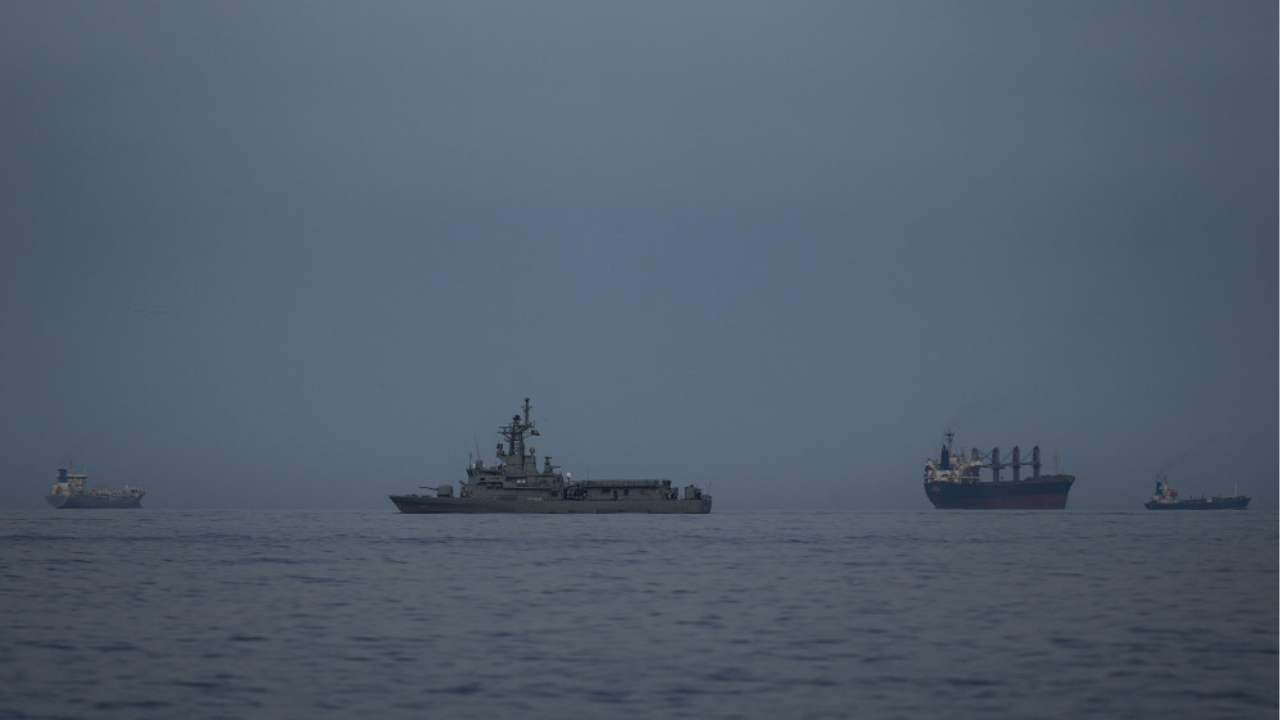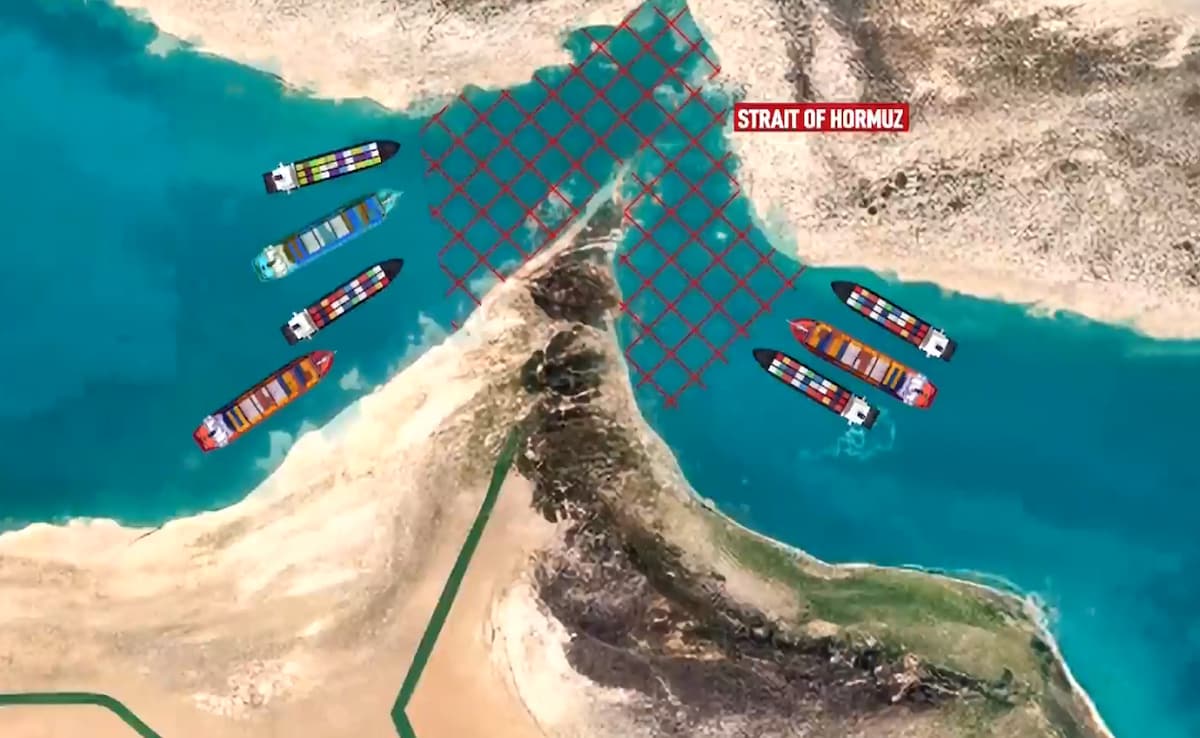
The Strait of Hormuz is not a "choke point" in the way your favorite armchair geopolitical analyst describes it. It is a fundamental architectural constraint of the modern world. When the industry starts whispering about "alternative routes" to bypass a potential blockade of the 21-mile-wide stretch of water that carries 20% of the world’s petroleum, they aren't offering solutions. They are selling fantasies.
Every analyst at every major logistics firm is currently peddling a menu of "Plan Bs" that include the Cape of Good Hope, overland rail through Central Asia, and the fabled Northern Sea Route. They are all wrong. They are treating a systemic heart attack as if it were a minor traffic jam that can be solved by taking the side streets.
There are no side streets. There is only the abyss.
The Cape of Good Hope is a Logistics Suicide Note
The most common "alternative" cited is the detour around the southern tip of Africa. It sounds simple on a map. You just keep sailing south, right?
Wrong. The Cape of Good Hope is a 6,000-mile detour that adds 10 to 15 days of transit time for a standard VLCC (Very Large Crude Carrier) heading to Europe or North America. But the time isn't the killer; the math is.
Shipping is an industry of razor-thin margins and precise synchronization. When you add two weeks to a voyage, you aren't just paying for more low-sulfur fuel. You are effectively removing 20% of the global fleet's capacity from the market. If every ship takes the long way, you suddenly need 20% more ships just to maintain current supply levels. Those ships don't exist. They aren't sitting in a parking lot in Singapore waiting for a signal.
Furthermore, the "Cape Route" assumes the insurance markets stay rational. I have sat in boardrooms where maritime underwriters laughed at the idea of "stable" premiums during a Hormuz crisis. The moment the Strait closes, "War Risk" surcharges won't just apply to the Gulf; they will contaminate the entire Indian Ocean. You aren't just paying for extra fuel; you are paying a ransom to the gods of probability.
The Pipeline Pipeline Dream
Someone always brings up the East-West Pipeline in Saudi Arabia or the Abu Dhabi Crude Oil Pipeline. "We can just pump it to the Red Sea or the Gulf of Oman," they say.
This is a fundamental misunderstanding of scale. The East-West Pipeline has a nameplate capacity of about 5 million barrels per day. The Strait of Hormuz handles roughly 20 million. You cannot fit a gallon of water through a straw, no matter how much "innovation" you claim to have.
Beyond the capacity issue, look at the geography. Pumping oil to the Red Sea just moves the target. Instead of a closure at Hormuz, you are now vulnerable at the Bab el-Mandeb. If an actor is sophisticated enough to shut down the Strait of Hormuz, they have already factored in your pathetic 5-million-barrel-a-day bypass. You are moving your assets from one firing range to another and calling it "strategic diversification."
Rail and the Silk Road Mirage
The "Middle Corridor" and the "Iron Silk Road" through Russia and Central Asia are the darlings of the ESG and "Resilient Supply Chain" crowd. They love to point at trains moving containers from Xi'an to Duisburg.
Rail is a boutique service. It is great for high-value electronics, fashion, and car parts. It is utterly useless for the bulk commodities that actually keep the lights on. A single Triple-E class container ship carries 20,000 TEUs. To move that same volume by rail, you would need a train roughly 75 miles long, or dozens of individual trains that would clog every siding from Kazakhstan to Poland.
Moreover, rail relies on the stability of transit countries. If the global order has degraded to the point where Hormuz is shuttered, why on earth would you trust a 5,000-mile land bridge through multiple volatile jurisdictions? Land routes are not "alternatives"; they are fragile, high-maintenance threads that snap the moment a local border guard decides he needs a raise.
The Northern Sea Route is a Seasonal Gimmick
Russia has spent billions marketing the Northern Sea Route (NSR) as the "Suez of the North." In theory, it cuts the distance between East Asia and Europe by 40%.
In reality, it is a nightmare of icebreaker fees, specialized "ice-class" hull requirements, and unpredictable weather. You cannot run a "Just-In-Time" global economy on a route that is only reliably open a few months a year and requires the permission of a pariah state to traverse.
If you are a CEO betting your Q4 earnings on the NSR, you aren't a visionary; you’re a gambler who doesn't understand the house always wins. The infrastructure—search and rescue, refueling, repair docks—simply doesn't exist in the Arctic. One grounded tanker in the Vilkitsky Strait doesn't just block a route; it creates an ecological and logistical catastrophe that would make the Ever Given look like a minor fender bender.
The Brutal Truth of Decoupling
The "other route options" conversation is a coping mechanism. It allows politicians and executives to avoid the terrifying reality: our global civilization is built on a single, fragile point of failure.
If Hormuz closes, there is no "workaround." There is only "less."
- Less electricity in Japan and South Korea.
- Less plastic feedstock for European industry.
- Less stability in the global financial markets.
We have spent forty years optimizing for efficiency and "lean" operations. We stripped out the redundancy. We sold the extra tankers for scrap. We built refineries that only accept specific grades of Middle Eastern sour crude. We are not "resilient." We are brittle.
The only real "alternative route" is a radical, painful localized production model that most companies are too cowardly to pursue. It means building smaller, less efficient factories closer to the end consumer. It means accepting that "global" was a temporary luxury afforded by a specific period of naval hegemony that is now evaporating.
Stop Asking "Where Else Can We Go?"
The question "What are the other route options?" is a trap. It assumes the status quo can be maintained through a different geography. It cannot.
If the Strait of Hormuz is blocked, the world doesn't find a new path. The world stops.
Instead of hunting for mythical sea lanes, the conversation needs to shift to "How do we survive a 30% reduction in global energy throughput?" That is the only question that matters. Everything else is just PowerPoint slides designed to keep the shareholders from panicking until the lights go out.
The logistics industry doesn't need better maps; it needs a cold shower and a dose of reality. The "Other Route" isn't a different way to the same destination. It's a dead end.
Build your bunkers accordingly.