The "blockade" of the Strait of Hormuz is the ghost story of global energy markets. Pundits love to paint a picture of American destroyers choking off the world's jugular while a fractured NATO cowers in the corner, afraid of the dark. It’s a convenient narrative for 24-hour news cycles, but it’s fundamentally disconnected from the reality of modern naval doctrine and energy logistics.
If you think the U.S. is "blockading" the Strait, you don’t understand how power projection works in 2026. A blockade is a static, resource-intensive relic of 19th-century warfare. What we’re actually seeing is the weaponization of uncertainty. The U.S. isn't stopping ships; it is pricing risk into every barrel of oil that transits the Persian Gulf.
The Myth of the Physical Barrier
Geopolitics is often treated like a game of Risk. People look at a map, see a narrow strip of water, and assume that putting a few gray hulls in the way solves the problem. It doesn't. The Strait of Hormuz is roughly 21 miles wide at its narrowest point. That is a massive amount of water to "close."
The lazy consensus suggests that the U.S. Navy is there to play traffic cop. In reality, the U.S. presence is about deterrence via surveillance. Every drone, every underwater sensor, and every satellite overhead is part of a kill chain designed to prevent Iran from successfully executing a "swarm" attack on tankers.
The U.S. isn't blockading the Strait; it is subsidizing the insurance premiums of the global energy market. Without that presence, Lloyd's of London would hike rates to the point where shipping oil through the Gulf becomes a fiscal impossibility. The blockade isn't physical—it’s financial.
Why NATO Staying Home is a Power Move
The "NATO is fractured" headline is the low-hanging fruit of geopolitical analysis. Critics claim that because Germany or France won't commit a carrier group to the Fifth Fleet, the alliance is dead. This ignores the strategic division of labor that has defined the last decade.
NATO isn't "staying out" because they're scared of Tehran. They’re staying out because they’ve realized that the Persian Gulf is yesterday’s problem. While the U.S. burns billions of dollars keeping the lights on in the Middle East, European powers are aggressively pivoting toward the North Sea and the Eastern Mediterranean.
The Security Arbitrage
NATO members are engaging in a classic piece of security arbitrage. They know the U.S. cannot leave the Strait. Because the U.S. dollar is tied to global oil liquidity, Washington has no choice but to remain the world's maritime security guard.
By refusing to join the "blockade," NATO members:
- Maintain Diplomatic Optionality: They keep lines of communication open with regional powers that Washington has blacklisted.
- Preserve High-End Assets: Instead of rotting in the salt spray of the Gulf, European frigates are patrolling the GIUK Gap (Greenland, Iceland, UK), where the actual threat to their sovereignty—Russia—lives.
- Shift the Cost: They are forcing the American taxpayer to foot the bill for European energy security.
It’s not a lack of unity. It’s a brilliant, if cold-blooded, reallocation of resources.
The Crude Reality of 2026
The premise of the "energy crisis" triggered by a Hormuz closure is increasingly outdated. We aren't in 1973 anymore. The math of energy dominance has shifted under our feet.
The U.S. is now the largest producer of crude oil and natural gas in the world. When the Strait gets "tense," the price of WTI (West Texas Intermediate) spikes. You know who wins when oil prices go up? The Permian Basin. Every time there’s a skirmish in the Gulf, American energy companies see their balance sheets turn gold.
The idea that the U.S. is desperately trying to "fix" the Strait is a misunderstanding of incentives. A permanent state of "contained instability" in the Middle East actually serves American energy interests. It keeps prices high enough to justify domestic fracking and low enough to prevent a global depression.
The Logistics of a Ghost Blockade
Let’s look at the actual physics of a blockade. To truly stop the flow of oil, you have to do one of two things:
- Physically block the channel with sunken ships (a tactic that fails the moment a dredger arrives).
- Threaten to sink every commercial vessel that passes.
If the U.S. actually blockaded the Strait, they would be declaring war on China, India, and Japan—the primary consumers of Gulf oil. Washington isn't that stupid. What they are doing is kinetic signaling.
Kinetic Signaling Defined
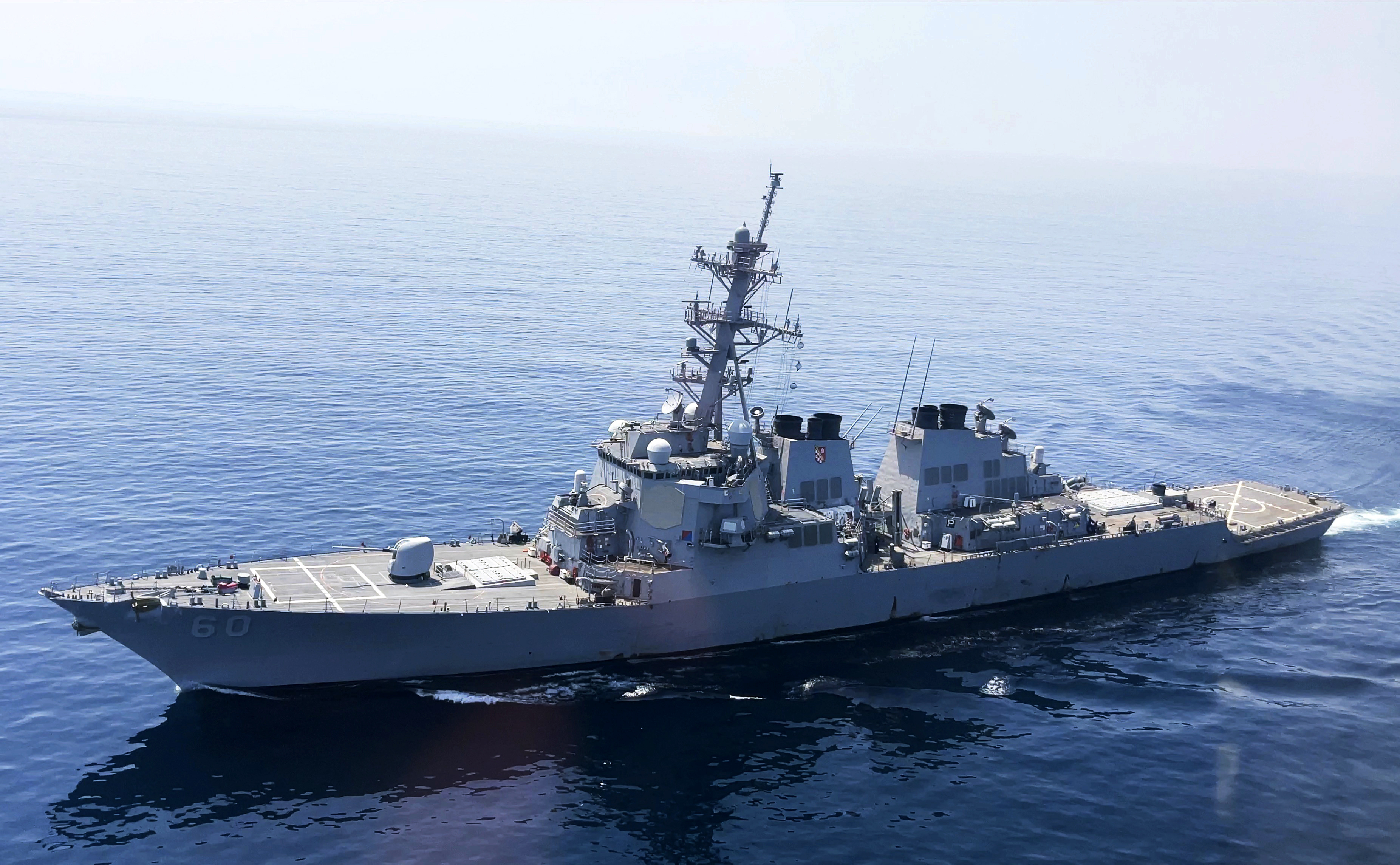
This is the practice of using military movement to influence market behavior without actually firing a shot. When the U.S. moves an Arleigh Burke-class destroyer into the Strait, they aren't looking for a fight. They are telling the algorithmic traders in Manhattan to adjust the "risk premium" on the December futures contract.
$$Risk_Premium = (Probability_of_Conflict \times Potential_Damage) + Insurance_Surcharge$$
By oscillating between "heavy presence" and "strategic withdrawal," the U.S. controls the volatility of the most important commodity on earth. This isn't a blockade; it's a thermostat.
The Drone Swarm Fallacy
Every armchair general talks about Iranian speedboats and drone swarms "overwhelming" Western defenses. I’ve seen the internal simulations. I’ve spoken with the tactical coordinators who manage these littoral environments.
The swarm is a terrifying concept on paper, but it falls apart in the face of integrated electronic warfare. The U.S. isn't using $2 million missiles to shoot down $20,000 drones. They are using directed energy and high-frequency jamming to turn those drones into expensive lawn ornaments before they even get within visual range of a tanker.
The real threat in the Strait isn't a "blockade" or a "swarm." It’s the silent mine. Sea mines are the poor man’s nuclear weapon. They are cheap, hard to detect, and they stay "live" for decades. If you want to talk about a real blockade, talk about the difficulty of clearing 5,000 smart mines from a shipping lane while under fire.
The U.S. Navy's mine countermeasures (MCM) are, quite frankly, the weakest part of their arsenal. If Tehran wanted to close the Strait, they wouldn't send boats. They would dump junk in the water and let the lawyers at the insurance companies do the rest.
The Strategic Pivot You’re Ignoring
Why is everyone obsessed with Hormuz? Because it’s easy to understand. It’s a funnel.
The real story of 2026 is the pipeline bypass. Saudi Arabia, the UAE, and Oman have spent the last decade building massive pipeline infrastructure that terminates outside the Persian Gulf. The East-West Pipeline in Saudi Arabia can move 5 million barrels per day to the Red Sea. The Habshan-Fujairah pipeline bypasses Hormuz entirely.
The "chokepoint" is being engineered out of existence by the very people who live there. The U.S. knows this. NATO knows this. The only people who don't seem to know it are the ones writing alarmist articles about "The Great Blockade."
The U.S. presence in the Strait isn't about oil anymore. It’s about data and cables. Underneath those waters lie the fiber optic nerves that connect Europe to Asia. If you want to cripple a modern economy, you don't stop a tanker full of 19th-century fuel. You cut the line that handles the high-frequency trading data between London and Singapore.
Stop Asking the Wrong Questions
Most people ask: "Will the U.S. open the Strait?"
The correct question is: "Why does the U.S. benefit from the threat of the Strait being closed?"
The status quo is a masterpiece of geopolitical theater.
- Iran gets to look like a regional heavyweight by threatening the world.
- The U.S. gets to justify its massive naval budget and support its domestic energy sector.
- NATO gets to focus on its own borders while letting the Americans play world police.
- China pays the "instability tax" on every barrel it imports.
This isn't a failure of diplomacy or a breakdown of alliances. It is a perfectly calibrated system of managed tension. If you’re waiting for a resolution, you’re going to be waiting forever. The tension is the product.
The U.S. won’t leave. NATO won’t join. The oil will keep flowing, albeit at a price that keeps the bankers in New York and the drillers in Texas very, very happy.
The blockade isn't coming. It’s already here, and it’s made of math, insurance contracts, and high-frequency noise. Stop looking for ships and start looking at the spread.