The British Prime Minister is smiling for the cameras, dusting off the old "Good News" template because a few tankers crawled through the Strait of Hormuz under the shadow of a Type 45 destroyer. On paper, it looks like a win for global trade. In reality, it is a masterclass in strategic vanity.
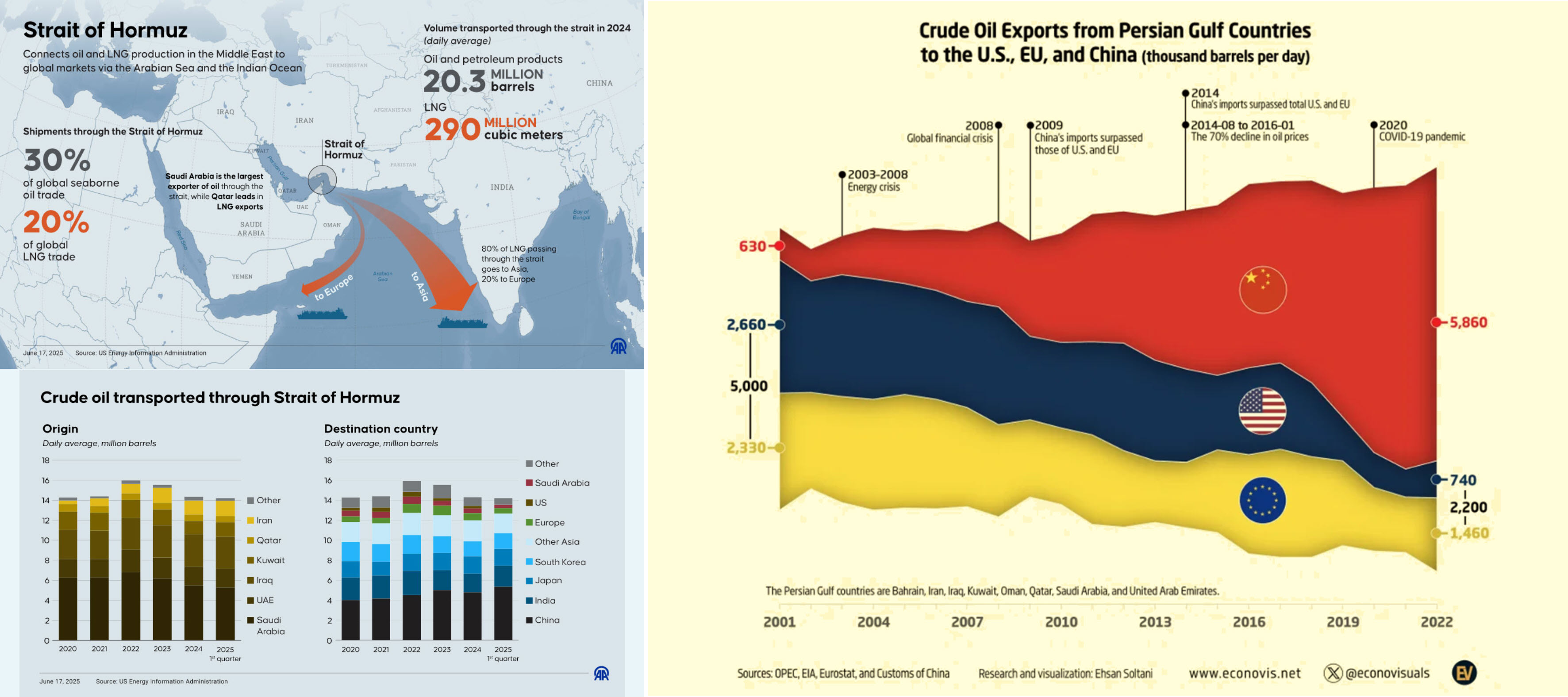
We are being told that a joint Anglo-French naval presence is the silver bullet for maritime security. This is a lie. What we are actually seeing is a desperate attempt to apply 19th-century solutions to a 21st-century asymmetric nightmare. If you think a few frigates and a press release can "protect" a chokepoint that handles 21% of the world's petroleum liquids, you haven't been paying attention to the math of modern warfare.
The Mathematical Certainty of Failure
Naval commanders love to talk about "deterrence." It’s a comfortable word that hides a terrifying imbalance of power.
Consider the cost-exchange ratio. A single Sea Viper missile, the primary air defense tool for the Royal Navy, costs roughly £1 million to £2 million per shot. The loitering munitions and "suicide" drones used by non-state actors and regional powers cost about $20,000 to $50,000.
You don't need a PhD in economics to see the problem. To "protect" shipping, a destroyer must be right 100% of the time. The aggressor only needs to be right once. By forcing the West to engage in a permanent escort mission, adversaries aren't trying to sink every ship; they are trying to bankrupt the defense budget. Every time the PM "hails" a reopening, he is actually celebrating the fact that we just spent $10 million to stop a $500 drone swarm. That isn't a victory. It’s a slow-motion collapse.
The Sovereignty Myth
The competitor’s narrative suggests that France and Britain are "stabilizing" the region. This ignores the most basic tenet of maritime law and regional ego.
When Western powers park warships in the backyard of a sovereign nation, they don't decrease tension. They create a target-rich environment. I have seen private security firms try to manage this same risk on a micro-scale in the Gulf of Aden. The moment you introduce "hard" protection, you escalate the stakes for the "soft" targets.
Insurance premiums don't drop because a destroyer is nearby. They drop when the geopolitical risk of the waterway itself is neutralized. By militarizing the Strait of Hormuz even further, we are ensuring that Lloyd’s of London keeps those War Risk premiums sky-high. The "good news" for the PM is actually bad news for the CFO of every shipping line operating in the Middle East.
Why Escorts Are Obsolete
Traditional naval escorts are built on the "Convoy Logic" of World War II. It worked when you were defending against U-boats that had to surface or fire unguided torpedoes. It doesn't work in a world of hypersonic anti-ship missiles and swarm intelligence.
The Strait of Hormuz is only 21 miles wide at its narrowest point. The shipping lanes are even narrower—roughly two miles wide in each direction.
In this geography, a warship is not a shield; it is a bottleneck. If a single VLCC (Very Large Crude Carrier) is hit and disabled in that lane, the entire global energy market stops. Not because the oil is gone, but because the insurance companies will pull coverage for every other vessel in the queue. No amount of Anglo-French "joint planning" can fix a physical blockage caused by a 300,000-ton deadweight hull sitting in the middle of the channel.
The Private Sector Secret
Here is the truth no one in the Ministry of Defence wants to admit: The most effective way to keep the Strait open isn't naval power. It's redundancy.
While politicians argue over who gets to fly the flag on the next patrol, the smart money is moving toward pipelines that bypass the Strait entirely. Saudi Arabia’s East-West Pipeline and the UAE’s Habshan-Fujairah line are the real "protectors" of shipping. They remove the incentive to attack the water because they remove the water's monopoly on transit.
If we actually wanted to secure the energy market, we wouldn't be spending billions on destroyer maintenance. We would be investing in regional infrastructure that makes the Strait irrelevant. But "We built a pipeline in another country" doesn't make for a very good photo-op for a Prime Minister looking for a quick poll boost.
The Invisible Cost of "Good News"
The PM’s "joint plan" with France is a diplomatic Band-Aid on a sucking chest wound.
- Readiness Depletion: Every day a Type 45 destroyer spends loitering in the Gulf is a day it isn't being refitted or patrolling the North Atlantic where actual peer-competitors are testing our lines.
- Fuel and Logistics: Moving a carrier strike group or even a small task force costs millions in fuel and support alone. This is money being burned to provide a false sense of security to a market that knows better.
- Personnel Burnout: We are asking a shrinking navy to do more with less. The "Good News" today leads to a recruitment and retention crisis tomorrow.
The Counter-Intuitive Reality
If you want to protect global shipping, you have to stop trying to protect it with guns.
The real solution is an ugly, messy, diplomatic slog that involves the very people the West is trying to "deter." Security in the Hormuz is an internal regional issue. External intervention acts like a catalyst in a chemical reaction; it speeds up the explosion.
We are told that the reopening of the Strait is a sign of Western strength. In reality, it’s a sign of our total dependency on a fragile 21-mile strip of water and our refusal to build an energy economy that doesn't rely on the goodwill of a few dozen naval officers.
Stop Applauding the Escorts
The next time you see a headline about a "joint plan" to secure a chokepoint, look at the price of oil. If it doesn't move, the market isn't buying the PM’s optimism. The market knows that one lucky hit from a $2,000 underwater IED makes the British Navy look like a relic of a bygone era.
We are protecting a 20th-century supply chain with 19th-century tactics, hoping our 21st-century enemies won't notice the math doesn't add up.
They’ve already noticed.
Pull the ships back. Build the pipelines. Stop pretending that a frigate is a substitute for a coherent foreign policy.