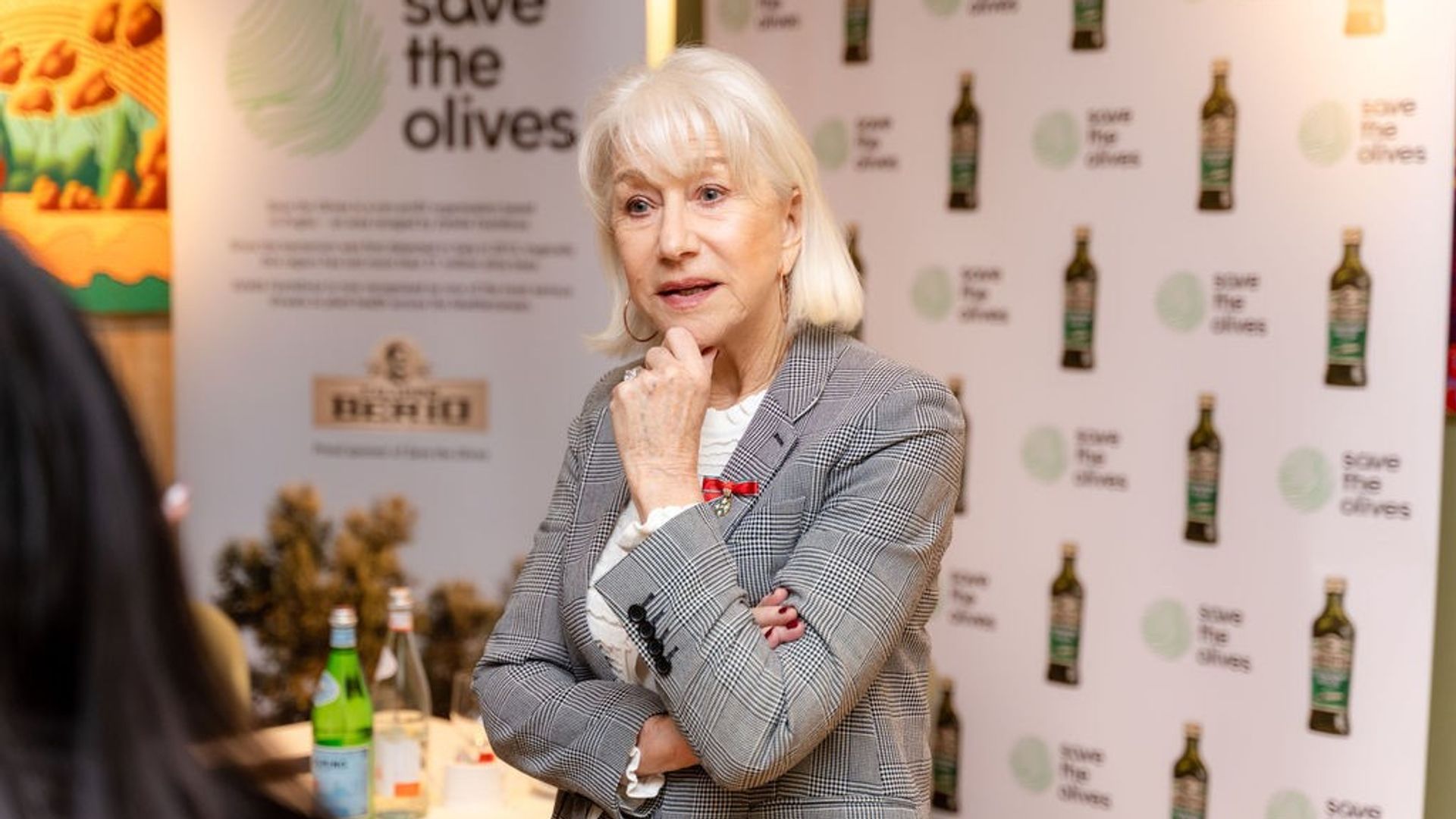
Dame Helen Mirren is kneeling in the dirt. She isn’t playing a queen or a detective today; she is just a woman with a spade, tending to a private patch of earth in the Italian countryside. To the casual observer, this is a charming celebrity anecdote about a legendary actress finding peace in her garden. To an economist, however, that garden is a microscopic battlefield. It is a quiet indicator of a global tremor that is currently shaking the loose change out of your pockets every time you walk through a grocery store checkout.
The connection between a Hollywood icon’s peonies and the rising cost of a loaf of bread isn't immediately obvious. It feels like a stretch. Yet, the same forces that dictate whether Mirren’s roses bloom or wither are the very same forces deciding if you can afford eggs this week.
The Invisible Ingredient in Your Cereal
Most of us view food prices through a simple lens: supply and demand. We assume that if there is a drought in the Midwest, corn prices go up. If there is a bird flu outbreak, eggs get expensive. This is true, but it is a surface-level truth. It ignores the silent, subterranean engine that powers the entire global food system.
Fertilizer.
It is a word that conjures images of heavy bags at a hardware store or the smell of a farm in mid-July. It isn't sexy. It isn't "disruptive." But it is the single most important physical commodity on the planet that you never think about. Without it, global crop yields would instantly drop by half. Billions would starve.
Helen Mirren recently spoke about her passion for gardening, specifically the importance of soil health and the delicate balance of nutrients required to keep her garden thriving. She isn't just "planting flowers"; she is engaging in the high-stakes management of nitrogen, phosphorus, and potassium. In her garden, a shortage of these elements means a few wilted petals. In the global market, a shortage means a geopolitical crisis.
[Image of the nitrogen cycle in agriculture]
The Gas Pressure Under the Soil
Consider a hypothetical farmer named Elias. He lives in a region where the soil was once rich but has been farmed for generations. To keep his yields high enough to pay his mortgage, Elias needs synthetic fertilizer. Specifically, he needs nitrogen-based fertilizer.
Creating this fertilizer is an incredibly energy-intensive process. It requires massive amounts of natural gas to pull nitrogen out of the air and turn it into something a plant can actually eat. Because of this, the price of food is actually a proxy for the price of energy. When natural gas prices spike—due to a war in Eastern Europe, a pipeline leak, or a sudden winter freeze—the cost of making fertilizer skyrockets.
Elias looks at his balance sheet and sees that the cost of nourishing his soil has tripled. He has two choices. He can buy less fertilizer, which means he will grow less food, leading to a global shortage. Or, he can buy the expensive fertilizer and pass that cost directly to the wholesaler, who passes it to the grocery store, who passes it to you.
When you see the price of a gallon of milk rise, you are often looking at the ghost of a natural gas price spike from six months ago, filtered through the dirt.
The Fragility of the Bloom
Helen Mirren’s garden represents the ideal: a closed loop where nature is respected and nurtured. But our global food system is not a garden. It is an industrial machine that is dangerously brittle.
We have spent the last fifty years optimizing for efficiency, not for resilience. We have created a world where the vast majority of our fertilizer comes from just a handful of places: Russia, China, and Canada. When one of those links snaps, the entire chain whips.
Imagine a spiderweb stretched across a doorway. It is an engineering marvel, strong enough to catch prey but light enough to be invisible. Now, imagine cutting just one anchor thread. The whole structure doesn't just sag; it loses its tension entirely. That is the current state of our food security. We are anchored to a few volatile regions for the very chemicals that keep our species fed.
This is why Mirren’s advocacy for "regenerative" gardening matters beyond the aesthetic. She is championing a return to soil health that doesn't rely on the heavy, expensive drip-feed of industrial chemicals. If we can learn to treat the earth like a living organism rather than a factory floor, we might find a way to decouple the price of dinner from the price of a barrel of oil.
The Human Cost of a Dollar
Statistics have a way of numbing the brain. We hear that "food inflation is at 7%" and we nod, perhaps feeling a slight pang of annoyance as we pay for our groceries. But look closer at the person behind you in line.
Maybe it’s an elderly woman who has to choose between her heart medication and a carton of blueberries. Maybe it’s a father who is quietly putting back the "name brand" cereal because the store brand is forty cents cheaper, and forty cents actually matters this month. These aren't just "consumers." They are people caught in the crossfire of a chemical and geopolitical war they didn't sign up for.
The stakes are invisible until they are agonizing.
We often talk about the "cost of living" as if it’s a static number. It isn't. It is a pulse. It fluctuates based on the health of the soil and the whims of dictators. When we ignore the connection between the dirt under a gardener's fingernails and the digital numbers on a bank statement, we lose our ability to solve the problem.
The Mirror in the Mud
There is a certain irony in the fact that a woman who has played queens and icons finds her greatest satisfaction in the mud. It is a grounding. It is a reminder that no matter how high we build our civilizations, no matter how fast our internet or how complex our algorithms, we are still entirely dependent on six inches of topsoil and the fact that it rains.
We have been living in a period of "cheap food" for decades. It was an anomaly of history, fueled by cheap energy and a stable climate. That era is closing. The "curious link" isn't just about Helen Mirren; it’s about a fundamental shift in how we value the planet.
If we continue to treat soil as a mere substrate for industrial chemicals, we will continue to be at the mercy of every global tremor. But if we look at the garden the way a gardener does—as a system that requires balance, patience, and a deep understanding of its limits—we might find a way to stabilize the world.
The next time you see a headline about food prices, don't think about the stock market. Think about the dirt. Think about the energy required to make a seed wake up. Think about the fact that we are all, every one of us, just a few failed harvests away from a very different kind of life.
Mirren knows that a garden is a commitment. It is a promise made to the future. Our food system needs to make that same promise, or we will all find ourselves staring at a barren patch of earth, wondering when the prices will finally come down, unaware that the answer was beneath our feet the whole time.
The spade hits the earth. The price of a loaf of bread shifts. The world turns, hungry and hopeful, waiting for the next bloom.