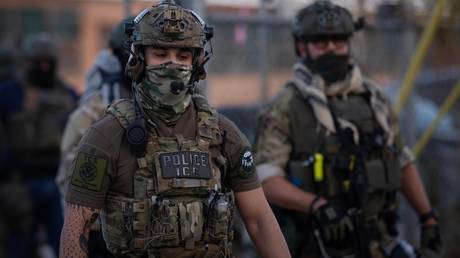
U.S. Immigration and Customs Enforcement (ICE) is currently paying millions to a private contractor with a history so dark it sounds like a plot from a political thriller. The firm is MVM Inc., and they've been hired to track down unaccompanied immigrant children. It’s a move that raises massive red flags about ethics, oversight, and exactly what kind of "security" we’re buying with taxpayer dollars.
Let’s be clear about the stakes here. These aren’t just files or data points. We’re talking about vulnerable children who have crossed the border alone, often fleeing violence. When the government hands the responsibility of locating them to a company previously accused of involvement in overseas torture, it’s not just a logistical choice. It’s a moral statement.
The public deserves to know why a firm with this specific track record is getting a seat at the table. It’s not just about one bad contract. It’s about a systemic reliance on private entities that operate with far less transparency than public agencies.
The troubling history of MVM Inc.
MVM Inc. isn't a newcomer to the world of government contracting. They’ve been around for decades, providing everything from private security to intelligence support. However, their resume contains some truly disturbing entries.
Years ago, the company was linked to activities at the CIA’s "black sites" during the war on terror. Specifically, allegations surfaced regarding their involvement in the rendition and interrogation programs—programs that the world now knows involved systemic torture. They weren't just the guys guarding the door; they were integral to the machinery of secret detention.
You’d think a history like that would make a company radioactive. In the world of high-stakes federal contracting, it seems the opposite is true. Experience in "high-threat environments" is often seen as a plus by agencies like ICE, even when that experience includes some of the worst human rights abuses of the 21st century.
Moving from war zones to the border
It’s a jarring shift. A company that once operated in the shadows of global conflict is now tasked with managing child welfare and tracking minors within the United States. This "mission creep" is a common theme in the private security industry. When the wars in the Middle East started winding down, these firms didn't just close up shop. They looked for new markets.
The U.S. border became that market.
ICE has increasingly relied on MVM for "transportation and logistics" regarding unaccompanied minors. That sounds clinical. It sounds like they’re just driving buses. In reality, the scope of these contracts often includes holding children in unlicensed office buildings and tracking them once they've been released to sponsors.
The problem with private tracking
When a government agency tracks a person, there are (theoretically) layers of legal accountability. When a private firm does it, those layers get thin. MVM’s role in "tracking" immigrant children often involves sophisticated data monitoring and physical surveillance.
The fear isn't just about the past; it’s about the culture of the company. If a firm’s DNA is rooted in interrogation and high-security detention, can they really be expected to prioritize the "best interests of the child"? Probably not. Their priority is fulfilling the contract and keeping the client—ICE—happy.
Critics argue that this creates a "surveillance state" specifically for migrants. We’re seeing a hand-off of sensitive, life-altering tasks to a for-profit entity that has every incentive to expand its reach and very little incentive to protect the civil liberties of the people it tracks.
Follow the money
The numbers are staggering. We aren't talking about a few thousand dollars for a one-off job. MVM has secured contracts worth hundreds of millions. In some fiscal years, the payouts from ICE and the Department of Health and Human Services (HHS) have skyrocketed as the number of arrivals at the border increased.
This creates a perverse incentive. The more "crisis" there is at the border, the more money these firms make. Peace and streamlined legal processing are bad for the bottom line. Conflict and "emergency" measures are where the profit lives.
If you look at the federal procurement records, you'll see a steady stream of "sole-source" or "urgent" contracts. These are often granted without the usual competitive bidding process because the government claims there’s an immediate need. It’s a perfect loophole for firms with checkered pasts to slide back into the government's good graces.
Where is the oversight
The most frustrating part of this situation is the lack of a clear paper trail for the public. Private contractors are notoriously difficult to monitor. Freedom of Information Act (FOIA) requests often come back heavily redacted, with companies claiming that their "proprietary methods" are trade secrets.
Even when internal whistleblowers speak up, change is slow. We’ve seen reports of children being held in MVM-managed facilities that lacked proper bedding or food. We’ve heard stories of kids being kept in office buildings overnight, which is a direct violation of standard operating procedures. Yet, the contracts keep getting renewed.
It seems the government has decided that as long as the problem is "handled" and off the front pages, the methods don't matter as much as they should.
The human cost of a "security-first" approach
When we treat immigration exclusively as a security threat, we end up with security solutions. That’s how you get torture-linked firms tracking children. If we viewed this as a humanitarian challenge, the "contractors" we’d hire would be social workers, pediatricians, and child advocates.
Instead, we have MVM.
The psychological impact on these children can't be overstated. Imagine fleeing a traumatic situation in your home country, only to be monitored and transported by a firm that specializes in "tactical solutions." It’s an environment of intimidation, even if no physical harm is being done in that specific moment.
Breaking the cycle of private detention
It’s easy to feel like this is just the way things are. It’s not. The reliance on private contractors is a policy choice, not a necessity. Other countries handle migration without outsourcing their conscience to the highest bidder.
To change this, there needs to be a fundamental shift in how ICE and HHS are funded. The "emergency" branding of border arrivals needs to stop being an excuse to bypass ethics. We need strict prohibitions on hiring firms with documented human rights abuses, regardless of how "efficient" they claim to be.
If you’re concerned about where your tax dollars go, start looking into the subcontractors. The big names like ICE get the headlines, but firms like MVM do the legwork in the shadows.
Demand transparency from your representatives. Ask why companies with ties to the darkest chapters of the war on terror are now in charge of the most vulnerable people in our borders. Support organizations that provide legal counsel to these children, as they're often the only ones standing between a child and a "logistics" firm. Check out the work being done by the American Civil Liberties Union (ACLU) or the National Immigrant Justice Center. They’re the ones actually filing the lawsuits to bring this data to light. Don't let the clinical language of "logistics" and "transportation" hide the reality of what’s happening on the ground. It’s time to stop treating children like cargo and start treating the companies that track them like the liabilities they are.