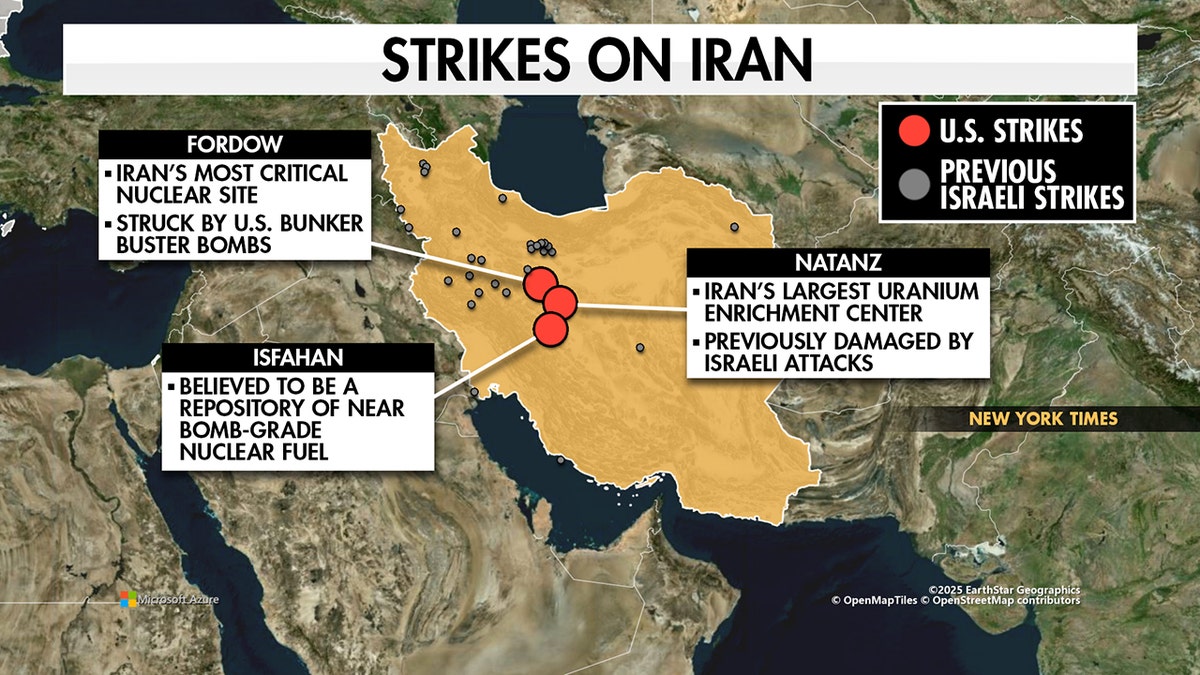
The Iranian presidency is currently a masterclass in the art of the hollow apology. On March 7, 2024, President Masoud Pezeshkian stood before cameras to offer an unprecedented "personal apology" to Gulf neighbors for a week of relentless missile and drone barrages. He claimed the country’s Interim Leadership Council—the triumvirate currently holding the keys since the assassination of Supreme Leader Ali Khamenei—had ordered a halt to strikes on neighboring soil. Within hours, Dubai International Airport was rocked by explosions, and fires gutted residential blocks in Manama. By Sunday, Pezeshkian was back on state television, pivoting with the desperation of a man realized to be talking to a void. He didn't retract the sentiment; he simply claimed the "enemy" had misinterpreted him to sow discord.
The reality is far more clinical. Pezeshkian is not being misinterpreted; he is being ignored. The disconnect between the presidency and the Islamic Revolutionary Guard Corps (IRGC) has transitioned from a structural tension to an open, violent schism. For decades, the West viewed Iranian "moderates" as a diplomatic pressure valve. Today, that valve has been ripped off. Pezeshkian’s attempt to de-escalate is a survival tactic for a state facing an existential "Operation Epic Fury" from Washington and Jerusalem, but for the hardline clerics and IRGC commanders currently vetting Khamenei’s successor, any olive branch is viewed as a signature on a surrender document.
A Commander in Chief Without a Command
The Iranian constitution technically grants the head of the Provisional Leadership Council—currently Pezeshkian—the powers of the Supreme Leader, including the role of Commander-in-Chief. In practice, the IRGC has spent the last eight days operating under a "fire at will" doctrine that bypasses the executive entirely. When Pezeshkian apologized for these "fire at will" strikes, he wasn't just being polite; he was admitting he had lost the leash.
The internal backlash was immediate and vitriolic. Hardline lawmakers like Mohammad Manan Raeisi labeled the apology "humiliating," suggesting the Assembly of Experts should skip the formalities and install a permanent, iron-fisted leader immediately to end the "weakness." This isn't just political theater. It is a signal to the military rank-and-file that the President’s orders are suggestions at best and treason at worst.
The Strategy of Forced Retaliation
Tehran’s current military strategy relies on the "martyred imam" doctrine—a reference to the late Khamenei—which dictates that the survival of the revolution depends on regional chaos. By striking the UAE, Saudi Arabia, and Qatar, the IRGC aims to force these nations to deny the U.S. use of their airspace and bases. Pezeshkian knows this is a failing hand. Every drone that hits a civilian tower in Dubai brings a fresh wave of B-52s over Tehran.
The "misinterpretation" Pezeshkian cited on Sunday is a linguistic shield. By framing the fallout as an "enemy plot," he attempts to satisfy two irreconcilable audiences. To the international community, he signals that there is still a "rational" actor in Tehran worth talking to. To the IRGC and the Assembly of Experts, he signals that he hasn't actually abandoned the fight, merely that his words were twisted by "Zionist media."
It is a thin performance. Donald Trump’s administration has already dismissed the nuance, with the U.S. President labeling the apology a sign that Iran is "being beaten to hell" and has effectively surrendered. This interpretation by Washington makes Pezeshkian’s position even more precarious at home, as it validates the hardline argument that diplomacy only invites further aggression.
The 24 Hour Succession Crisis
While the President manages the optics, the real power move is happening behind closed doors. The Assembly of Experts is reportedly set to finalize a new Supreme Leader within 24 hours. This race is the true catalyst for the current "misinterpretations."
- The Mojtaba Factor: Reports suggest the IRGC is throwing its full weight behind Mojtaba Khamenei, the late leader's son. A Mojtaba ascension would effectively turn the Iranian presidency into a clerical clerk's office, permanently cementing IRGC control over foreign policy.
- The Larijani Shadow: Ali Larijani, now heading the Supreme National Security Council, represents a "middle path" that the IRGC finds increasingly distasteful. His silence during Pezeshkian’s apology suggests he is waiting to see who survives the coming week of strikes.
- The Street: Anti-regime slogans like "No Gaza, No Lebanon, I will sacrifice my life for Iran" have returned to the streets of Tehran and Isfahan. The public sees the apology and the subsequent missile launches for what they are: a regime that has lost its internal compass.
The Death of the Moderate Buffer
The world is witnessing the end of the "two-track" Iranian state. For forty years, the Islamic Republic functioned by having a hardline core shielded by a more diplomatic executive branch. This allowed for negotiations like the JCPOA while the IRGC built its "Ring of Fire" across the Middle East. With the core now shattered by the loss of Khamenei and the executive branch openly contradicted by the military, that duality has collapsed.
Pezeshkian’s "clarification" on state TV was an attempt to stop a coup that has already happened in all but name. When the President says his peace offering was misinterpreted, he is acknowledging that the missiles launched at his neighbors carry more weight than the words spoken from his office. In a wartime Tehran, the man who controls the silo wins the argument. The man who offers the apology is simply a target for both sides.
Watch the skies over the Persian Gulf. If the drones continue to fly tonight, it will confirm that Pezeshkian is no longer the President of a functioning government, but the spokesperson for a fractured junta.
Ask yourself if a leader who cannot control his own batteries can ever truly negotiate a ceasefire.