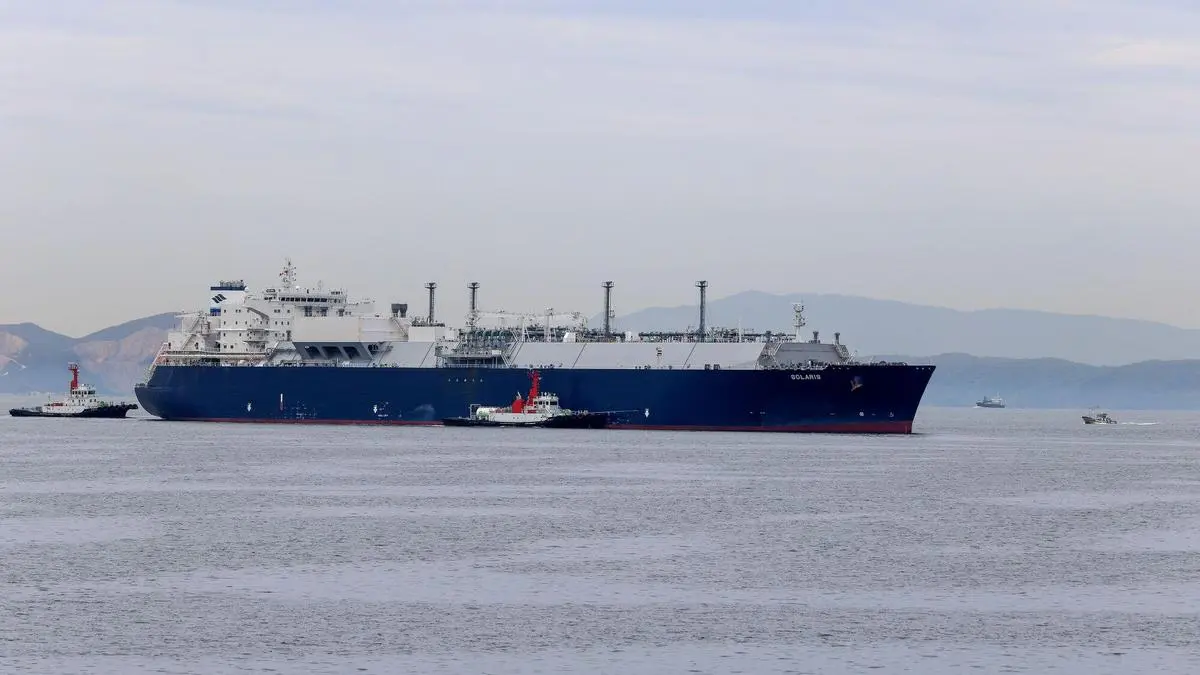
A quiet, desperate game of maritime hide-and-seek is unfolding in the Persian Gulf. The reappearance of the ADNOC-managed liquefied natural gas carrier, Umm Al Ashtan, northwest of Muscat, Oman, carrying a fully loaded cargo bound for India, does not signal a return to geopolitical normalcy. Instead, it underscores the terrifying precarity of global energy infrastructure. The 136,357-cubic-meter vessel went dark on May 2, 2026, vanishing from the Automatic Identification System tracking screens near the eastern entrance of the Strait of Hormuz. Satellite imagery later revealed it had slipped past the de facto blockade enforced by the ongoing Iran war to load at Abu Dhabi National Oil Co.’s Das Island facility before emerging back into the light.
This is the fourth time since the war erupted in late February 2026 that an ADNOC vessel has completed this high-stakes, blacked-out transit to keep fuel flowing to western India. Mainstream coverage has treated these isolated successful voyages as signs of a thawing chokepoint or emerging resilience. That interpretation is a dangerous misreading of the reality on the water.
Before the conflict, approximately three massive LNG carriers steamed out of the 21-mile-wide strait every single day, predominantly carrying fuel from Qatar’s massive Ras Laffan complex. Today, the normal traffic pattern has completely evaporated. Four successful "dark" voyages across three months do not represent a resumption of trade. They are a drop of water in an industrial desert. What we are witnessing is not a solution, but a highly volatile, unsustainable workaround that exposes the deep structural vulnerabilities of the global energy supply chain.
The Anatomy of a Dark Transit
To understand why these runs are not a blueprint for sustainable commerce, one must understand how a 100,000-ton steel thermos flask carrying gas super-chilled to minus 162 degrees Celsius operates in a war zone. When a captain flips the switch on the Automatic Identification System, the vessel ceases to exist to civilian tracking networks. It becomes a ghost.
+-------------------------------------------------------+
|        THE HORMUZ LNG TRANSIT GAP (MAY 2026)          |
+-------------------------------------------------------+
| Pre-Conflict Baseline: ~3 Tankers Per Day             |
| Current Status: Near-Zero Standard Transits           |
| Total ADNOC Dark Transits: 4 Vessels Total Since Feb   |
+-------------------------------------------------------+
Turning off transponders does not hide a massive commercial vessel from military-grade radar, thermal imaging, or satellite surveillance. It merely strips away the vessel’s identity, reducing the risk of being targeted by automated drone strikes or sea mines programmed to look for specific transponder signatures. The crew sails through a landscape of hyper-vigilance, knowing that any unexpected silhouette on the horizon could be a hostile actor.
Commercial insurers have responded to this environment by driving premium rates into the stratosphere, or outright withdrawing coverage for vessels entering the Persian Gulf. For a state-backed entity like ADNOC Logistics & Services, the financial burden can be absorbed under national strategic imperatives. For the broader merchant fleet, the math simply does not work. The financial risk of losing a multi-million-dollar hull and a cargo worth tens of millions more outweighs any potential profit margin.
India's Mismatched Infrastructure Asset Trap
The immediate destination for these stealth cargoes is the western coast of India, a region currently grappling with a severe domestic fuel crunch. For decades, Indian energy planners engineered their importing architecture around a single, rational thesis: proximity to the Persian Gulf equals cheap, reliable energy.
This geographic convenience has transformed into a structural liability. India’s premier regasification terminals are concentrated on its western coast, built specifically to receive short-haul shuttles from Qatar and the United Arab Emirates. Last year, more than half of India’s total LNG imports arrived via this route. Since late February, those regular contract deliveries have effectively frozen.
The consequences have rippled through the Indian economy. Deprived of stable, long-term contract gas from the Gulf, New Delhi has been forced to hunt for replacement volumes on the wildly expensive international spot market. Industrial consumers—fertilizer plants, power generators, and heavy manufacturing clusters—have faced enforced supply curbs and soaring input costs.
+---------------------------------------------------------+
|           INDIA'S STRATEGIC DILEMMA                     |
+---------------------------------------------------------+
| Structural Asset: Western terminals built for Gulf gas. |
| Vulnerability: Zero pipeline elasticity from East/West. |
| Financial Hit: Forced reliance on volatile spot prices. |
+---------------------------------------------------------+
The fundamental problem is that you cannot re-route an ocean of gas overnight. While alternative supplies exist in the United States, West Africa, and Australia, sending a vessel from the US Gulf Coast to India takes weeks longer than a quick run across the Arabian Sea. The extended voyage times lock up global shipping capacity, driving up charter rates and further inflating the ultimate price paid by the end consumer. India's infrastructure is built for a short-haul pipeline-on-water that has ceased to exist.
The Mirage of Qatari Redirection
The biggest blind spot in current market analysis is the assumption that Qatar, the world’s heavy hitter in LNG exports, can simply follow the UAE's lead and run its fleet dark through Hormuz. This ignores the vast difference in operational scale and geographic reality between the two producers.
ADNOC's Das Island plant is positioned just inside the mouth of the Persian Gulf. Its vessels have a relatively short, direct run to clear the strait and reach the deep waters of the Arabian Sea. Qatar's Ras Laffan infrastructure sits much deeper within the Gulf. For Qatar to maintain its pre-war export volumes via dark transits, it would require dozens of massive carriers to navigate hundreds of miles of highly contested waters completely blind every single week.
The logistical complexity of managing a dark fleet of that size without an catastrophic collision or an interceptive incident is practically impossible. Qatar cannot simply turn off the lights on its export apparatus. Consequently, the vast majority of Qatari production remains effectively bottlenecked behind the chokepoint, forcing global markets to search for alternative supply cushions that do not exist.
The Long-Term Premium on Geopolitical Risk
Every dark transit that successfully reaches a terminal in Gujarat or Maharashtra provides a temporary reprieve, but it also alters the long-term pricing of global energy. The market is currently pricing in a structural risk premium that will persist long after the current shooting war in Iran concludes.
Energy majors are realizing that the old rules of maritime security are obsolete. The assumption that state actors would always preserve the freedom of navigation in international straits to protect their own economic interests has been shattered. The de facto blockade of Hormuz has proven that modern asymmetric warfare can shut down global trade routes with terrifying ease.
For international buyers, the strategic takeaway is clear: diversification must prioritize geographic independence over raw economic efficiency. Relying on the cheapest, closest supplier is a liability if that supplier’s export pipeline passes through a twenty-mile bottleneck controlled by warring factions.
The voyage of the Umm Al Ashtan is a remarkable feat of tactical seamanship and corporate determination. But do not mistake a desperate, high-risk smuggling run by a state energy giant for the resurrection of a global trade corridor. The Strait of Hormuz remains broken, and the global energy market is running out of time to adapt to the permanent shadow cast across the Gulf.