Politics is rarely a game of logic. It is a theater of performance, and lately, the acting has become desperate.
Picture a hushed room in the Capitol, where the air feels heavy with the scent of old wood and the electric hum of cameras waiting for a slip-up. Senator Lindsey Graham stands before the microphones, his expression fixed in the intense, unwavering mask of a man who believes he has just solved a puzzle no one else can see. He leans in. He utters the word: "Checkmate."
In the world of chess, checkmate is final. It is the end of the line, the moment where the king has nowhere to run and the struggle ceases. But in the messy, loud, and often absurd arena of modern American governance, the word has lost its teeth. It has become a rhetorical security blanket.
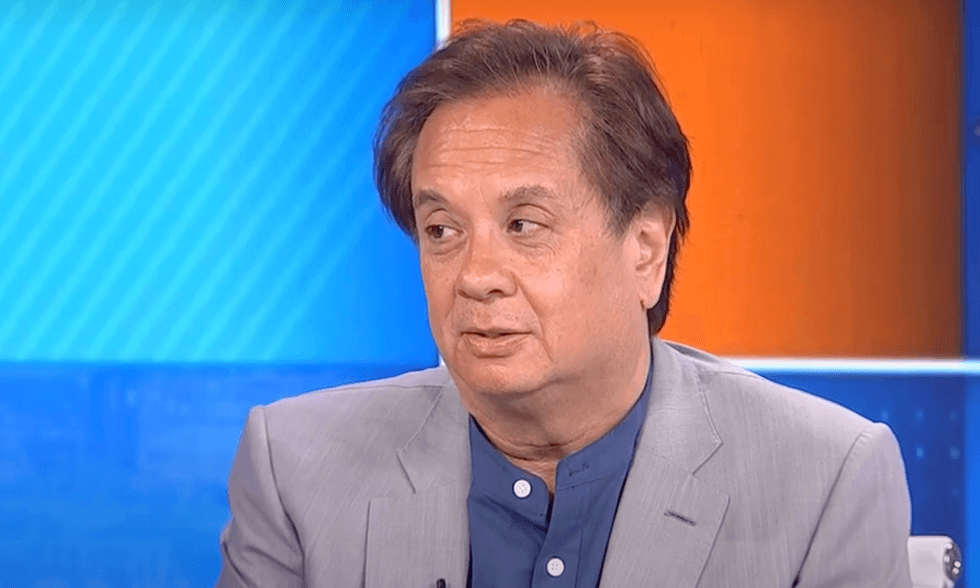
George Conway, a man who has made a second career out of pointing at the emperor’s lack of wardrobe, didn't just disagree. He laughed. It wasn't a cruel laugh, but rather the weary chuckle of someone watching a person try to win a marathon by running in the wrong direction. The disconnect between the reality of the GOP’s current standing and the bravado of its leadership has created a surreal gap in our public discourse. We are witnessing a clash between the cold mechanics of law and the feverish dreams of political survival.
The Mechanics of a False Victory
When Graham declared checkmate regarding the various legal and legislative hurdles facing his party, he wasn't speaking to the historians. He was speaking to the base. He was trying to project an image of a strategist three steps ahead of the opposition. Yet, the facts on the ground tell a story of a party entangled in its own contradictions.
The "checkmate" in question usually refers to the idea that the Republican party has successfully cornered their opponents through procedural maneuvers or the appointment of sympathetic judges. But law is not a static board. It moves. It breathes. It reacts to the pressures of a changing society. To claim total victory in a system designed for constant friction is to fundamentally misunderstand how democracy functions.
Conway’s mockery stems from a very specific place: the courtroom. In a court of law, you cannot simply declare you have won because you feel like it. You need evidence. You need a coherent argument. You need to withstand the scrutiny of a cross-examination. Graham’s rhetoric bypasses all of that. It is the political equivalent of shouting "Bingo!" when your card is still half-empty.
The Human Cost of Hyperbole
Why does this matter to someone sitting at home, miles away from the DC beltway? Because words have consequences. When leaders use the language of finality and war to describe every minor legislative skirmish, it exhausts the public.
Consider a hypothetical voter named Sarah. Sarah is trying to figure out how the latest tax changes or healthcare debates will affect her daughter’s education. She turns on the news and hears a senator shouting about checkmate and total victory. She doesn't see a solution to her problems. She sees a game. She sees men in expensive suits treating her life like a hobby.
This rhetorical escalation turns neighbors into enemies. If every move is "checkmate," then every compromise is "treason." The GOP’s reliance on these high-stakes metaphors has boxed them into a corner where they can never admit defeat, never pivot, and never truly govern. They are stuck playing a game of chess against a ghost, while the real world waits for them to do something productive.
The Mirror of George Conway
George Conway occupies a strange space in our collective consciousness. He is the insider who stepped outside. His critiques carry weight because he knows the language of the rooms Graham frequents. He knows the legal precedents. He knows exactly how flimsy a "checkmate" declaration is when the king is still very much in play.
His reaction to Graham is a reminder that we don't have to accept the performance. We are allowed to look at a politician’s "grand strategy" and see it for what it often is: a frantic attempt to stay relevant in a news cycle that moves at the speed of light. Conway acts as a mirror, reflecting the absurdity of the GOP’s self-congratulatory loops back at them.
The mockery isn't just about partisan bickering. It’s about the preservation of reality. When Graham claims victory in the face of mounting legal challenges and internal party fractures, he is attempting to rewrite the truth in real-time. Conway’s job, and perhaps ours, is to refuse to read the new script.
The Strategy of Distraction
There is a specific kind of magic trick being performed here. By focusing on the "win," the GOP avoids discussing the "what." What is the actual plan? What is the vision for the future that doesn't involve merely defeating an opponent?
The GOP’s current trajectory feels less like a grand master’s opening and more like a player who has lost most of their pieces and is now throwing the board across the room. They are lashing out at the systems they once championed—the courts, the FBI, the democratic process itself—because those systems are no longer delivering the results they desire.
Checkmate is a word used by someone who has run out of moves.
In Graham’s mouth, it sounds like a plea. He wants the struggle to be over. He wants to be able to tell his supporters that the war is won and they can finally rest. But the reality is that the board is more crowded than ever. New voices are entering the fray. New legal challenges are appearing on the horizon like storm clouds. The "checkmate" he announced is nothing more than a temporary ceasefire in a conflict that shows no signs of ending.
The Weight of the Gavel
We must look at the actual stakes. Behind the "checkmate" lies a series of very real legal battles that will define the boundaries of executive power and political accountability for a generation. These aren't just points on a scoreboard. They are the foundations of the Republic.
When we treat these moments as mere fodder for late-night talk shows or Twitter spats, we lose sight of the gravity. Conway mocks because the alternative is to cry. He sees the erosion of the legal standards he spent a lifetime studying, and he sees it being replaced by a kind of playground bravado.
The GOP is currently a party defined by its relationship to one man and his legal troubles. Every move they make is filtered through that lens. To call that "checkmate" is a dizzying bit of cognitive dissonance. It is a defense mechanism. If they admit the game is still going, they have to admit they might lose. And in the current political climate, losing isn't just a part of the process—it’s an existential threat.
The Sound of Silence After the Shout
After the cameras turn off and the "checkmate" headline fades, what remains?
A pile of unresolved issues. A divided electorate. A legal system under immense strain.
The GOP’s insistence on declaring victory where none exists has created a vacuum of leadership. You cannot lead if you are perpetually claiming you have already won. Leadership requires an acknowledgement of the work still to be done. It requires the humility to see the board as it is, not as you wish it to be.
The mockery from the likes of Conway will continue as long as the rhetoric remains this detached from the truth. It is a necessary friction. Without it, the "checkmate" narrative becomes the only story in the room. We need the people who are willing to point out that the game is nowhere near over.
We are living in an era of the "un-victory." It is a time where politicians claim the highest ground while standing in a ditch. They use the biggest words to describe the smallest gains. They shout "checkmate" while their own king is being chased across the board.
The image that lingers isn't one of a triumphant Senator Graham. It’s the image of a man standing alone on a stage, declaring an end to a story that is only just beginning its most difficult chapter. The pieces are still moving. The clock is still ticking. And the world is watching, waiting for a move that actually matters.