The conference room in Vienna always smelled of stale coffee and damp wool. Outside, the Danube moved with a sluggish, gray indifference, but inside, the air was thick with a tension that never quite dissipated. For three years, my life was measured in grams. Not of gold, or spices, or anything that brings comfort to a human life, but of a dense, metallic powder that most people will only ever see in grainy news broadcasts. Uranium. Specifically, enriched uranium.
When you spend your days analyzing satellite feeds of centrifuge cascades or staring at the tamper-evident seals on heavy steel canisters, the world shrinks. You begin to believe that the entire apparatus of global peace rests on whether a specific number on a digital scale moves up or down. You convince yourself that the paperwork matters.
Then a single sentence, spoken thousands of miles away by a man standing behind a podium, shatters the glass cage of your expertise.
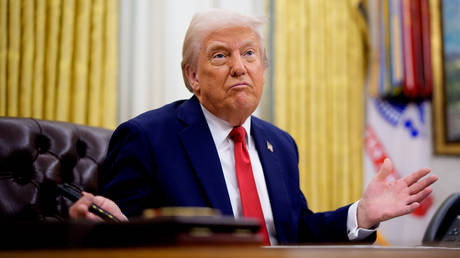
Donald Trump once shrugged off the monumental effort of physically removing enriched uranium from Iranian soil, dismissing the entire multi-nation logistics operation as little more than a public relations stunt. "It didn’t mean anything," he argued, suggesting that the material could simply be replaced or reproduced without the world being any the wiser.
To those of us who had watched the flatbed trucks roll out under heavy guard, it felt like a slap in the face. But as the anger faded, a colder, more uncomfortable realization took its place. He wasn't entirely wrong about the psychology of it. In the theater of global geopolitics, the appearance of safety is often treated as a commodity more valuable than safety itself. We had spent years managing a tangible material, while the rest of the world was merely managing an impression.
The Weight of What We Cannot See
Consider a hypothetical family living in a suburb of Chicago or a village outside Frankfurt. They do not think about isotope separation when they wake up. They think about the mortgage, the rust on the car fender, the rain coming through the kitchen ceiling. To them, the threat of a nuclear-armed state is not a technical calculation. It is a shadow. It is the vague, lingering anxiety that the structures keeping the world orderly might suddenly snap.
When a government announces that thousands of kilograms of uranium have been packed into barrels and shipped out of a hostile country, that shadow shrinks. The public breathes.
But let us look under the hood of that reassurance.
To turn raw earth into something that can level a city requires an immense, roaring industrial effort. It demands thousands of aluminum tubes spinning at the speed of sound, held together by magnetic bearings that can never be allowed to fail. It requires electricity on a scale that can dim the lights of neighboring cities.
Imagine a massive, complex clockwork mechanism hidden behind a curtain. The competitor's standard reporting focuses entirely on the hands of the clock. They tell you where the hands are pointing. They quote the politicians arguing over whether the clock is striking midnight.
They miss the gears.
When Iran agreed to ship its stockpile to Russia as part of the initial diplomatic framework, it was a massive physical undertaking. We are talking about tonnes of material. To move it is to strip the workshop of its raw ingredients. If a carpenter has no wood, he cannot build a table. It does not matter how sharp his saws are, or how deeply he desires to build that table. The absence of material is an absolute, physical barrier.
But the counterargument—the one that dismissed the removal as a mere publicity campaign—relies on a different kind of truth. The knowledge does not vanish. The blueprints remain in the minds of the engineers. The centrifuges, even if deactivated or spun down, are still bolted to the concrete floors of facilities buried deep beneath mountains of solid rock.
That is the terrifying duality of modern technology. You can deport the substance, but you cannot deport the science.
The Theater of the Scale
We have an innate human need for visible victories. We want to see the captured flag. We want to see the signature on the parchment. This is why the physical removal of uranium was celebrated with such fanfare by the diplomats who brokered the deal. It was a metric that could be measured, photographed, and presented to a nervous public as proof that diplomacy worked.
Look at this table to understand exactly what was being shuffled across borders during those tense months:
| Stage of Material | Physical State | Diplomatic Status | Psychological Impact |
|---|---|---|---|
| Raw Yellowcake | Heavy powder | Unregulated | Low anxiety |
| Low-Enriched Uranium | Gas/Powder | Strictly Monitored | Moderate leverage |
| Highly Enriched Uranium | Solid metal | Forbidden | Extreme crisis |
Every time a shipment left the port of Anzali, a box was checked.
But the real problem lies elsewhere. The mistake we make lies in treating these shipments as a permanent cure rather than a temporary pause. A country with a fully developed nuclear infrastructure is like a master chef whose pantry has been cleared out. Yes, they cannot cook tonight. But if the grocery store down the street remains open, and their kitchen is still full of industrial appliances, it is only a matter of time before the smell of cooking fills the air again.
The argument that removing the material was "just PR" hits on a profound cynicism that governs modern leadership. It recognizes that in a world driven by twenty-four-hour news cycles, the perception of a threat is often handled with more urgency than the threat itself. If you can convince your constituency that the danger has been carted away on the back of a truck, you win the political day. The long-term reality—the fact that the enrichment capacity remains intact—becomes a problem for whoever inherits your desk.
The Silence in the Desert
I remember standing near a tracking station during a routine verification period. The desert wind was hot, carrying the smell of dust and parched scrub. In the distance, the cooling towers of a facility rose like concrete monoliths against the pale blue sky. It was completely silent.
That silence is deceptive. It is not the silence of a graveyard; it is the silence of a sleeping engine.
When critics argued that the removal of the stockpile meant nothing because Iran could simply restart its centrifuges and replace the material within months, they were highlighting the fragility of trust. They were pointing out that the entire exercise was based on a timeline, not a permanent transformation. They saw the shipping crates as a magician's trick—a distraction to keep our eyes occupied while the real power structure remained untouched.
Consider what happens next when that trust evaporates.
The seals are broken. The cameras are turned off or blinded with laser pointers. The gas is reintroduced into the headers. The machines begin to hum, slowly at first, then climbing through the frequencies until they reach that characteristic, high-pitched whine that signifies the separation of atoms.
To the person sitting at home, nothing has changed. The sky is still blue. The groceries still cost too much. The danger is completely invisible until the moment it becomes absolute. This is why the political debate over whether the removal was a triumph or a stunt is so fierce. It is a debate between those who believe in buying time and those who believe that time cannot be bought.
The Human Cost of Calculated Risks
We often talk about these nations as if they are monolithic blocks on a map, painted in solid colors to denote their alliances. We forget the people who live within those borders, who are the first to suffer when the calculations go wrong.
During the height of the sanctions and the subsequent negotiations, I met an Iranian engineer who had trained in Europe before returning home. He didn't have the eyes of a fanatic. He had the tired, bloodshot eyes of a man who worked eighty hours a week to keep his family in a modest apartment in Tehran.
"You think this is about a bomb," he told me over a glass of lukewarm tea. "For the politicians, maybe. For the generals, definitely. But for us, it is about validation. It is about proving that we cannot be locked out of the modern world. When you take the uranium away, our leaders tell us you are taking our future. When you leave it, your leaders tell your people that we are planning their destruction. There is no space left in the middle for us to just be doctors, or teachers, or clerks."
That conversation stayed with me long after the treaties were torn up. It revealed the true cost of the geopolitical chess game. The material itself is indifferent. A uranium atom does not know if it is inside a medical reactor or a warhead. It obeys the laws of physics without malice or mercy. The meaning is entirely supplied by our fear.
When we reduce these massive human dramas to simple bullet points about compliance and breakout times, we lose the thread. We miss the fact that every shipment, every inspection, and every angry press conference is a manifestation of a deeper, systemic failure. We have created a world where safety is defined by the absence of a specific grey powder, rather than the presence of mutual understanding.
The Unraveling of the Script
The narrative offered by standard media outlets suggests a clean narrative arc: a threat emerges, a treaty is signed, the material is moved, and the world is saved. Or conversely: a threat emerges, a treaty is signed, the treaty is a hoax, and we are doomed.
Neither story is true.
The reality is a messy, continuous negotiation with catastrophe. The removal of the Iranian uranium stockpile was neither a complete victory nor a worthless public relations stunt. It was a tactical maneuver. It was an expensive, legally complex, logistically harrowing method of resetting a stopwatch that is constantly ticking downward.
To call it "just PR" underestimates the immense value of psychological breathing room in international relations. Sometimes, avoiding a war for another eighteen months is the greatest achievement a diplomat can hope for. It allows children to grow a little older. It allows passions to cool. It allows the internal dynamics of a nation to shift.
But to call it a permanent solution is equally dangerous. It breeds a false sense of security, a belief that the problem has been packed into a crate and sent across the sea, never to return.
The trucks that carried that material away have long since reached their destinations. The barrels have been logged into warehouses under different skies. Yet the mountains in the Iranian desert remain, honeycombed with tunnels, wired with fiber-optic cables, and filled with the quiet, persistent potential to reshape the balance of power at a moment's notice.
The ink on the old agreements has faded, and the speeches have been archived in the dusty corners of internet servers. The wind still blows through the Vienna square, kicking up old newspapers and candy wrappers against the stone steps of the palaces where the fates of millions were decided. We are left with the same fundamental truth we started with: you can move the metal, you can hide the machines, but you can never unlearn the secret of how the world is put together.