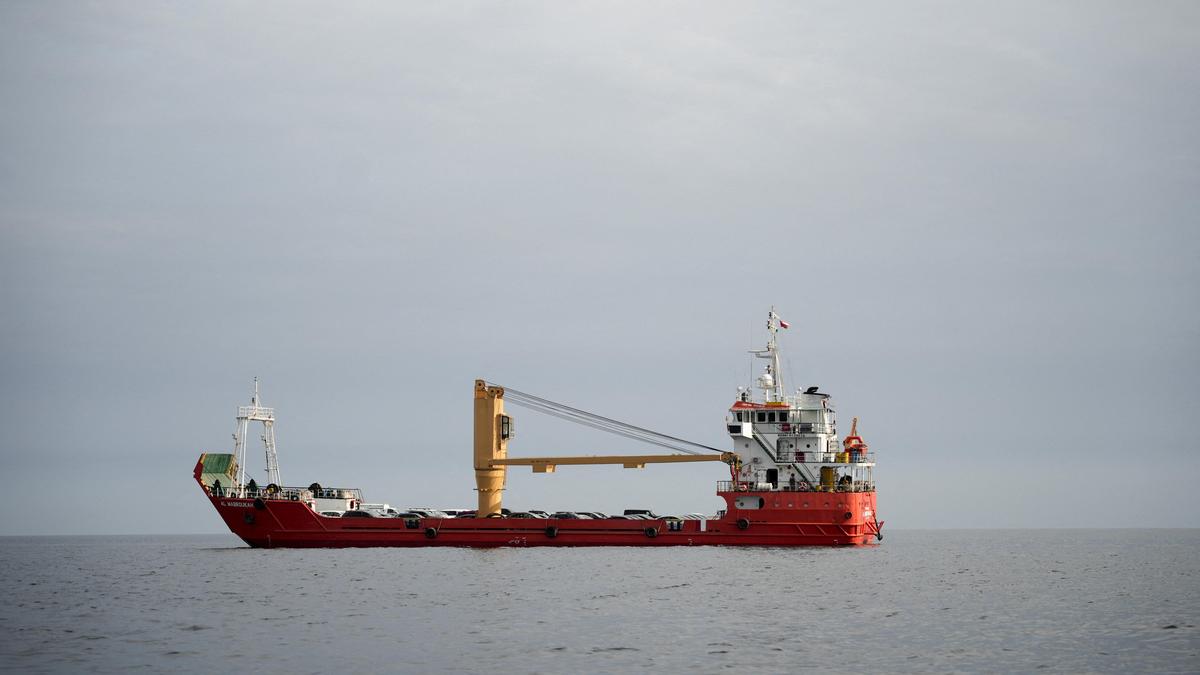
The Strait of Hormuz isn't just a stretch of water. It's a choke point that holds the global economy by the throat. When India-flagged vessels start sailing out of these waters during periods of high tension, the world notices. It's not just about ships moving from point A to point B. It's about energy security, soaring insurance premiums, and the cold reality of maritime geopolitics. You might see headlines about "vessels sailing out," but the story behind those movements is way more complex than a simple exit.
Most people think these ships just decide to leave because it's "dangerous." That's part of it, but it's mostly about the math. Shipping companies don't care about headlines as much as they care about the "War Risk" surcharge. When the risk goes up, the profit goes down. India’s decision to manage its fleet movement in the Persian Gulf and the Gulf of Oman reflects a calculated move to protect assets while keeping the oil flowing. You can't just stop imports. India gets a massive chunk of its crude from this region. Balancing safety with the need for fuel is a tightrope walk that New Delhi performs every single day.
Why the Strait of Hormuz dictates Indian energy prices
If you've ever wondered why your local fuel prices stay high despite global shifts, look at the map. The Strait of Hormuz is the only way in and out of the Persian Gulf. About one-fifth of the world's total oil consumption passes through here. For India, the stakes are even higher. We’re talking about a nation that imports over 80% of its oil. When India-flagged vessels face threats or delays in this corridor, the ripple effect hits everything from the cost of your morning commute to the price of a bag of rice.
Ship owners aren't just worried about physical attacks. They're worried about seizures. We've seen it happen. Tankers get intercepted, crews get detained, and suddenly a commercial vessel is a political pawn. When Indian vessels start "sailing out" or avoiding certain zones, it's often a response to specific intelligence. The Indian Navy often monitors these movements through missions like Operation Sankalp. This isn't just a drill. It’s a constant presence of destroyers and frigates intended to give Indian captains enough confidence to keep their engines running. Without that naval shadow, many companies would simply refuse to enter the Gulf.
The hidden cost of maritime security
Let's talk about money. When a region is flagged as high-risk by the Joint War Committee (JWC) in London, insurance rates don't just go up—they explode. A single transit through the Strait of Hormuz can cost hundreds of thousands of dollars extra in "additional premium" alone. Shipowners have to pass that cost somewhere.
- Insurance spikes: Even if nothing happens to the ship, the mere possibility of an incident costs millions across a fleet.
- Rerouting: Going around or waiting in "safe zones" burns fuel. Heavy fuel oil isn't cheap.
- Crewing: Sailors aren't always keen to sail into a potential combat zone. Hazard pay becomes a necessity.
I've seen how these logistics play out. It’s a mess of paperwork and nervous satellite calls. When you hear about India-flagged vessels moving out, you're seeing the result of a cost-benefit analysis. If the risk of seizure outweighs the profit of the cargo, the ship stays out. It's that simple. The Indian government often coordinates with the Indian National Shipowners’ Association (INSA) to ensure that the private sector and the state are on the same page. If the Navy says the risk is too high, the ships move.
Comparing Indian flagged vessels to foreign counterparts
Why does the flag even matter? A ship flagged in India is technically Indian territory. If an Iranian or other regional force boards an India-flagged vessel, they're physically stepping onto Indian soil. That’s a huge diplomatic nightmare. Ships flying "flags of convenience" like Panama or Liberia don't always have a powerful navy ready to back them up. India is in a unique position. It has a strong relationship with Middle Eastern powers but also has the naval muscle to protect its own.
This dual-track approach—diplomacy and destroyers—is why India-flagged vessels sometimes stay when others flee. But even the best navy can't stop a drone or a limpet mine in the middle of the night. The decision to sail out of Hormuz usually follows a specific threat profile. It isn't a sign of weakness. It’s a sign of a captain who wants to keep his crew alive and his cargo intact.
The role of Operation Sankalp in ship safety
The Indian Navy didn't just stumble into this. Operation Sankalp started back in 2019 after attacks on tankers in the Gulf of Oman. Since then, it’s become the backbone of Indian maritime security in the northwest Arabian Sea. You'll find Indian warships stationed near the Strait, acting as a literal shield. They provide "safe passage" for India-flagged tankers.
Captains are in constant communication with the Information Fusion Centre for the Indian Ocean Region (IFC-IOR). They get real-time updates on suspicious skiffs, drone sightings, and naval movements. If a vessel is told to "sail out," it’s because the IFC-IOR saw something they didn't like. This isn't guesswork. It's high-tech surveillance meeting old-school naval power.
What happens when the ships leave
When India-flagged vessels sail out of the immediate danger zone, it doesn't mean the oil stops. It means the "bridge" is being managed differently. Ships might loiter in the Gulf of Oman, waiting for a naval escort. Or they might wait for a "green light" from diplomatic channels. The problem is the backlog. A 24-hour delay for ten VLCCs (Very Large Crude Carriers) can disrupt refinery schedules in Gujarat or Maharashtra.
Refineries don't like surprises. They operate on tight "just-in-time" schedules. If the ships aren't coming through Hormuz, the refineries have to tap into strategic reserves. That's why the movement of these vessels is a lead indicator for the health of the Indian economy. If the ships are moving out, you can bet the bureaucrats in New Delhi are having a very long night.
The geopolitical shadow over the Strait
You can't talk about Hormuz without talking about Iran and the West. India is in a tough spot here. It buys oil from Russia, maintains a strategic port at Chabahar in Iran, and is a key partner to the United States. When tensions flare up between Iran and Israel, or Iran and the US, the Strait becomes a minefield—sometimes literally.
India’s strategy is generally "de-hyphenation." It tries to keep its commercial shipping interests separate from the regional wars. But that's getting harder. If an India-flagged vessel is caught in the crossfire, New Delhi can't stay neutral. Sailing out of the Strait is a way to avoid being forced into a conflict India doesn't want. It’s a tactical retreat to maintain strategic neutrality.
Navigating the future of the Persian Gulf
The reality is that the Strait of Hormuz will never be "safe." It will only ever be "managed risk." For India-flagged vessels, the future looks like more technology and more naval integration. We're moving toward a period where autonomous underwater vehicles and better satellite tracking will be standard for every tanker.
If you're looking at the shipping industry, watch the "deadweight tonnage" of the vessels moving out. If the big tankers are leaving, the situation is dire. If it’s just the smaller cargo ships, it might just be a localized spike in tension.
The next time you see a report about ships exiting the Gulf, don't just think about empty seas. Think about the massive logistical machine trying to keep the lights on in Delhi while avoiding a shooting war. The Indian Navy's role will only grow. Private shipowners will continue to demand more protection. And the Strait? It’ll remain the most dangerous, most important 21 miles of water on the planet.
Check the live maritime tracking maps if you want to see this in real-time. Look for the clusters of ships near Fujairah. That’s where the waiting happens. If the cluster grows, the tension is rising. If the ships are moving through, someone, somewhere, decided the risk was worth the reward. Keep an eye on the Indian Navy’s official social media feeds for updates on Operation Sankalp deployments. They are the best indicator of how serious the situation actually is on the water. Regardless of the headlines, the flow of oil won't stop—it’ll just get a lot more expensive and a lot more guarded.