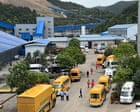
The official numbers out of the coal fields always follow a predictable, grim script. First comes the flash alert of an underground explosion, followed by a single-digit casualty report that inevitably climbs as rescue teams clear the rubble. When a methane gas blast tore through a state-regulated colliery, the death toll quickly escalated to 90 miners, making it one of the deadliest industrial disasters in recent memory. While state media frames these tragedies around heroic rescue efforts and promises of sudden safety audits, the reality is far more systemic. The real crisis in the Chinese mining sector is not a lack of safety regulations, but an economic framework that makes breaking those regulations highly profitable.
Behind every major gas blast lies a complex web of production quotas, local political protectionism, and structural energy demands that guarantee safety takes a backseat to output. To understand why ninety men died in darkness, one must look beyond the immediate ignition source and examine the economic pressures forcing extraction companies to bypass vital ventilation protocols.
The Ventilation Illusion and the Rush for Tonnage
Methane buildup is an inherent risk in underground coal mining. In modern engineering, managing this risk is straightforward. Powerful ventilation systems constantly flush out the toxic, flammable gas, while automated sensors shut down electrical equipment if methane concentrations breach a specific threshold.
The system fails when production speed becomes the only metric that matters. When a mine operates under intense pressure to meet state-mandated energy quotas, halting production to allow a high-gas face to clear means losing money. Mine managers face a stark choice: stall operations and face penalties from corporate overseers, or bypass safety sensors to keep the conveyor belts moving.
Investigators routinely find that in high-casualty disasters, ventilation overrides are common practice. Sensors are covered with plastic bags, or calibrated incorrectly on purpose, to prevent them from triggering automatic shutdowns. This creates a highly volatile subterranean environment where a single spark from a poorly maintained cutting tool can trigger an immediate, catastrophic explosion. The blast waves propagate through the tunnels, feeding on accumulated coal dust, transforming an isolated incident into a sweep of destruction that leaves dozens dead.
The Local Protectionism Shield
Beijing regularly issues sweeping directives aimed at cleaning up the mining sector. Following major disasters, central authorities vow to close illicit operations and punish negligent executives. Yet, these top-down mandates routinely fracture when they hit the provincial level.
Local governments depend heavily on mining tax revenues to balance their budgets and hit economic growth targets. This creates a dangerous conflict of interest. The very officials charged with enforcing safety compliance are incentivized to keep the coal moving.
This dynamic fosters a culture of local protectionism. Small and medium-sized operations, which frequently account for the highest accident rates, often enjoy the backing of local cadres. When central inspectors announce a surprise audit, word leaks down the chain. Substandard mines temporarily halt operations or hide non-compliant shafts, only to resume full production the moment the inspection team leaves the province. The central government commands compliance, but the local economy demands coal.
The Cost of Human Capital in the Extraction Machine
Human life in these mining hubs is governed by an unwritten financial calculus. The vast majority of underground laborers are migrant workers from impoverished rural provinces. They possess little bargaining power and fewer alternative employment options.
Companies accept the financial risk of accidents because the cost of paying wrongful death compensation is vastly cheaper than retrofitting an aging mine with state-of-the-art gas drainage systems. The legal fines and compensation payouts are viewed merely as an occasional cost of doing business.
Typical Resource Allocation Focus:
[Production Maximization] ----> Overrides Ventilation Systems
[Local Government Need]   ----> Blinds Safety Inspection Teams
[Cheap Labor Pool]        ----> Lowers Financial Risk of Disasters
Even when a mine's license is revoked after a fatal blast, the physical assets rarely stay idle for long. Under the guise of restructuring, assets are frequently sold off to another state-backed entity or a larger conglomerate. The management structure changes on paper, but the underlying infrastructure and the corner-cutting culture remain intact. The industry does not reform; it merely rebrands.
The Clean Energy Contradiction
The persistence of these mining disasters exposes a glaring contradiction in global energy politics. The world frequently hears of massive investments in solar arrays, wind farms, and electric vehicle infrastructure across East Asia. The transition is real, but it is built on top of a massive, coal-fired foundation.
Green energy grids require a stable, baseline power supply to prevent blackouts when the sun sets or the wind dies down. For all the progress made in renewables, heavy industry and urban centers still rely heavily on coal to keep the lights on.
When international supply chains strain or geopolitical tensions rise, the mandate from the top is clear: secure energy self-reliance at all costs. This pressure cascades down to the extraction pits. Miners are pushed deeper into volatile, high-gas seams to extract the fuel needed to power the factories manufacturing the world's green technology. The transition to a cleaner future is being subsidized by the safety of the men working underground.
The Failure of Post-Disaster Theatre
Every major mining tragedy triggers a familiar public ritual. High-ranking officials arrive at the scene, cameras capture solemn expressions, and state media broadcasts promises of a merciless crackdown on safety violations. A few mid-level managers are publicly detained, and a handful of local bureaucrats are stripped of their titles.
This corporate and political theater obscures the structural flaws. True accountability would require an independent labor union movement capable of halting work without fear of retaliation, paired with an independent judiciary free to penalize state-owned enterprises. Neither of these mechanisms exists in the current system.
Instead, the industry relies on brief periods of enforced dormancy. Following a ninety-casualty blast, mines across the region may be ordered to shut down for safety inspections lasting a few weeks. This artificial constriction of supply drives up coal prices, increasing the profit margins for the mines that remain open or those that resume operations first. The financial incentive to cut corners actually intensifies once the temporary restrictions are lifted.
Shifting the Calculus of Accountability
Stopping the cycle of underground mass casualty events requires moving beyond the ritual of post-disaster crackdowns. The current regulatory framework focuses on punishing individuals after the bodies are pulled from the shafts, which does nothing to alter the daily pressures that cause the explosions.
True reform requires changing the financial metrics of the entire energy sector. Safety compliance must be tied directly to the access of capital and credit lines for these massive energy conglomerates. If a mining group faces immediate, un-insurable financial ruin across its entire portfolio for a single major safety violation, the corporate pressure on mine managers shifts completely. Bypassing a methane sensor would no longer be viewed as a calculated operational risk, but as an existential threat to the company’s survival.
Until the economic rewards for over-production are completely severed from the local political structure, the toll will keep rising. The next explosion is already being prepared in a shaft where a sensor has been covered, a ventilation fan has been turned down to save electricity, and the quota takes precedence over the men breathing the air below.