The United States military faces a quiet, compounding crisis in its manufacturing supply chain that directly threatens its long-term strategic readiness. For decades, defense planners focused on high-profile platforms like stealth fighters, aircraft carriers, and advanced missile systems, while largely ignoring the raw, unrefined materials required to build them. Now, Washington is scrambling to secure domestic and allied sources for critical minerals, most notably antimony, a metal vital for manufacturing ammunition primers, night-vision goggles, infrared sensors, and precision-guided munitions. This scramble is the direct result of a near-monopoly held by geopolitical rivals, primarily China, which controls the vast majority of global mining and refining capacity for these critical elements.
The vulnerability is not a sudden development. Decades of offshoring and a strict focus on immediate cost-efficiency created a fragile ecosystem where a single supply disruption can halt the production of essential defense hardware. You might also find this connected article useful: Deconstructing the US Iran Diplomatic Impasse A Strategic Mechanics Framework.
The Invisible Chokepoint in Modern Weaponry
Antimony remains an obscure element to the general public, but it is indispensable to the defense industrial base. It acts as a hardening agent in lead alloys, making it a core component of conventional ammunition. More critically, antimony trisulfide is used in the primers of hundreds of types of military cartridges and explosive devices. Without it, standard munitions simply cannot fire.
Beyond traditional explosives, the metal is essential for advanced military technologies. It is used in the production of infrared guided missiles, laser sight systems, and nuclear weapons components. The Department of Defense has recognized this dependency for years, yet the domestic supply remains virtually non-existent. As discussed in latest reports by Associated Press, the implications are widespread.
The global supply concentration is staggering. China, Russia, and Tajikistan control approximately 90% of the world’s antimony supply. When relations between major powers deteriorate, these supply chains tighten instantly. Beijing’s recent implementation of stricter export controls on antimony and related compounds serves as a direct warning shot to Western defense contractors. The move highlighted a systemic failure in Western defense planning: the reliance on adversaries for the foundational components of national security.
The Failure of the Strategic National Stockpile
Washington once maintained a robust safety net for these scenarios. The National Defense Stockpile was established after World War II to ensure the military had access to critical raw materials during extended conflicts. At its peak, the stockpile held billions of dollars worth of metals, minerals, and agricultural commodities.
The end of the Cold War changed everything. Policymakers viewed the massive stockpiles as an unnecessary financial burden. Throughout the 1990s and 2000s, Congress authorized the liquidation of these assets to fund unrelated government programs or to balance budgets. The assumption was that global free trade would always provide a steady flow of materials.
It was a catastrophic miscalculation. The current inventory of the National Defense Stockpile is a fraction of its historical value. In many cases, the quantities available would sustain high-intensity military operations for only a few weeks. Rebuilding these reserves cannot happen overnight. Finding new deposits, securing environmental permits, building processing facilities, and reaching commercial scale takes years, sometimes decades.
Why Domestic Mining Cannot Quick-Fix the Problem
The immediate reaction from lawmakers is often a call to simply mine more at home. In the United States, there is currently only one primary domestic source of antimony under development: the Stibnite Gold Project in Idaho. While this site contains significant deposits that could eventually supply a substantial portion of domestic demand, it faces a gauntlet of regulatory and environmental hurdles.
Mining is capital-intensive and legally complex. The permitting process in North America involves multiple federal, state, and local agencies, often taking upwards of ten years to navigate. Environmental concerns regarding water quality and habitat disruption create fierce local opposition and protracted legal battles.
Even if a mine opens tomorrow, extraction is only the first step. Raw ore cannot be dropped into a missile guidance system. It must be refined.
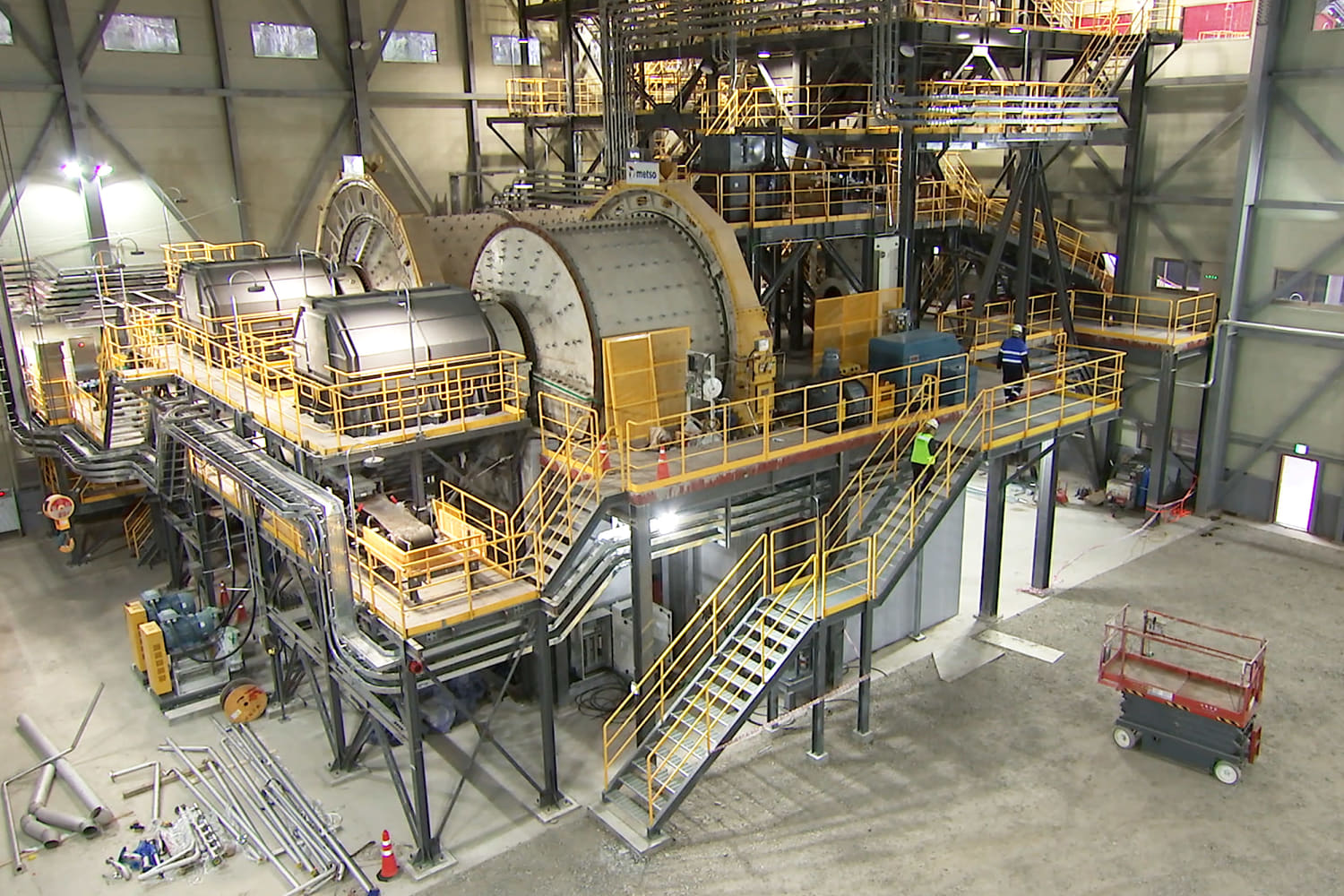
The West has systematically dismantled its smelting and refining infrastructure over the last forty years. China did the opposite. By heavily subsidizing its domestic processing industry and enforcing lax environmental standards, Beijing artificially lowered global prices, driving Western refiners out of business. Today, even if the United States extracts antimony or lithium domestically, much of it must still be shipped overseas to be processed into usable, industrial-grade materials. The supply chain remains compromised regardless of where the dirt is dug.
The Allied Sourcing Alternative
To mitigate this bottleneck, the United States is pursuing a strategy of friend-shoring—collaborating with allied nations like Australia, Canada, and various African states to develop alternative mining and refining hubs.
- Australia: Possesses significant mineral wealth and a mature mining sector, but scaling up processing facilities requires massive capital injections.
- Canada: Holds unrefined deposits near existing infrastructure, yet faces similar regulatory delays to those found in the United States.
- Central Asia: Countries like Tajikistan offer immediate supply, but operating in these regions carries high geopolitical risk and vulnerability to secondary economic pressures from neighboring superpowers.
This international hunt for minerals is highly competitive. European nations and Asian allies like Japan and South Korea are drawing from the same limited pool of non-aligned suppliers, driving up costs and creating diplomatic friction over allocation priorities.
The Technology Sector Complication
The defense sector does not operate in a vacuum. It competes directly with the commercial technology industry for these exact same elements. Antimony is used extensively in the production of semiconductors, solar panels, and flame-retardant plastics.
Global Antimony Consumption by Sector:
┌───────────────────────────┬─────────┐
│ Flame Retardants          │   50%   │
├───────────────────────────┼─────────┤
│ Lead-Acid Batteries       │   20%   │
├───────────────────────────┼─────────┤
│ Clean Energy (Solar/Semis)│   15%   │
├───────────────────────────┼─────────┤
│ Military & Ammunition    │   15%   │
└───────────────────────────┴─────────┘
When commercial demand spikes, defense contractors must pay a premium to secure their allocations. While the military can invoke priority access under legislation like the Defense Production Act, doing so disrupts consumer supply chains and fuels inflation across the broader tech economy.
The push toward green energy exacerbates the strain. The transition to solar power and electric vehicles requires unprecedented volumes of rare earths and minor metals. The sheer scale of commercial purchasing power dwarfs the procurement budgets of defense ministries, leaving national security supply chains vulnerable to market forces driven by consumer electronics and renewable energy infrastructure.
Alternative Materials and the Innovation Trap
Faced with a structural shortage, the immediate technological response is to seek substitutes. Pentagon research arms like DARPA frequently fund initiatives to discover synthetic alternatives or alternative alloys that can replicate the properties of critical minerals.
This approach faces severe physical limits. Elements are selected for specific defense applications because of their unique atomic properties. Substitute materials often result in a direct compromise in performance. Replacing a specific hardening agent in an armor plate might make it heavier, reducing vehicle mobility. Utilizing a different chemical compound in a missile sensor could reduce its accuracy or thermal stability.
Innovation also takes time that current geopolitical timelines may not allow. A new material requires rigorous testing, safety certification, and manufacturing retooling before it can be deployed in active inventory. In a crisis scenario, relying on unproven material science is a high-risk gamble that military commanders are hesitant to take.
The true solution is far less glamorous than discovering a new miracle material. It requires a sustained, multi-billion-dollar commitment to rebuilding basic industrial infrastructure—smelters, refineries, and chemical processing plants—on sovereign soil. It requires accepting higher production costs as a necessary premium for national security. Until the fundamental mechanics of processing raw earth into industrial material are repatriated, the most advanced military apparatus in the world will remain fundamentally dependent on the decisions of its competitors.