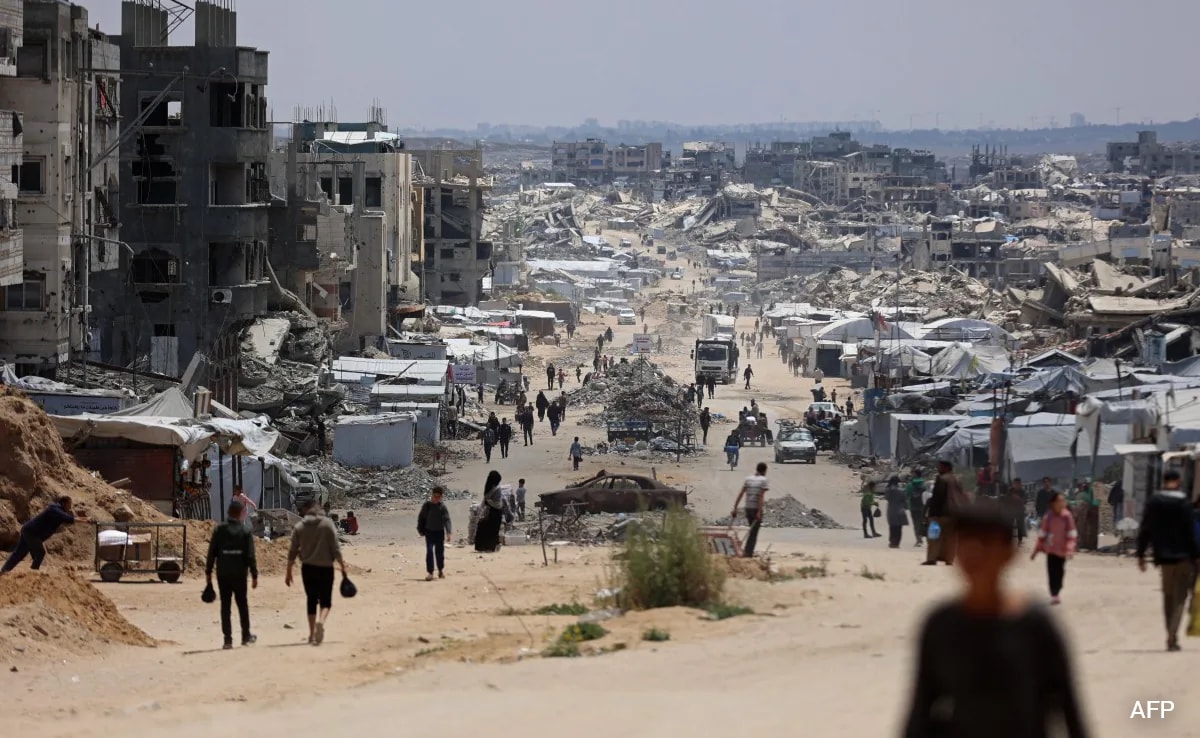
An intense Israeli airstrike in Gaza City targeted Mohammed Odeh, the newly minted chief of the Hamas armed wing. The strike, which hit a residential building in the western Rimal neighborhood, came just over a week after Odeh assumed command of the Izz ad-Din al-Qassam Brigades. While Prime Minister Benjamin Netanyahu and Defense Minister Israel Katz quickly claimed credit for authorizing the operation, intelligence assessments indicate Odeh was likely killed, though official confirmation remains fluid. This rapid assassination attempt reveals a deeper, systematically overlooked reality: Hamas is experiencing an unprecedented leadership vacuum that its traditional succession framework cannot handle.
Military analysts have long viewed Hamas as a highly adaptable, hydra-headed militant group capable of replacing fallen commanders instantly. The past weeks have broken that assumption. Odeh took the reins only because his predecessor, Ezzedine al-Haddad, was eliminated in an air raid just eleven days prior.
Before Haddad, the top military roles were held by iconic veterans like Muhammad Deif and Muhammad Sinwar, both eliminated during the multi-year conflict that followed the October 2023 invasion. Hamas is burning through its leadership bench at a rate that precludes proper transition, operational security, and strategic continuity.
The Eleven Day Commander and the Decay of Command
When Mohammed Odeh was elevated to lead the Qassam Brigades, he was already a marked man. As the former head of Hamas intelligence during the October 7 planning phases, Odeh possessed deep institutional knowledge regarding Israeli border vulnerabilities. According to Middle Eastern intelligence sources, Odeh had previously declined the top military post after the death of Muhammad Sinwar in mid-2025, citing a desire to focus on rebuilding the group's shattered internal security apparatus.
He was eventually forced into the role by necessity. He lasted eleven days.
The swiftness of the strike points to an existential vulnerability for Hamas: its internal communications are compromised. For the Israel Defense Forces and the Shin Bet to locate and strike a top tier commander within days of his promotion implies that the group's underground operational security has turned into a sieve. Hamas can no longer protect its senior staff, even within the subterranean networks that once baffled foreign intelligence agencies.
Local rescue services operating under the Hamas administration reported that the strike killed at least three individuals and wounded twenty others in Rimal. The high civilian toll highlights the brutal trade-offs of modern urban warfare. For Israel, the tactical reward of preventing a new commander from consolidating power outweighed the geopolitical blowback of striking a dense residential block.
The Myth of Seamless Succession
For two decades, the prevailing counter-terrorism consensus maintained that decapitation strategies against militant organizations yielded diminishing returns. If you kill a leader, a well-trained deputy steps up.
That theory assumes a stable environment. In a prolonged war of attrition where the top three tiers of command are erased within a twelve month window, succession turns into a game of musical chairs with lethal consequences.
- Loss of Institutional Memory: New commanders lack decades of operational experience. They are forced to make high-level decisions without established logistical lines.
- Degraded Recruitment and Training: Under constant drone surveillance, senior figures cannot properly vet subordinates, leading to paranoia and a breakdown in internal trust.
- Fractured Local Units: Northern and southern Gaza cells are increasingly forced to operate autonomously, destroying the unified command structure that made Hamas a formidable guerrilla army.
This structural rot explains why Odeh and Haddad were targeted in Gaza City, an area Israel claimed to have cleared of organized militant infrastructure months ago. Hamas is trying to build a command structure out of fragments, and the pieces are being picked off before they can stick.
Domestically Driven Targets
The timing of the strike reveals a dual narrative. Beyond the immediate security imperative, the political survival of the Israeli leadership remains a major factor. The operations against Haddad and Odeh occurred against a backdrop of domestic turbulence within Israel.
Opposition figures and military analysts have openly warned that Netanyahu has a strong incentive to maintain a high tempo of high-profile operations to secure his political standing. Talk of dissolving the Knesset and calling early elections has intensified. In this climate, a headline announcing the elimination of an October 7 architect serves as a potent political shield.
Simultaneously, the broader regional picture is shifting away from Gaza. Israel has resumed heavy targeting of Hezbollah positions in Lebanon, despite a tentative ceasefire agreement negotiated last month. Netanyahu claimed that Israeli forces have killed more than 700 Hezbollah fighters since that agreement, demonstrating that the military is fighting a multi-front war with shifting priorities.
As Washington leads complex peace negotiations with Iran, Israel finds itself largely sidelined from the diplomatic table. Consequently, Jerusalem is using unilateral military facts on the ground to dictate its security terms, demonstrating that it will hunt its adversaries regardless of diplomatic timelines or regional ceasefires.
The Wall Street Journal recently reported that Israeli intelligence has compiled a comprehensive directory of every individual tied to the October 7 incursions. The objective is total elimination or capture. The strikes in Rimal prove this policy is absolute. By killing Odeh before he could issue a single major strategic directive, Israel has signaled that the title of Hamas military chief is no longer a position of power. It is a death sentence.
Hamas now faces an impossible choice. It must either appoint another high-profile commander who will immediately inherit the same compromised communication channels, or dissolve its traditional hierarchy into decentralized, leaderless insurgent cells. Choosing the latter preserves individual lives but ends their status as a unified governing military force.