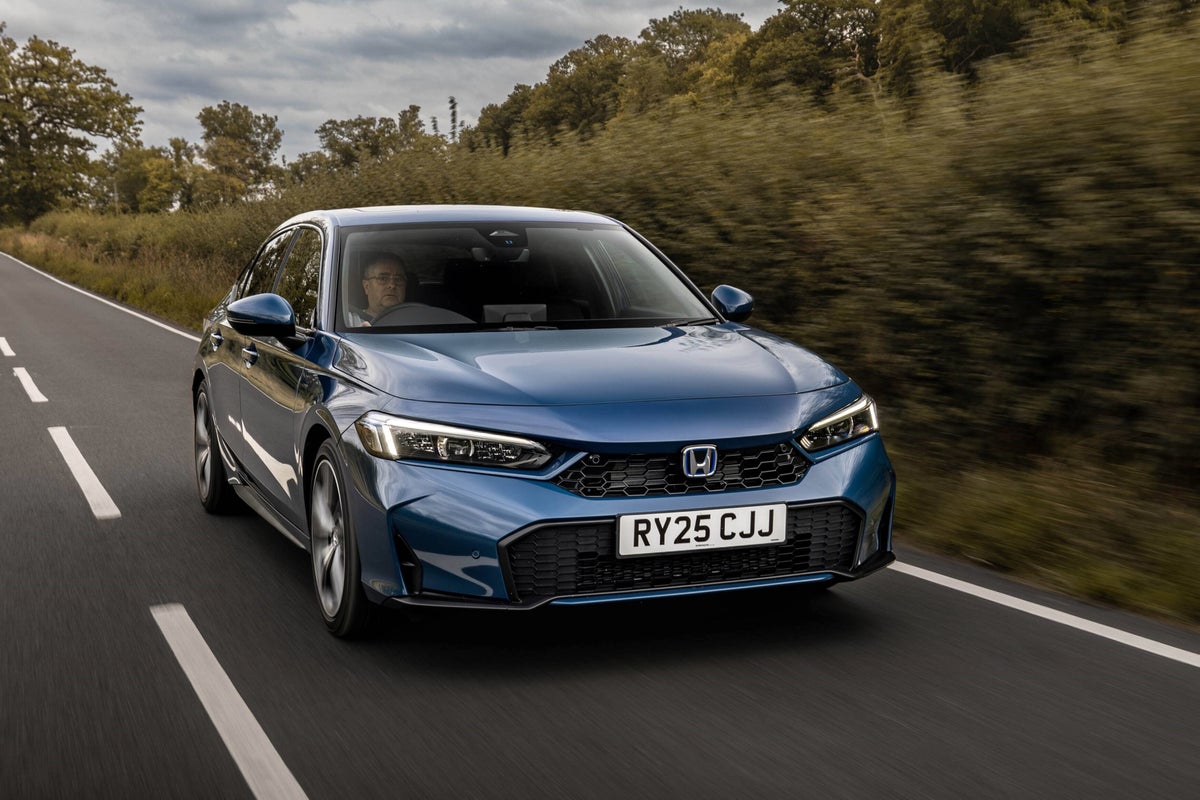
Honda has issued a massive safety recall impacting nearly 1.7 million vehicles in North America due to a critical steering manufacturing defect. Drivers across multiple model lines have reported an alarming "sticky" sensation while navigating roads at high speeds, a condition that forces sudden, jerky physical corrections to maintain a straight line. The National Highway Traffic Safety Administration (NHTSA) opened an intensive engineering analysis after thousands of consumer complaints poured in, pointing directly to a manufacturing flaw inside the vehicle’s electronic power steering gearboxes. This widespread component failure raises serious questions about modern automotive quality control.
The official campaign targets a broad cross-section of the automaker's lineup. Popular family haulers and enthusiast cars alike are caught in the dragnet, spanning the 2022 through 2025 model years. The list includes the standard Honda Civic, Civic Type R, CR-V, HR-V, and the Acura Integra. While the headline figures sound staggering, the mechanical reality of the defect reveals a deeper story about how modern supply chains and computerized engineering systems can inadvertently create a systemic safety hazard.
Inside the Swelling Worm Wheel
Older vehicles relied on hydraulic fluid pumped via a belt connected to the engine to provide steering assistance. Modern vehicles have replaced this heavy, less efficient mechanism with an Electronic Power Steering (EPS) system. The system relies on a small electric motor, a precision metal worm gear, and a high-density plastic worm wheel to turn driver input into front-wheel movement.
The engineering breakdown is deceptively simple. According to regulatory documents filed with federal safety investigators, the internal plastic worm wheel was manufactured improperly by supplier Hitachi Astemo Americas. Under normal operating conditions, heat and environmental exposure cause this specific plastic component to swell significantly. As the worm wheel expands inside the tightly sealed gearbox, the microscopic gap between it and the metal worm gear vanishes.
This swelling triggers a cascade of mechanical issues:
- The critical film of lubricating grease between the gears is squeezed out.
- The internal spring preload on the worm gear was set too high during factory assembly.
- Metal-on-plastic friction spikes dramatically during basic steering adjustments.
Drivers do not experience a complete mechanical lockup. Instead, they feel a momentary catching or resisting sensation when making small, incremental steering adjustments, particularly at highway speeds above 40 miles per hour. To overcome this unexpected friction, a driver must apply sudden, manual force. This physical overcompensation results in an abrupt, jerky movement that can easily push a vehicle out of its intended lane.
The Long Paper Trail to a Recall
Automotive manufacturing defects rarely result in immediate recalls. The timeline behind this specific steering failure shows a protracted three-year struggle between consumer field reports, corporate investigations, and federal oversight.
Honda received its very first field complaint regarding the notchiness in the steering system in September 2021. It took more than a year of accumulating warranty claims before the automaker initiated a formal internal market quality report in late 2022. By early 2023, federal regulators at the NHTSA stepped in, opening an official preliminary evaluation after noticing an anomalous spike in owner complaints describing identical terrifying moments on the highway.
Engineers examining returned parts found distinct physical deformation on the teeth of the plastic worm wheels. Despite the supplier modifying its manufacturing mold process in early 2024, the volume of reported incidents continued to mount. By the time the voluntary safety recall was officially codified, the manufacturer had logged an astonishing 10,328 unique warranty claims related to the sticky steering phenomenon.
Supply Chain Vulnerabilities
This crisis exposes a fundamental vulnerability in how modern automobiles are built. Major car brands are no longer vertically integrated entities that build every component under one roof. They are primary assemblers relying on a complex web of global tier-one suppliers. When a single supplier miscalculates a material specification or a component tolerance, the mistake is quickly duplicated across millions of consumer vehicles sharing the same engineering architecture.
The affected gearbox assembly was utilized across multiple distinct vehicle platforms to save on development costs. This maximizes corporate efficiency, but it also creates a single point of failure. A defect that hits a Civic component automatically compromises a CR-V or an Acura Integra because the underlying mechanical DNA is identical.
Dealership service centers face a monumental logistical task. The mandated repair requires mechanics to disassemble the front suspension area, remove the steering gearbox, replace the internal worm gear spring with a calibrated variant, and inject specialized high-durability lubricant. In severe cases where physical scoring or damage has already occurred, the entire electronic power steering rack must be completely replaced. The sheer volume of affected vehicles means that parts logistics will likely stretch dealership capacities for months, leaving owners to manage a flawed steering system while waiting for their official notification letters.
Owners concerned about their specific vehicle should access the official NHTSA recall portal or the manufacturer's look-up tool to input their 17-character Vehicle Identification Number (VIN). If your car exhibits an uncharacteristic resistance or notchiness during highway lane changes, avoid sudden over-corrections and schedule a diagnostic inspection immediately, as the mechanical wear within the steering box will only accelerate over time.