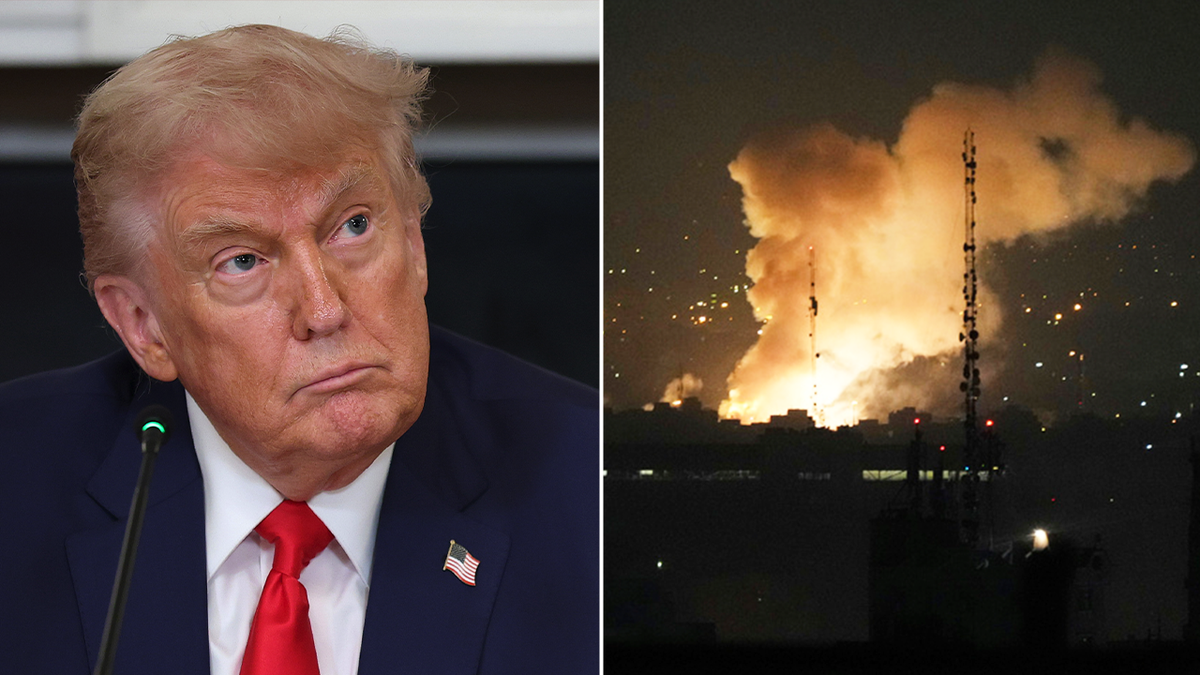
The smoke rising from Tehran’s oil depots on March 15, 2026, isn't just a byproduct of "Operation Epic Fury"—it is the visual manifestation of a total diplomatic vacuum. While Middle Eastern intermediaries scramble to prevent a regional meltdown, President Donald Trump has slammed the door on ceasefire negotiations, signaling that the White House is no longer interested in the "art of the deal." He wants a total collapse of the current order. By rejecting overtures from Oman and Egypt this week, the administration has moved past the era of containment and into a high-stakes gamble on regime expiration.
The primary objective is no longer a signature on a nuclear accord; it is the systematic dismantling of the Islamic Republic’s ability to function as a state. Sources close to the White House suggest that Trump viewed the pre-war February talks in Muscat not as a genuine opportunity for peace, but as a final "check-the-box" exercise before unleashing a long-planned air campaign alongside Israel.
The Death of the Middleman
For decades, Muscat served as the quiet pressure valve for U.S.-Iran tensions. That valve has been welded shut. When Omani officials attempted to present a de-escalation framework last Tuesday, they were met with a blunt refusal from the American side. The logic from the West Wing is straightforward: Iran is at its weakest point in forty years, and any pause in military operations would only allow the Islamic Revolutionary Guard Corps (IRGC) to regroup.
This is not a policy of pressure; it is a policy of erasure. Trump’s refusal to guarantee a ceasefire even for the sake of opening a dialogue marks a departure from his first-term instincts, where he often sought a grand televised summit. Now, surrounded by a cabinet including Secretary of State Marco Rubio and Vice President JD Vance—who have both expressed deep skepticism that Tehran can be trusted to sign anything—the President is leaning into a "victory through exhaustion" strategy.
Why the Off-Ramp is Invisible
To understand why a ceasefire is currently impossible, one must look at the demands being traded through backchannels. They are designed to be rejected.
- The U.S. Position: Unconditional surrender of the nuclear program, the total dismantling of the ballistic missile industry, and a "people-led" transition of power.
- The Iranian Position: A permanent cessation of all U.S. and Israeli strikes, billions in reparations for infrastructure damage, and a written guarantee that no future American administration will ever use force against Iran again.
These are not the starting points of a negotiation; they are the end-state goals of two parties that believe the other is on the verge of total collapse. The White House calculates that the internal protests that rocked Iran in January have hollowed out the regime's legitimacy. They believe that if the bombs keep falling, the Iranian public will eventually do the work that a ground invasion would otherwise require.
The Cost of Silence
The risks of this diplomatic blackout are manifesting in the global economy and regional security. Brent crude has flirted with $85 per barrel as the Strait of Hormuz becomes a graveyard for commercial tankers. Iran, realizing it cannot win a conventional air war against U.S. F-35s, has pivoted to a war of attrition.
By hitting desalination plants in the UAE and targeting U.S. bases in Bahrain, Tehran is trying to prove that it can inflict enough pain on America’s allies to force Trump back to the table. It is a gruesome game of chicken. The "Epic Fury" strikes have crippled the Iranian navy and pulverized missile sites, but they have not stopped the "fire at will" orders given to IRGC remnants and regional proxies.
The Mirage of Regime Change
The administration’s bet hinges on a specific sequence of events: military pressure leads to economic paralysis, which leads to a popular uprising, which leads to a pro-Western government. History suggests this sequence is rarely so tidy.
By refusing to talk, the U.S. is also refusing to provide the Iranian "moderates"—if any remain in the bunkers of Tehran—with a reason to challenge the hardliners. When the choice is between certain death by bombardment or a desperate fight for survival, even a fractured leadership will choose to fight. Trump has publicly urged the Iranian people to "take over your government," but without a clear diplomatic alternative, he is essentially asking a civilian population to charge machine-gun nests with their bare hands.
This conflict is entering a phase where the lack of an objective is the objective. If the goal is truly "unconditional surrender," then the war doesn't end when the missiles run out; it ends when there is no one left in Tehran with the authority to sign the papers.
The White House believes it can wait. The question is whether the global economy and the stability of the Middle East can wait with them. Every day that a ceasefire is rejected is a day where the "limited" air campaign risks turning into a generational conflict that no one—not even a President who hates "forever wars"—can easily exit.
Identify the specific financial and military "breaking points" the administration is watching to determine if their "no-talk" strategy is actually working.