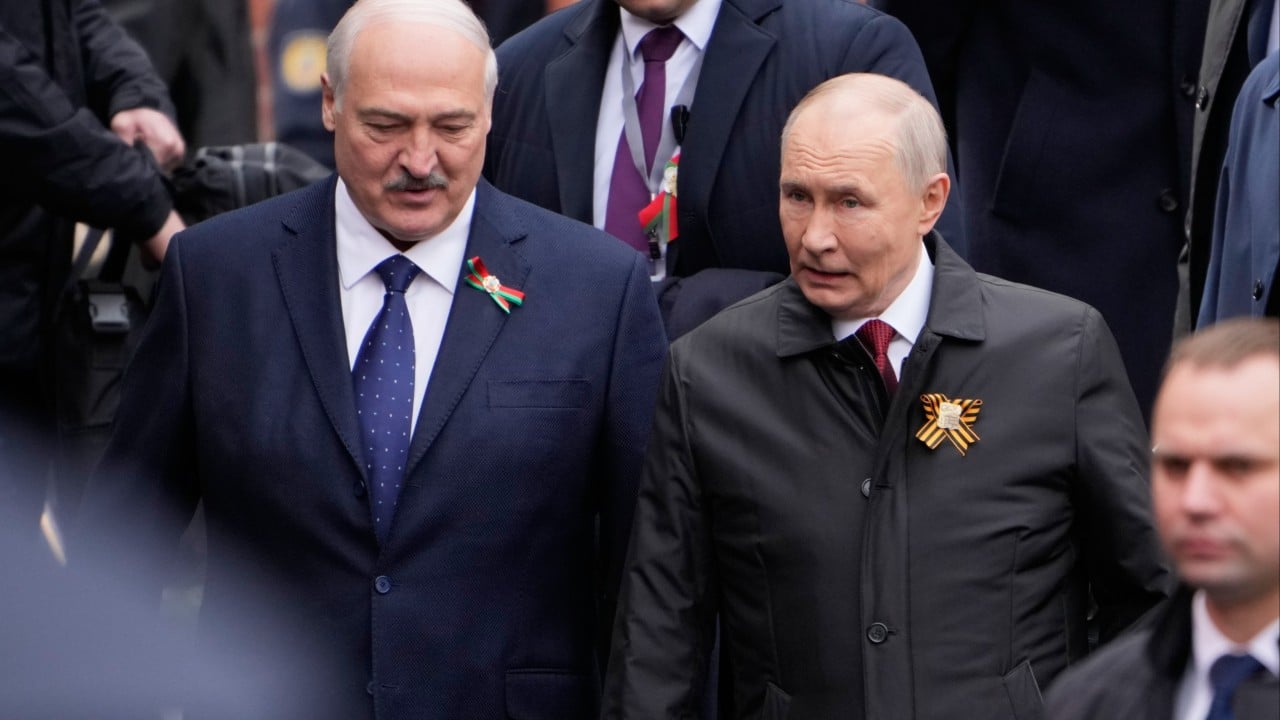
The joint military maneuvers launched on May 18, 2026, by Russia and Belarus are not just ordinary field exercises or standard sabre-rattling. By practicing the covert transport, handling, and simulated launch of tactical nuclear weapons from unprepared, makeshift positions across Belarus, Moscow and Minsk have structurally altered European security. Ukraine’s Foreign Ministry immediately warned that the drills directly violate Articles I and II of the Treaty on the Non-Proliferation of Nuclear Weapons (NPT). Behind the official statements lies a much darker reality: Russia has successfully integrated its neighbor into a forward-deployed nuclear outpost, creating an operational gray zone that directly threatens NATO's eastern flank and permanently alters the geography of deterrence.
The Western response has largely treated this as a repetitive psychological operation. This is a dangerous miscalculation. For decades, the foundational logic of European security rested on the geographical buffer between Russia's core nuclear arsenal and the borders of central Europe. That buffer is gone.
The Illusion of Belarusian Sovereignty
Minsk claims these maneuvers are purely defensive, planned well in advance, and pose zero threat to third countries. The Belarusian Defense Ministry stated the exercises focus on training forces to move nuclear munitions covertly across large distances. Alexander Lukashenko has spent thirty-two years playing a complex game of survival, frequently balancing Western engagement against Moscow's financial dominance. That balancing act concluded when he permitted Russian forces to invade Ukraine from Belarusian soil.
The deployment of tactical nuclear weapons to Belarus, formalized under the Kremlin's updated nuclear doctrine, stripped away any remaining pretense of Minsk's strategic autonomy. Under the current framework, Vladimir Putin maintains exclusive control over the authorization and activation codes of these weapons. However, the operational reality is more insidious. Russia has granted Belarus the authority to select targets during a hypothetical conflict.
This division of labor serves a deliberate purpose. By keeping the launch codes in Moscow while letting Belarusian pilots and missile crews handle the physical munitions, the Kremlin creates a dangerous layer of ambiguity. If a tactical strike originates from an airbase near Brest or Grodno, who is the primary combatant? The Western alliance would face an agonizing dilemma: retaliate against Minsk and risk a full-scale response from Russia, or strike Moscow directly and trigger a global catastrophe.
Opposition leader Sviatlana Tsikhanouskaya noted that this arrangement transforms the nation of 9.5 million into a permanent hostage. Lukashenko has traded his country's long-term survival for immediate regime security. The introduction of the intermediate-range Oreshnik missile system into Belarus further cements this transformation. The Oreshnik, a dual-capable system capable of flying up to 5,500 kilometers at hypersonic speeds, brings every Western European capital within striking distance of a launch site positioned outside NATO's border.
The Non-Proliferation Treaty is Dead in All But Name
Ukraine’s formal protest focuses heavily on the erosion of global legal norms, and their legal argument is sound. Articles I and II of the NPT are explicitly designed to prevent nuclear-armed states from sharing control of mass destruction technologies with non-nuclear states. Moscow argues its arrangement mimics NATO’s nuclear sharing program, where American B61 gravity bombs are stationed in countries like Germany and Belgium.
The comparison is flawed. NATO’s nuclear sharing mechanisms were established before the NPT was signed in 1968 and were explicitly grandfathered into the treaty's framework during negotiations. Russia's sudden expansion of its nuclear footprint into Belarus breaks a multi-decade status quo. It signals to other ambitious regional powers that the international legal architecture can be dismantled without consequence.
NPT Article Violations: Current Legal and Strategic Reality
┌──────────────────────────────────────────────────────────┐
│ Article I: Nuclear states cannot transfer weapons        │
│ ➔ Russia bypasses via "operational custody" loops       │
├──────────────────────────────────────────────────────────┤
│ Article II: Non-nuclear states cannot receive weapons    │
│ ➔ Belarus integrates warheads into domestic units        │
└──────────────────────────────────────────────────────────┘
The erosion of these norms creates a dangerous precedent for international security. If Russia can legally absorb a neighbor into its active nuclear architecture under the guise of a "Union State" alliance, there is little to prevent other nuclear powers from doing the same.
The Mechanics of Covert Deployment
Military analysts focusing solely on the political rhetoric are missing the technical significance of these drills. The Belarusian Defense Ministry explicitly noted that forces are practicing deployment from "unplanned and unprepared areas."
In conventional nuclear doctrine, weapons are kept in highly secured, heavily fortified central storage facilities. These sites are easily monitored by Western satellite imagery. Intelligence agencies look for specific signatures: increased security perimeters, specialized transport vehicles, and distinctive communications activity.
By training troops to disperse warheads into commercial logistics networks, dense forests, and civilian infrastructure, Russia and Minsk are developing an asymmetric capability.
- Decentralized Transport: Utilizing standard commercial vehicles to move warheads, blending transport into everyday civilian traffic.
- Rapid Readiness: Pre-positioning deployment teams at regional airstrips to drastically reduce the warning time of a potential strike.
- Mobile Launch Integration: Utilizing the road-mobile capabilities of the Iskander and Oreshnik missile systems to create a highly fluid, unpredictable launch environment.
If a crisis escalates, Western intelligence may not get the traditional forty-eight-hour warning of nuclear movement. The warheads could already be deployed, mated to their delivery systems, and hidden in a pine forest forty miles from the Polish border.
The Fragmented Western Response
Kyiv has called for a sharp increase in sanctions pressure and a substantial boost in military aid to counter this threat. They are asking for a systemic deterrence strategy from the Euro-Atlantic community. Yet, the international response remains siloed. Western policymakers have separate strategies for countering Russian aggression in Ukraine, enforcing sanctions on Minsk, and managing strategic arms control.
They fail to see these issues as part of a single, integrated challenge. The current sanctions regime is filled with loopholes. Russian components still find their way into Belarusian assembly lines, and potash and transit routes continue to generate hard currency for Lukashenko's inner circle.
Deterrence cannot be achieved through economic statements alone. The reality is that the Kremlin has successfully moved the front lines of nuclear confrontation westward. To counter this, NATO must re-evaluate its force posture along the Suwalki Gap and the Baltic borders. This requires permanent defensive installations, advanced missile interception capabilities, and clear communication regarding the consequences of any nuclear movement within Belarus. Until the alliance acknowledges that Minsk and Moscow operate as a single nuclear entity, its defensive strategies will remain outdated. The maneuvers in Belarus are not a drill for a future war; they are the foundation of a new Cold War.