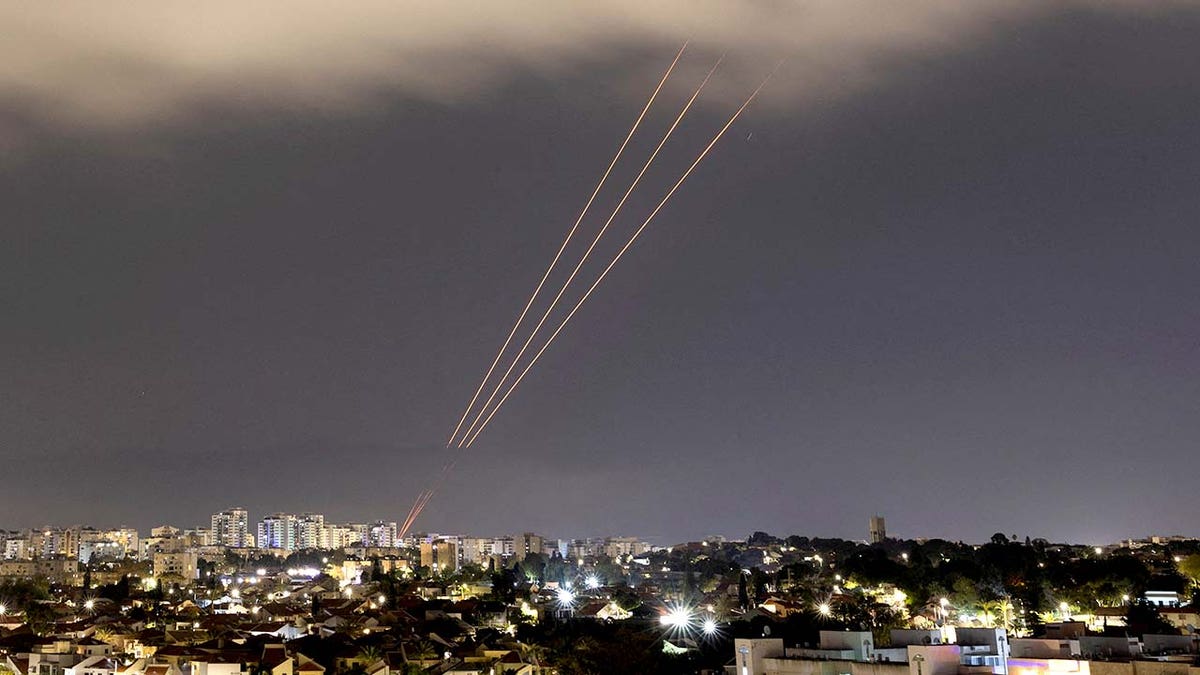
The official line from Tehran is that the sensors are quiet. After a joint U.S.-Israeli strike pounded the Shahid Ahmadi Roshan enrichment complex in Natanz early Saturday morning, the Atomic Energy Organization of Iran (AEOI) rushed to assure the public that no radioactive material had leaked into the Isfahan province. It is a familiar script, designed to project a veneer of control while the bedrock of their nuclear program is systematically dismantled. But the absence of a radioactive plume does not mean the facility survived.
In reality, Natanz is no longer a functioning heart of an atomic program; it is a graveyard of high-end centrifuges buried under tons of reinforced concrete and twisted steel. This latest sortie, occurring in the fourth week of a widening regional war, represents a shift from tactical sabotage to total structural liquidation. While the world watches for a "Chernobyl moment" that will likely never come due to the depth of the bunkers, the actual crisis is the permanent erasure of Iran’s enrichment capacity and the desperate, invisible scramble to secure what remains of its 60% enriched uranium.
The Engineering of a Ghost Site
Natanz was never just a building. It is a sprawling subterranean honeycomb, protected by meters of soil and sophisticated air defense umbrellas. However, the munitions used in Saturday's strike—and the preceding waves since late February—are designed to bypass the traditional concept of "destruction."
Military planners are no longer aiming for a single catastrophic explosion that would send isotopes into the atmosphere. Instead, they are using sequential "bunker-buster" strikes, likely including the GBU-57 Massive Ordnance Penetrator (MOP), to collapse the access points and internal life-support systems of the underground halls. When the entrances at Kuh-e Kolang Gaz La (Pickaxe Mountain) are caved in, the facility becomes a high-tech tomb.
The technical reality is brutal. Centrifuges, particularly the advanced IR-6 and IR-9 models Iran has been testing, are temperamental machines. They spin at supersonic speeds, balanced on magnetic bearings with tolerances measured in microns. Even a non-kinetic strike—a "near miss" that sends a massive seismic shock through the bedrock—is enough to cause thousands of these machines to touch their outer casings and shatter instantly. You don’t need to hit a centrifuge to kill it; you just need to make the mountain shake.
The Enriched Uranium Shell Game
The most pressing question isn't whether the buildings are standing, but where the fuel has gone. Before the February 28 escalation, the International Atomic Energy Agency (IAEA) estimated Iran had amassed nearly 500 kilograms of uranium enriched to 60%. That is a hair’s breadth from 90% weapons-grade material.
Satellite imagery from early March showed frantic activity around the secondary "Pickaxe Mountain" site. Intelligence suggests the Revolutionary Guard has been attempting to "ratline" this material out of known facilities and into mobile, decentralized storage—possibly in civilian areas or deep within the Zagros Mountains. This creates a terrifying intelligence gap. If the U.S. and Israel successfully bury the enrichment halls but lose track of the existing stockpile, they haven't ended the threat; they’ve just made it portable.
Washington is currently debating the deployment of Joint Special Operations Command (JSOC) units for "sensitive site exploitation." This is the polite military term for sending elite teams into a hot war zone to physically seize nuclear material before it vanishes into the black market or a hidden "dirty bomb" program.
The Myth of "No Leak"
Tehran’s insistence that there is no leakage is technically plausible but strategically deceptive. Modern enrichment facilities don't "melt down" like power reactors. Uranium hexafluoride (UF6) gas, the feedstock for centrifuges, is chemically toxic and can form hydrofluoric acid when it hits moisture in the air, but it doesn't create a continental radiation cloud.
By focusing the narrative on the lack of a leak, the Iranian government is attempting to distract from the fact that their primary strategic lever has been snapped in half. President Masoud Pezeshkian’s vow to "rebuild with greater strength" rings hollow when the specialized carbon fiber and high-strength maraging steel required for new centrifuges are under a total blockade. You cannot 3D-print a nuclear program in a basement while your energy grid is being systematically picked apart by airstrikes.
The End of Strategic Depth
For decades, Natanz was the ultimate insurance policy. It was thought to be too deep to hit and too sensitive to touch without sparking a global catastrophe. That psychological barrier has evaporated. The 2026 conflict has demonstrated that "strategic depth" is an obsolete concept against modern penetration forensics.
The strikes on Saturday were not just about stopping a clock; they were about proving that no amount of concrete can buy sovereignty anymore. As the Israeli Air Force and U.S. assets continue to cycle through targets in Isfahan and Fordow, the Iranian leadership is learning that their nuclear shield has become a lightning rod. The facility is quiet because it is dead, and no amount of official denial can restart the rotors.
Would you like me to analyze the current logistical movements of JSOC units or the specific seismic signatures recorded during the Natanz strike?