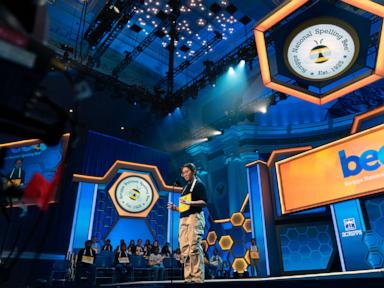
For fifteen years, the Scripps National Spelling Bee lived a comfortable, insulated life. Tucked away inside the cavernous, suburban ecosystem of the Gaylord National Resort & Convention Center in National Harbor, Maryland, the event was a self-contained universe. Spellers, parents, judges, and media existed under one massive glass atrium. You could glide from your hotel room to a study lounge, grab a quick bite at a food court, and walk onto the competition stage without ever feeling a gust of wind or checking the weather forecast.
That isolation ended this week. In a bid to inject historic grandeur into its second century of operation, the Bee returned to downtown Washington, D.C., anchoring its onstage rounds at DAR Constitution Hall.
The move looks spectacular on television. The grand, neoclassical auditorium sits just steps from the National Mall, offering an aesthetic weight that a suburban convention center simply cannot match. Yet, behind the scenes, the transition has introduced severe logistical friction that threatens the hyper-focused routine required by these elite young competitors. By swapping the clinical efficiency of a modern resort for a fractured footprint across the nation's capital, organizers have forced 247 middle schoolers to navigate a gauntlet of urban security, political spectacles, and transportation hurdles.
The Disconnected Footprint
The core flaw of the new layout is spatial division. For the first time since 1957, Bee Week is split between two separate facilities located blocks apart.
While the onstage competition unfolds under the historic proscenium of Constitution Hall, the official host hotel and all non-broadcast events are stationed at the JW Marriott on Pennsylvania Avenue. This separation transforms a routine trip to the stage into a complex military-style movement. To keep the schedule on track, organizers are relying on a fleet of shuttle buses to ferry families back and forth through the gridlocked heart of the capital.
For a fourteen-year-old competitor trying to maintain perfect mental clarity before parsing obscure Latin or Greek roots, these transitions are exhausting. The previous venue allowed spellers to rest in their hotel rooms until moments before their flight was called. Now, they face crowded hotel lobbies, strict bus departure windows, and the ambient noise of a bustling metropolitan downtown.
The physical constraints of Constitution Hall compound the issue. Built in 1929 by the Daughters of the American Revolution, the building is a National Historic Landmark. It was designed as a concert hall, not a modern convention facility. Backstage space is at a premium. Hallways are narrow and easily congested. The sprawling lounges where spellers used to decompress, review word lists, and console one another after an elimination have been replaced by tight corridors and temporary holding areas.
Dining has emerged as another overlooked failure point. At National Harbor, a massive food court provided rapid, predictable sustenance for families working around unpredictable tournament brackets. Downtown D.C. offers world-class dining, but little of it is built for a family needing a twenty-minute lunch before a high-stakes written test. The immediate vicinity of the hall is a government office desert, forcing families to rely on limited in-house options or travel back to the hotel area just to find a meal.
The Birthday Cage Match Next Door
If the internal logistics are difficult, the external environment is surreal. The ultimate irony of the Bee’s return to the district is its immediate neighbor on the Ellipse.
As the eighth-graders step off their shuttle buses to spell words like anchialine or éclaircissement, they are greeted by the hum of heavy construction machinery on the South Lawn of the White House. Crews are currently erecting a massive outdoor octagon. This structure is for UFC Freedom 250, a mixed martial arts mega-event scheduled for June 14 to mark President Donald Trump’s 80th birthday and the nation's semiquincentennial.
The visual contrast is staggering. On one side of the security fence stand some of the most academic, disciplined children in the world. On the other side is the building of a cage-fighting arena designed for maximum physical violence.
This juxtaposition is more than a cultural curiosity; it is a major security headache. The quickest, most logical pedestrian path between the JW Marriott and Constitution Hall would normally be a direct stroll across the Ellipse. Instead, that public space is completely choked by temporary fencing, construction assets, and Secret Service checkpoints. The path is blocked.
Furthermore, the entire neighborhood is on high alert. Just days before the competition began, a security incident escalated rapidly when a man opened fire at a White House checkpoint, wounding a bystander before being fatally shot by law enforcement. Consequently, security around Constitution Hall has been intensified to an extraordinary degree. Bomb-sniffing K-9 units patrol the historic corridors, and magnetic scanners guard every entrance. It is a tense, high-pressure environment for children who are already carrying the immense weight of national television expectations.
The TV Glitz and the Cost of History
Organizers knew the move would be disruptive, but they bet on the cultural capital of the District. There is an undeniable romanticism to having these students surrounded by the monuments, museums, and institutions that reflect the nation’s history. For some families, the chance to walk past the Washington Monument between rounds makes the logistical headaches worthwhile.
The television broadcast also reaps the benefits. Scripps has partnered with production company Embassy Row to execute a refreshed visual identity for the ION primetime broadcasts. The historic backdrop of Constitution Hall provides a dramatic weight that a generic corporate ballroom lacks. The stage looks grand, the lighting is cinematic, and the stakes feel appropriately massive.
Yet, this raises an uncomfortable question about the modern evolution of academic competitions. Is the event prioritizing the aesthetic demands of a television audience over the practical needs of the participants?
Elite spelling requires an environment stripped of variables. It demands absolute focus, silence, and predictable routines. When the competition was held in the Maryland suburbs, it was heavily criticized by traditionalists for lacking soul and feeling sterile. But that sterility was a feature, not a bug. It insulated the children from external chaos.
The early rounds of the 2026 tournament have already proven that the kids can handle the pressure, but they shouldn't have to battle the venue alongside the dictionary. As the remaining field moves into the high-stakes final rounds, the true test will not just be memory, but endurance. The speller who lifts the trophy on Thursday night will have conquered the English language, an oppressive security apparatus, and the logistical nightmare of a city center caught between a scholastic tradition and a presidential prize fight.