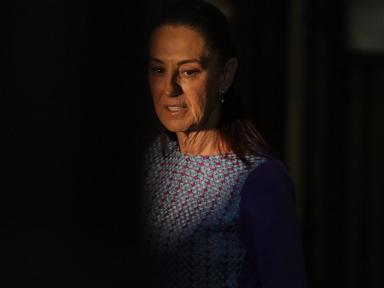
President Donald Trump told Vivek Ramaswamy to keep airing a controversial Ohio gubernatorial campaign ad featuring Democratic rival Amy Acton's estranged mother, calling the spot "hitting pay dirt" even as bipartisan criticism mounted. For voters watching from the sidelines, the story looks like another loud cable-news squabble over negative television. Look closer at the mechanics of modern statewide media buying, party discipline, and trauma politics, and a sharper picture emerges.
Campaign ads rarely survive on shock value alone. They survive when a campaign decides the outrage itself does free distribution work. Ramaswamy backed the spot with a reported $4 million push across television and digital channels in the closing stretch of the race, turning a deeply personal family rift into a statewide loyalty test inside the Ohio Republican Party.
How a Family Rift Became a Statewide Loyalty Test
Most reporters treat an ad controversy like a weather report. A storm hits on Tuesday, politicians offer quotes on Wednesday, and polls move—or don't—by Friday. That misses how modern statewide campaigns actually operate in the final weeks before an election.
When Ramaswamy put Acton's estranged mother, Donna Arthur, on screen attacking her daughter's character, the spot bypassed policy debates over healthcare, taxes, or state management. It aimed straight at emotional friction. At the same time, it forced every prominent Republican in Ohio to pick a side publicly.
Ohio Governor Mike DeWine broke ranks and urged the campaign to pull the ad, calling it wrong. U.S. Senator Jon Husted said he would not have run it. Representative Nancy Mace of South Carolina called it shameful and offensive. Every living full-term governor of Ohio criticized the commercial.
Trump moved the other way. On social media and at a rally in Iowa, he urged Ramaswamy to "ride with it" and keep the spot on the air, attacking DeWine in the process. Vice President JD Vance backed the hard-line posture as well, telling critics to stop whining and focus on winning.
The Strategic Calculus Behind Four Million Dollars
Four million dollars in a high-stakes statewide race buys heavy rotation across broadcast stations and digital feeds. Still, paid media is only half the ledger. Earned media—news segments, clips, social debates, and angry reaction quotes—multiplies the reach without draining the ad budget.
In veteran campaign strategy, that trade-off carries a clear risk. Broadening an attack beyond a candidate's public record can alienate swing voters and suburban moderates who already dislike mudslinging. Yet base-mobilization strategists often calculate differently. They bet that an unapologetic fighter who refuses to apologize signals strength to loyal voters, even when party elders object.
A campaign ad that provokes your own party's governors is no accident; it is a deliberate wager that party loyalty to the top of the movement outweighs traditional decorum.
That wager exposes a real fracture inside Ohio Republicans. Traditionalists worry about reputational damage and ticket-splitting. Movement loyalists treat institutional restraint as weakness. Trump's defense turned a messaging dispute into a test of who stands with the campaign in the homestretch.
What the Ad Left Out of the Frame
A commercial has thirty or sixty seconds to make an impression. What gets edited out matters just as much as what stays in.
Public reporting around the dispute highlighted the long estrangement between Acton and her birth mother, Donna Arthur. Acton has not seen her mother since 1978, after child abuse allegations involving Arthur's husband, Cledith Arthur, who faced a grand jury indictment and became a fugitive before eventually dying years later. Acton's brother backed her account, and family members pointed out that Arthur remained married to Cledith Arthur until his death in 2004.
When reporters pressed Trump on that backstory shortly after his initial social media post, Trump said he did not know the details of the family history. Even without knowing the specifics, he argued that a mother publicly criticizing a candidate running for office was major news that any campaign would use if it had the chance.
Why Context Changes How Voters Read the Spot
Context does not settle every political argument, nor does it guarantee how an individual voter will react. Some voters view family estrangement as a private matter that has no place in a governor's race. Others listen to any harsh criticism of an opponent and weigh it alongside policy disagreements.
Still, leaving out decades of documented family history strips away information voters need to judge credibility. A parent's condemnation carries one weight in an ordinary family dispute and a very different weight when the parent and child have been estranged for nearly half a century amid severe childhood trauma.
Acton addressed that personal history directly by framing her background around protecting vulnerable families and children across Ohio. Her campaign and allies argued that weaponizing an estranged parent's words crossed an ethical line. Ramaswamy's camp pushed back with a counter-accusation, claiming critics were inventing double standards and changing the subject from Acton's own record.
The Double-Standards Argument and Media Mechanics
Every modern ad fight includes a battle over the referee. Campaigns rarely argue that an ad is gentle; they argue that the rules of coverage are rigged against them.
Ramaswamy's team contended that critics applied a double standard, arguing that Acton and her allies had previously attacked opponents' families or reputations without drawing the same condemnation. Trump echoed a version of that point when he suggested critics would celebrate a similar attack if it targeted his own family.
| Strategic Angle | Core Claim | Likely Audience Reaction | Key Vulnerability |
|---|---|---|---|
| Ramaswamy and Trump Defense | A mother's criticism is fair game; party critics are weak or disloyal. | Appeals to voters who favor aggressive counter-punching and tough campaigners. | Risks alienating moderate and undecided voters put off by personal attacks. |
| GOP Establishment Pushback | The ad crosses basic decency lines and hurts the broader ticket. | Resonates with traditional conservatives and institutional voters. | Invites sharp retaliation from movement leaders and loyalists. |
| Acton and Family Pushback | Exploiting an estranged parent and decades-old trauma is cruel and dishonest. | Strengthens sympathy among voters who view personal attacks as unfair. | Can get pulled back into constant defensive headlines instead of policy. |
In practice, media coverage rewards escalation. A polite disagreement over state budget numbers rarely leads the evening broadcast. A high-profile clash between a sitting president and a state's sitting governor over a family feud almost always does.
Yet escalation carries diminishing returns for both sides. Voters who tune out negative ads altogether often lump all candidates into the same cynical bucket. Meanwhile, voters who care deeply about specific policy outcomes—healthcare access, school funding, economic growth, cost of living—sometimes wonder why weeks of airtime go to personal grievances instead of concrete plans.
What This Fight Reveals About Voter Fatigue
Talk to ordinary voters during a heated campaign cycle and you hear a consistent refrain: exhaustion. Many people feel trapped between two versions of politics—one that treats every election as total war, and another that asks them to accept every compromise as normal.
In Ohio, some voters said they were tired of constant personal attacks and wished commercials focused strictly on what candidates would actually do in office. Others said ads barely changed their minds because they preferred reading up on candidates' records on their own.
- Ad saturation: Heavy spending in battleground states floods local screens with rival narratives until viewers tune out the noise.
- Party friction: Public splits between top national figures and state officeholders signal deeper ideological tension beneath the surface.
- Record versus persona: Voters must decide whether personal character claims, family disputes, or policy track records deserve the most weight.
To see how a campaign's messaging choices play out in real life, consider a hypothetical example of two swing-district voters watching the same evening news block. One voter sees Trump's backing of Ramaswamy as proof of a united, unapologetic push against the political establishment. Another voter sees the same exchange and decides neither side is talking about kitchen-table bills, prompting a closer look at independent voter guides rather than campaign spots.
Neither reaction is purely theoretical in modern campaigns. Both reflect real pressures shaping how Americans process political conflict when every clip is sliced for maximum friction.
When judging a controversial campaign ad, look past the loudest quotes on television and check the primary record behind the claims, verify who funded the buy, and weigh how the candidate's proposals would actually affect your household.