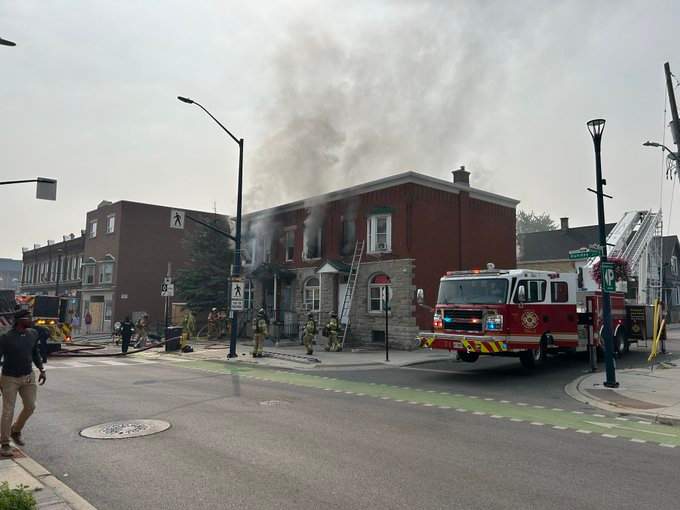
On July 17, 2026, thick black smoke began billowing from the second-floor windows of a multi-dwelling rental house at 745 Dundas Street in London, Ontario. Within days, a 29-year-old woman pulled from the burning structure succumbed to her injuries in a hospital bed, turning a local emergency into a full-scale criminal investigation led by the London Police Service Major Crime Section. This death was entirely predictable. The municipality already knew the building was a hazard, yet the regulatory gears turned too slowly to save a life.
This tragedy exposes a systemic failure across Ontario municipal enforcement frameworks. It reveals what happens when property standards and corporate ownership intersect at the expense of human lives.
The Paper Shield of Pending Court Dates
Municipalities regularly boast about their strict property standards and rigorous fire codes. Yet, the reality on the ground is that a corporate property owner can stack up violations for months or even years while the legal system crawls forward at a glacial pace.
The property at 745 Dundas Street, situated at the corner of Hewitt and Dundas streets in London’s Old East Village, was already the subject of an active, ongoing fire code investigation. Fire Department Deputy Chief Gary Bridge confirmed that multiple fire code charges against the property were already sitting before the courts when the blaze broke out. City staff further verified that the building owners had been formally notified of outstanding Property Standards and Building Code orders earlier in the year.
The system treats these violations as bureaucratic paperwork disputes. They are handled via corporate notices, fine structures, and court dockets that can be adjourned repeatedly by defense attorneys. While lawyers argue over compliance timelines and administrative definitions, real people sleep in structures that lack proper fire separations, functioning smoke alarms, or adequate suppression systems.
Public records identify the owner of the property as Radium-1 Development Ltd. In the modern real estate market, numbering systems and corporate shells frequently insulate investors from immediate personal accountability. When an Ontario building violates code, the city cannot simply lock the doors or instantly seize the property without an exhaustive, multi-stage legal battle. The law protects property rights with immense ferocity, often leaving the safety of the occupants as a secondary concern. The resulting policy gap allows unsafe multi-unit buildings to operate right up until the moment they burn down.
How Low-Income Housing Becomes a Unregulated Trap
When a corporate entity purchases a low-cost residential building in an urban core, the internal social dynamic shifts rapidly. Long-term tenants who understand their rights are often replaced by a transient, highly vulnerable population.
Consider the testimony of Daniel Boudreau, who lived in a basement apartment at 745 Dundas Street for 18 years. He woke up to smoke filling his unit and managed to escape. He noted that since the building changed hands roughly a year prior to the fire, the stable tenant base eroded. The building became occupied by squatters and street people.
This transition is a recognized economic strategy in sub-prime real estate management. When an owner stops maintaining a property, traditional tenants move out. The vacuum is filled by individuals experiencing severe housing precarity, substance use challenges, or psychiatric vulnerabilities. These occupants are highly unlikely to report fire code violations to the city. They will not complain about a missing fire extinguisher or a blocked fire exit because they fear eviction or police interaction.
Landlords discover that they can extract residual cash flow from a dying building while ignoring maintenance altogether. The property degrades into an unmonitored rooming house, holding eight to ten people in tight, hazardous conditions. When a fire inevitably starts, the results are catastrophic. Witnesses across the street reported seeing an individual jump from a second-floor window to escape the heat and black smoke. The damage to the structure is estimated at $500,000, but the true cost is measured in the intensive care ward and the morgue.
The Failure of Regional Enforcement Mechanisms
Ontario cities face an enforcement bottleneck that remains largely unaddressed by provincial policy. Fire inspectors and municipal property standards officers do not possess the immediate executive authority required to mitigate acute risks instantly.
| Enforcement Stage | Typical Operational Timeline | Operational Loophole |
|---|---|---|
| Initial Inspection | Triggered by complaint or routine check | Limited access to interior units without tenant consent or warrants |
| Issuance of Orders | Days to weeks following inspection | Corporate owners appeal the orders to municipal boards |
| Court Referrals | Months after non-compliance is verified | Adjournments, legal representation tactics, and low corporate fines |
| Emergency Closure | Rarely utilized due to high legal threshold | Cities must fund temporary housing for all displaced occupants |
The threshold for a municipality to declare an emergency closure of a building is exceptionally high. If a city shuts down a building, it faces the immediate financial and logistical burden of rehousing the displaced residents. In this specific instance, the Canadian Red Cross and municipal community partners were forced to step in after the tragedy to locate temporary housing for the survivors.
By delaying emergency interventions to avoid these logistical burdens, cities implicitly gamble with tenant safety. They rely on the court system to scare corporate owners into compliance. But a corporation cannot be jailed. A corporation views municipal fines simply as a cost of doing business, a line-item expense that is weighed against the cost of a full structural renovation.
Moving Beyond Bureaucracy
The Ontario Fire Marshal and the London Police Service are currently trying to piece together the exact origin of the Dundas Street blaze. They will inspect charred wiring, look for signs of acceleration, and analyze structural degradation. But focusing strictly on the physical spark misses the systemic arson of neglect.
If Ontario truly wants to stop these preventable fatalities, the legal framework must shift. Municipalities require the statutory power to immediately seize control of properties that fail multiple critical fire safety inspections, bypassing the months of courtroom maneuvering that corporate owners use as a shield. When an owner fails to maintain basic life-safety systems like fire separations and alarms, the property should be placed into immediate municipal receivership. The city should repair the building using the owner's assets, rather than waiting for a court date that might arrive too late.
The current strategy allows real estate speculators to hoard deteriorating urban properties, milk them for rent, ignore safety warnings, and leave the public to deal with the ashes. A 29-year-old woman is dead because a property development company was allowed to treat fire safety orders as a long-running legal negotiation. Until the provincial government changes the rules to prioritize human lives over corporate property rights, the next fatal fire is already burning.