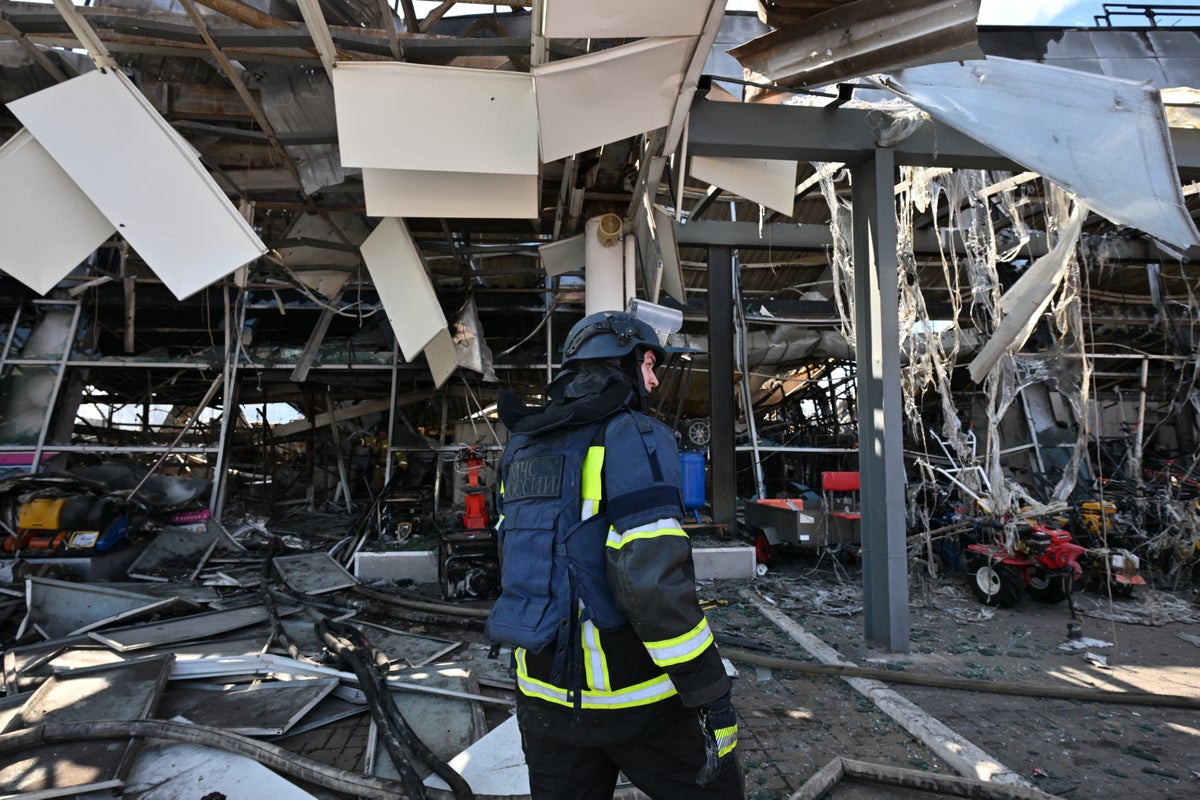
Nine people are dead, flattened into the concrete and earth of two southern Lebanese villages by a pair of Israeli airstrikes that mark the bloodiest escalation since a fragile June truce was stitched together by international brokers. The targets included a residential home on the edge of Ansar, where seven members of a single community—including three children—perished before dawn. Hours later, a second blast tore through Deir al-Zahrani, killing two more and sending a fresh wave of panic choking up the highways leading north toward Beirut.
This is what a hollow peace looks like on the ground. For weeks, diplomats in foreign capitals have pointed to the June agreement as proof that the southern front had cooled. They spoke of stabilization frameworks, monitored borders, and a gradual return to normalcy. But anyone tracking the rhythmic pulse of artillery and drone patrols knew the arrangement was built on sand. The latest casualties expose the core flaw of the current architecture: a cessation of open conventional war was mistaken for a permanent political settlement, leaving civilians trapped in a permanent grey zone of occupation, retaliation, and unaddressed grievances.
The Mechanics of a Fragile Front
To understand why Ansar and Deir al-Zahrani became targets, one has to look past the immediate tactical justifications offered by military commanders. The Israeli military stated that the strikes hit infrastructure belonging to Hezbollah in response to hostile actions near the strategic Ali Taher hill. Yet local officials and residents paint a starkly different picture of daily reality outside the formally designated security zones.
Southern Lebanon has effectively been carved into partitioned spheres of control. Large swaths of land south of the Litani River remain under direct Israeli military administration, while towns sitting further north—such as those struck this weekend—exist in an administrative vacuum. The Lebanese state lacks the military capacity to project power effectively into these contested spaces, and Hezbollah refuses to fully disarm or abandon its asymmetric posture.
When a skirmish or an exchange of fire happens along the frontier, the response does not respect fine legal distinctions between combatant and non-combatant. It hits homes. It hits roads. It shatters families who thought they were far enough from the frontline to sleep safely.
+---------------------------------------------------------------+
|                SOUTHERN LEBANON POWER DYNAMICS                |
+-------------------+-------------------------------------------+
| Israeli Forces    | Controls large security zones in the deep |
|                   | south; maintains active strike posture.   |
+-------------------+-------------------------------------------+
| Hezbollah         | Operates asymmetric networks; rejects     |
|                   | forced disarmament demands. |
+-------------------+-------------------------------------------+
| Lebanese State    | Struggles to project sovereignty; caught  |
|                   | between diplomatic appeals and reality.   |
+-------------------+-------------------------------------------+
Why Traditional Diplomatic Fixes Keep Breaking
The international community continues to rely on formulas that failed prior to the March outbreak of full-scale hostilities. Washington-led talks focus primarily on border security arrangements, weapon containment, and temporary buffers. These frameworks treat the symptoms of a deep-seated structural crisis while ignoring the political poison underneath.
Hezbollah views unilateral disarmament demands as an existential capitulation, arguing that the Lebanese government is making unreciprocated concessions under foreign pressure. Meanwhile, Israeli security doctrine dictates a zero-tolerance policy toward any remnant of militant infrastructure near its northern communities, leading to preemptive or retaliatory strikes that routinely level civilian housing blocks.
There is no mechanism in the current diplomatic blueprint to reconcile these opposing red lines. Instead, every minor friction point—an unconfirmed drone sighting, a suspicious vehicle movement, a localized exchange of mortar fire—acts as a match dropped into a dry forest.
The Human Toll and the Exodus North
The immediate consequence of Saturday's strikes is not strategic realignment; it is human displacement. Following the explosions in Nabatieh and its surrounding districts, main exit routes were immediately choked with traffic. Families packed whatever belongings could fit into the trunks of sedans and onto the backs of motorcycles, fleeing further north toward the capital.
This migration has happened before. It happened in March, it happened during the heavy bombardments of previous years, and it is happening now because the civilian population has zero confidence in the longevity of any ceasefire announced from abroad. Every time a roof caves in on a family in Ansar, the psychological contract between the Lebanese citizen and the state frays further. People are no longer asking when the war will end permanently; they are calculating how long they have before the next airstrike finds their own neighborhood.
The diplomatic machinery will likely grind forward next week. Statements of condemnation will be issued, envoys will exchange phone calls, and temporary quiet may be re-imposed. But nine more people are dead in the hills of the south, and the underlying machinery of violence remains completely untouched