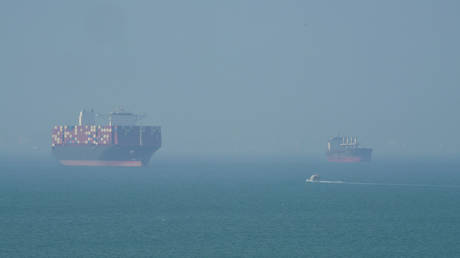
The Strait of Hormuz remains the single most precarious artery in the global economy. Through this narrow maritime chokepoint flows roughly 30 percent of the world’s seaborne oil and a significant portion of its liquefied natural gas. When this passage coughs, global markets catch a fever. Recently, Tehran proposed a new governance mechanism for the strait as part of a 14-point peace framework submitted to Washington. On the surface, it looks like a diplomatic opening. Underneath, it is a calculated bid to cement permanent structural control over the flow of energy that sustains modern civilization.
Washington has, predictably, signaled deep skepticism. The standoff is not merely about navigation rights. It is a fundamental disagreement over whether the Islamic Republic retains the legitimacy to levy tolls or dictate terms in a zone that international law generally categorizes as open to transit. By framing their proposed governance as a source of stability, Iranian planners are attempting to reposition themselves from a perceived disruptor to a formal administrator.
The mechanics of this proposal reveal much about the current state of regional power dynamics. Iran is not asking for a temporary ceasefire arrangement. They are seeking to normalize their physical presence in the water as a recognized maritime authority. This shift would provide Tehran with a permanent revenue stream and, more importantly, the ability to selectively apply pressure on shipping based on compliance with their own regulatory environment. For the United States and its regional allies, conceding this would be a move toward acknowledging Iranian sovereignty over waters that are essential to global trade.
Consider the logistical reality of the chokepoint. It is not just about the ships. It is about the insurance premiums, the navigational uncertainty, and the downstream impact on fertilizer, petrochemicals, and manufacturing. When maritime security degrades, costs do not simply rise in the Gulf. They multiply across global supply chains. A shipping line facing high war-risk insurance or the threat of seizure will inevitably pass those costs to the buyer in Shanghai, Rotterdam, or Los Angeles. This creates a hidden tax on the global economy, one that remains regardless of which power nominally controls the coastlines.
The Iranian proposal to establish a toll system or a new management framework is a recognition that their leverage is tied to the physical restriction of this corridor. By separating the Strait of Hormuz from the broader nuclear negotiations, Tehran is attempting to create a compartmentalized deal. They hope to secure the lifting of naval blockades and gain international recognition of their maritime rights in exchange for a temporary period of transit security. It is a classic strategy of trading operational constraint for political legitimacy.
Yet, this approach ignores the core security requirements of the United States. President Trump’s administration continues to push for a comprehensive resolution that includes limits on enriched uranium and ballistic missile development. A deal that addresses the strait without addressing the nuclear program fails to satisfy the fundamental security anxieties that drive the current naval presence in the region. Without a broader, more integrated agreement, any mechanism governing the strait remains a fragile construct, susceptible to the same pressures that have brought the region to the brink of open conflict repeatedly.
The history of maritime security is littered with failed attempts to regulate chokepoints through bilateral or regional arrangements. When the incentive for disruption outweighs the incentive for cooperation, the governance framework collapses. Right now, both sides are operating under the weight of accumulated distrust. Iran sees the U.S. naval presence as an existential threat to its maritime commerce, while Washington views Iranian efforts to control the strait as an act of extortion meant to bypass sanctions.
If this standoff continues to simmer, the most likely result is a continued deterioration of shipping reliability. We are seeing signs of this already. Operators are forced to navigate through increased GPS interference, heightening the risk of collision or unintentional violation of territorial waters. These incidents act as catalysts for escalation. A miscalculation by a junior commander in the heat of a tense patrol is just as likely to trigger a regional crisis as a formal policy shift in Tehran or Washington.
The proposal for a new management mechanism will not resolve the underlying issue. It is merely a symptom of a larger struggle for regional order. As long as the basic incentives for conflict remain—sanctions, the threat of military action, and the desire to project power through energy dominance—the Strait of Hormuz will remain a site of acute vulnerability. The path to stability does not lie in a new committee or a new set of maritime regulations. It lies in the extremely difficult work of aligning the core interests of two powers that, at present, see the control of this narrow, essential waterway as a zero-sum contest.
The reality remains that the world will continue to pay the price of this friction until a more comprehensive settlement is reached, or until one side decides that the cost of continued brinksmanship exceeds the benefits of the status quo. For the shipping industry and the global economy, the only certainty in the coming months is that the transit through the gulf will continue to be expensive, unpredictable, and entirely at the mercy of political outcomes that remain currently out of reach.