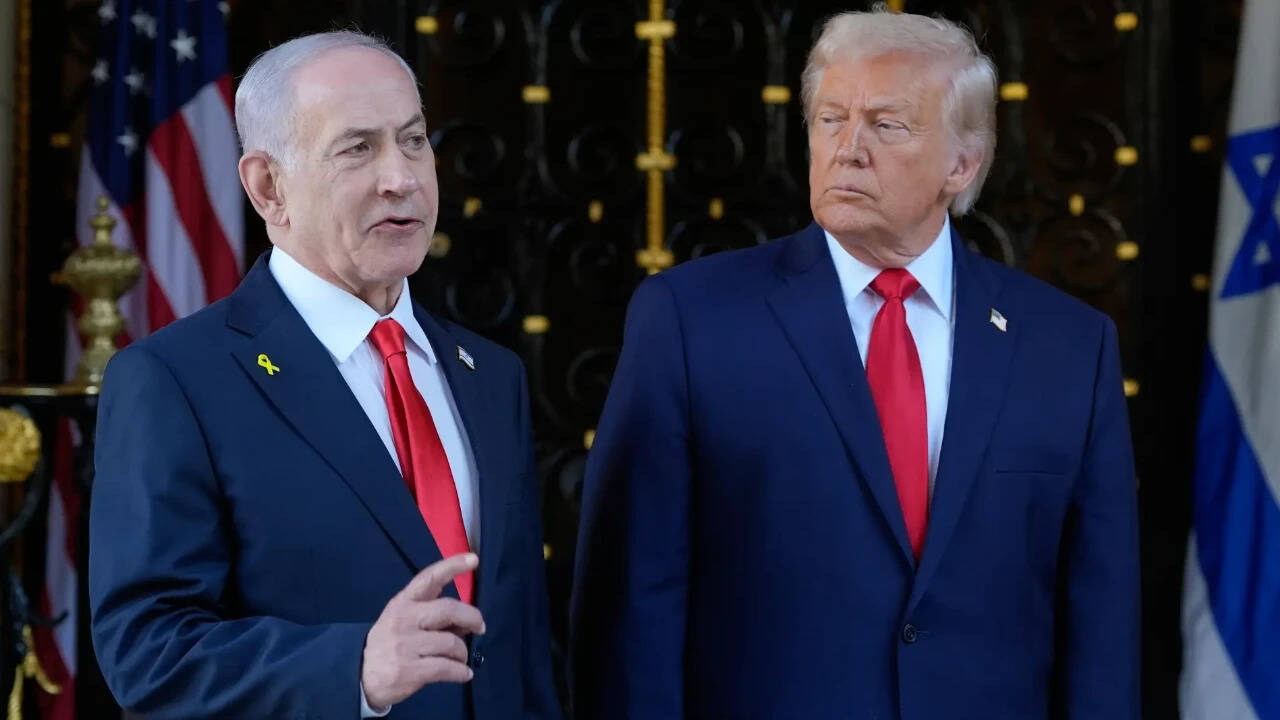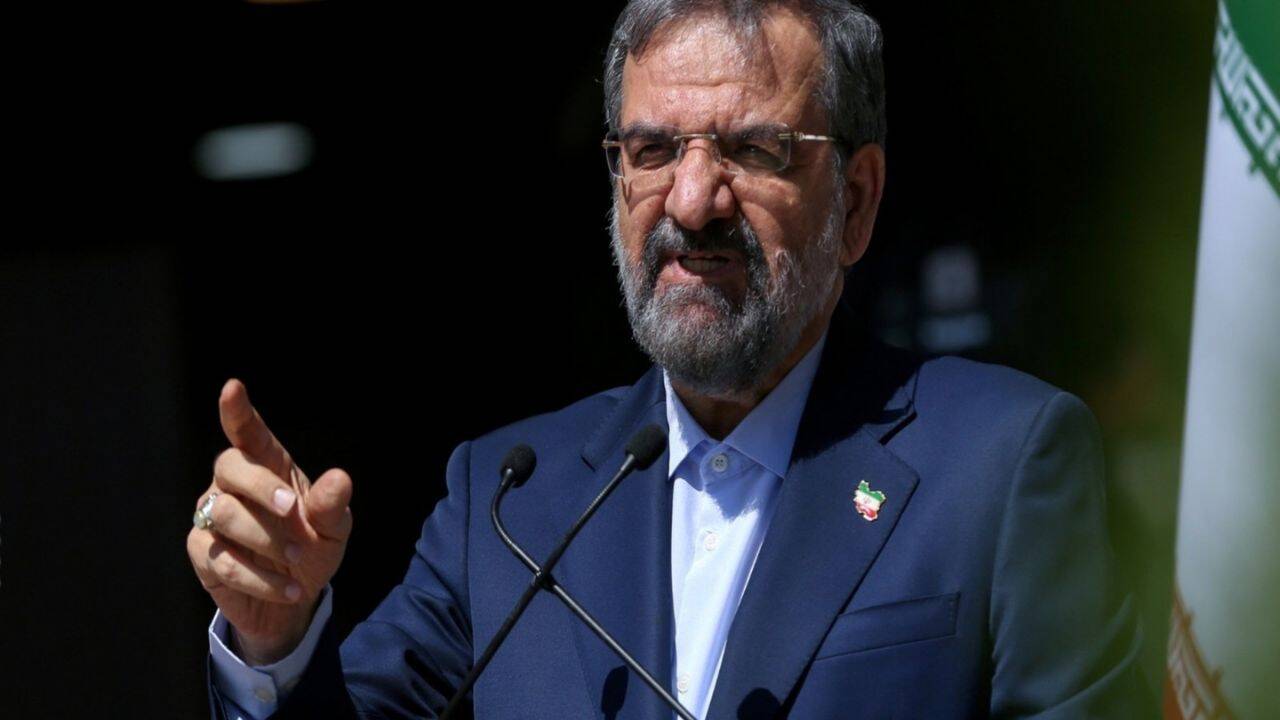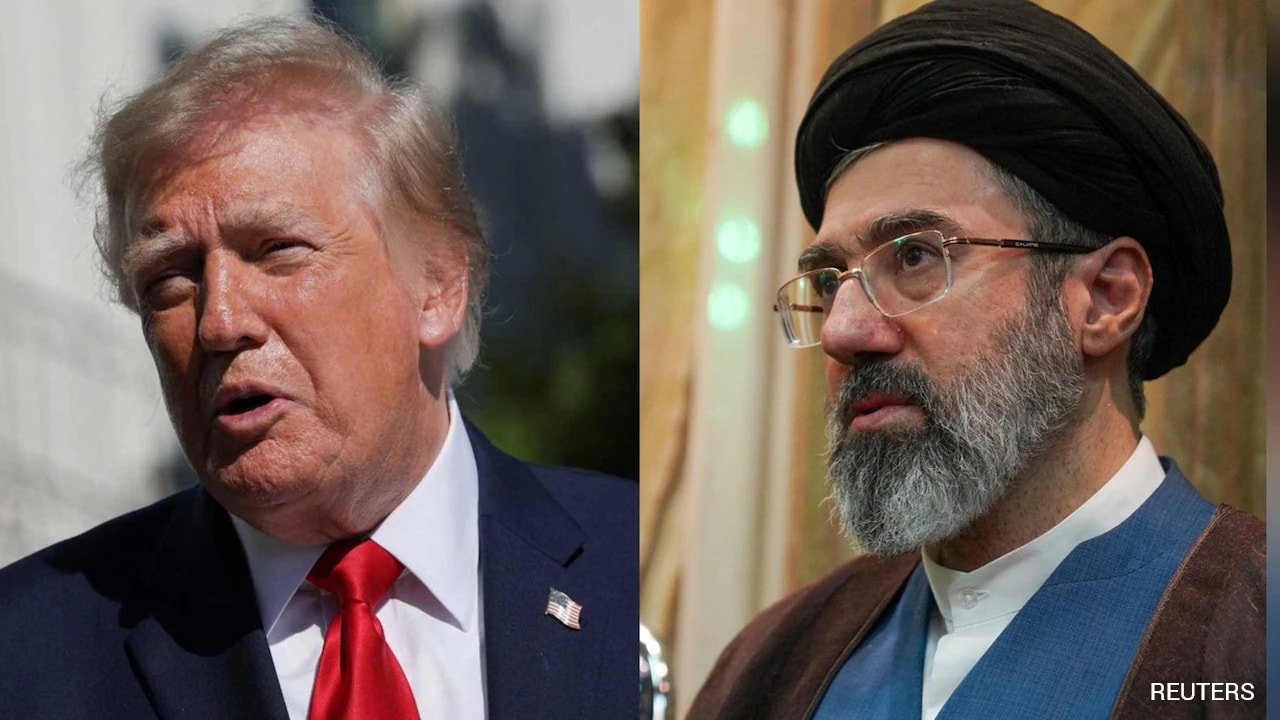
The core premise behind Donald Trump’s ten-minute strike threat and Mojtaba Khamenei’s reported updating of Iranian target lists is a classic escalation of asymmetric deterrence. Washington relies on forward-deployed hypersonic and stealth assets to compress decision-making windows, while Tehran uses decentralized proxy networks and hardened subterranean missile cities to guarantee painful, economically destabilizing retaliation regardless of initial leadership losses. Neither posture is designed to start a conventional war. Both are calculated psychological gambits meant to establish escalation dominance before diplomatic channels freeze entirely.
Look past the cable news chyrons. When a United States president or senior defense official floats a ten-minute window to hit targets inside Iran, they are not talking about scrambling fighter jets from continental bases. They are referencing a pre-positioned regional architecture that already has coordinates locked into guidance systems.
The Physics of a Ten-Minute Strike
Speed changes strategy. A ten-minute kinetic timeline eliminates the traditional diplomatic off-ramps that defined Cold War crises, leaving zero margin for miscalculation or back-channel clarification.
To execute a strike inside Iranian territory within ten minutes of a presidential order, the Pentagon relies on a specific triad of regional assets already operating in the Persian Gulf, the Arabian Sea, and hardened bases across the Levant.
First, there are guided-missile submarines like the Ohio-class vessels periodically deployed to the Fifth Fleet's area of operations. Carrying up to 154 Tomahawk land-attack cruise missiles, a submerged platform sitting in the Gulf of Oman can launch salvos that cross the Iranian coastline in minutes, flying low enough to evade standard radar horizons.
Second, forward-deployed fifth-generation aircraft—specifically the F-35A and F-22 Raptor—operating out of Al Dhafra in the United Arab Emirates or Al Udeid in Qatar require minimal transit time to reach launch boxes over the Persian Gulf. Armed with standoff munitions, these platforms do not even need to penetrate dense Iranian airspace to hit coastal radar installations, naval assets, or port infrastructure.
Third, long-range artillery and tactical ballistic systems stationed in neighboring theaters provide immediate suppression capabilities.
The strategic purpose of broadcasting this ten-minute capability is compressed decision-making. By signaling that the fuse is already lit, Washington attempts to force Tehran's leadership into a defensive crouch, compelling them to spend resources on dispersal and concealment rather than offensive planning. Yet anyone who has watched the Islamic Revolutionary Guard Corps (IRGC) operate over the last three decades knows that public ultimatums rarely produce compliance in Tehran. Instead, they trigger a very specific, well-rehearsed counter-protocol.
Mojtaba Khamenei and the Shadow Succession
Understanding the Iranian response requires looking at who actually holds the operational levers inside the regime. For years, analysts treated Mojtaba Khamenei—the second son of Supreme Leader Ali Khamenei—as a background figure, an enigmatic cleric operating without a formal government portfolio. That assessment is dangerously outdated.
Operating out of the Beit-e Rahbari (the Office of the Supreme Leader), Mojtaba has spent the better part of twenty years cultivating deep, personal loyalties within the IRGC’s intelligence apparatus and the Basij paramilitary network. He is not a public politician giving Friday prayer sermons. He is an institutional gatekeeper who controls access, vets senior military appointments, and coordinates intelligence flow between the clerical establishment and the security state.
When intelligence reports surface regarding Mojtaba Khamenei updating a "target list," they point to a critical shift in how Tehran manages succession and crisis response. An aging Supreme Leader means the regime is actively stress-testing its command-and-control continuity. Updating target matrices under Mojtaba’s supervision serves two distinct purposes.
Internally, it solidifies his credentials as a wartime strategist among hardline IRGC commanders who might otherwise view a hereditary succession with skepticism. Externally, it signals to Washington and Tel Aviv that decapitation strikes or rapid kinetic campaigns will not paralyze the chain of command. The authority to retaliate has already been delegated, mapped out, and distributed across autonomous cells.
What Actually Sits on Tehran's Target List
Mainstream coverage often reduces Iranian retaliation to vague threats against American military bases. That misses the actual economic and geopolitical calculus driving IRGC planners. Tehran knows it cannot win a symmetrical force-on-force engagement against the United States military. Consequently, its target matrix is built around asymmetric economic pain and regional political disruption.
Consider a hypothetical scenario where an initial wave of US strikes destroys three major Iranian naval facilities and an enrichment hall within a fifteen-minute window. Tehran’s immediate response would almost certainly avoid trying to sink a US aircraft carrier—a high-difficulty, low-probability mission—in favor of high-probability, high-impact economic targets across the region.
Energy Chokepoints and Infrastructure
The Strait of Hormuz remains the ultimate geographic lever. Roughly a fifth of the world's petroleum liquids consumption passes through this narrow waterway. Tehran does not need to physically blockade the strait with surface ships to halt global energy flows; deploying fast-attack craft, mobile coastal anti-ship cruise missiles, and smart naval mines is enough to send maritime insurance rates skyrocketing, effectively freezing commercial tanker traffic within hours.
Beyond the water, energy processing facilities across the Persian Gulf sit within a five-to-ten-minute flight time of Iranian ballistic missiles and one-way attack drones. The 2019 drone and cruise missile strike on Saudi Aramco’s Abqaiq and Khurais facilities demonstrated how a relatively inexpensive salvo can temporarily knock out five percent of global oil supply. Updating the target list in the current climate means mapping the exact vulnerabilities of regional desalination plants, export terminals, and pipeline junctions—infrastructure that neighboring Gulf states cannot easily replace or defend against saturation attacks.
Forward Operating Bases and Logistics Hubs
While Washington touts its ten-minute strike capability, those very forward bases are Tehran's most accessible targets. Installations in Iraq, Syria, Jordan, and the Gulf states sit well within the range of Iran’s Fateh-110 and Zolfaghar short-range ballistic missiles.
IRGC doctrine focuses heavily on saturation tactics. Rather than firing one expensive missile, Iranian planners launch coordinated waves of cheap Shahed-series drones to exhaust interceptor batteries like Patriot and THAAD systems, followed immediately by precision-guided ballistic missiles aimed at runways, fuel depots, and radar arrays. Even if ninety percent of incoming munitions are intercepted, the remaining ten percent can render an airfield unusable for days, complicating the very air superiority Washington relies on to sustain a campaign.
The Proxy Depth Chart
Perhaps the most complex section of any updated target matrix involves non-state actors across the Levant and the Red Sea. Hezbollah in Lebanon, the Houthis in Yemen, and various Shia militias in Iraq give Tehran strategic depth that extends thousands of miles beyond its borders.
By activating these nodes simultaneously, Tehran turns a bilateral confrontation with the United States into a multi-front regional firestorm. Commercial shipping in the Red Sea becomes a target. Diplomatic compounds and logistics convoys across Mesopotamia come under rocket fire. The objective is to raise the political and financial cost of American intervention to a threshold that Washington’s domestic electorate—and its regional allies—refuse to tolerate.
The Intelligence Blind Spots Both Sides Ignore
Every war game looks clean on a briefing slide, and both Washington and Tehran suffer from dangerous institutional blind spots when assessing the other's capabilities.
American military planners frequently overestimate the psychological shock value of precision strikes. The assumption that destroying high-value infrastructure in ten minutes will force a rational actor to sue for peace ignores the foundational ideology of the Islamic Republic. For the IRGC, survival is measured in regime continuity and resistance, not the preservation of physical assets. Absorbing a massive first strike and firing back—even with degraded capabilities—is viewed in Tehran as a strategic victory because it proves the regime cannot be intimidated into submission.
Conversely, Iranian strategists routinely miscalculate American domestic politics and escalation thresholds. Tehran often assumes that infusing low-level friction—a few injured contractors, a disrupted shipping lane, a damaged radar site—will cause Washington to back down to avoid a broader war. History shows the exact opposite can happen. Cross a specific casualty threshold, particularly involving American service members, and domestic political pressure in Washington rapidly shifts from containment to overwhelming, punitive force that ignores economic consequences.
There is also the problem of hardened subterranean infrastructure. Over the past two decades, Iran has buried its most critical missile production facilities, enrichment centrifuges, and command centers deep beneath granite mountains at sites like Fordow and Natanz, alongside vast underground "missile cities" along the Zagros range. A ten-minute strike utilizing sea-launched cruise missiles or standard tactical munitions can destroy surface buildings, radar dishes, and electrical grids, but it cannot collapse reinforced bunkers buried hundreds of meters underground. Achieving deep-earth penetration requires specialized heavy bombers carrying massive ordnance penetrators—assets that take significantly longer than ten minutes to deploy and telegraph their arrival well in advance.
The Fragility of Regional Alliances
Caught directly between Trump’s rapid-strike rhetoric and Mojtaba Khamenei’s target lists are the Arab states of the Persian Gulf. Countries like Saudi Arabia, the United Arab Emirates, and Qatar host the very infrastructure Washington needs to execute rapid regional operations, yet they also sit squarely inside Tehran's retaliatory crosshairs.
Over the last several years, Gulf capitals have quietly hedged their bets. Recognizing that American air defense umbrellas cannot guarantee total immunity against low-altitude drone swarms and short-range ballistic missiles, Riyadh and Abu Dhabi pursued diplomatic détente with Tehran.
If Washington moves toward a ten-minute kinetic option, its biggest operational hurdle will not be Iranian radar; it will be overflight and basing permissions. Host nations are acutely aware that allowing their territory to be used as a launchpad for strikes against Iran automatically turns their own oil fields, desalination plants, and financial centers into legitimate targets on the IRGC's updated list. Without unrestricted access to regional airbases and airspace, the Pentagon’s ten-minute strike window stretches into hours, forcing reliance on long-range bomber sorties from Diego Garcia or the continental United States, or purely naval assets operating in international waters.
Cyber Warfare as the Silent First Strike
Before a single missile leaves a vertical launch tube or a drone lifts off from a mobile erector, the initial exchange in this standoff will happen in the electromagnetic and cyber domains—and it likely already is.
Both nations possess mature, battle-tested offensive cyber capabilities. For the United States, a ten-minute kinetic strike would be preceded by electronic warfare and cyber operations designed to blind Iranian air defense networks, sever fiber-optic command links between Tehran and regional missile brigades, and disrupt power grids around key military zones.
Iran’s cyber apparatus, while less sophisticated than the NSA or US Cyber Command, specializes in disruptive, asymmetric attacks against civilian and commercial infrastructure. An updated target list in Tehran does not just consist of GPS coordinates; it includes IP addresses for Western financial institutions, water treatment facilities, municipal transit systems, and energy grids. Cyber retaliation allows Tehran to strike inside the continental United States without firing a single physical projectile, blurring the lines of attribution and complicating Washington’s response calculus.
The Architecture of Deterrence Failure
The fundamental danger of pairing a ten-minute strike doctrine with a pre-delegated retaliatory target list is the removal of human friction from the escalation ladder.
Deterrence relies on ambiguity and time—time for intelligence agencies to verify threats, time for diplomats to pass messages through third-party intermediaries in Muscat or Bern, and time for leaders to weigh the catastrophic costs of full-scale conflict. When military doctrines compress strike timelines down to ten minutes, early warning systems become hair-trigger mechanisms. A misinterpreted radar signature, an unauthorized militia rocket launch, or a localized naval incident in the Strait of Hormuz can instantly trigger automated or pre-approved strike packages before anyone in Washington or Tehran has verified what actually happened.
The rhetoric surrounding ten-minute strikes and updated target lists is ultimately a battle over perception, an attempt by both capitals to convince the other that the cost of crossing the line is immediate and unbearable. Yet when both sides build war machines optimized for instantaneous reaction rather than deliberate restraint, the line itself disappears long before either leader gives the final order.