The Ghost in the Boardroom
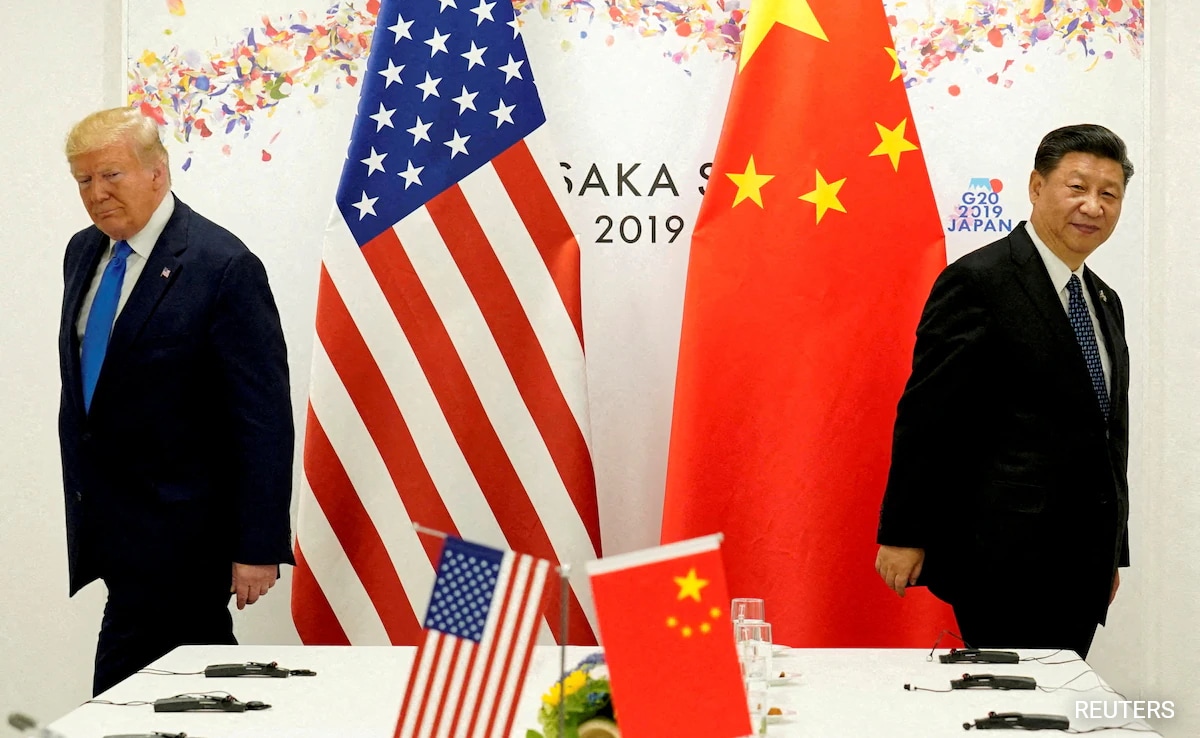
Late on a Tuesday evening in a glass-and-steel tower in Shanghai, a logistics manager named Chen stares at a spreadsheet that refuses to make sense. On paper, the trade war between the United States and China is in a state of frozen animation—a "Phase One" truce that smells of ink and handshake photos. But Chen’s reality is different. A shipment of specialized sensors from a Midwestern American firm has been sitting in a customs warehouse for three weeks. There is no new tariff. There is no official ban. There is only a quiet, bureaucratic shrug.
This is the new front. It isn't fought with loud proclamations or televised signing ceremonies. It is fought with the "Economic Pressure Toolkit," a collection of subtle, administrative levers that China has been refining while the world was distracted by the surface-level drama of trade deals.
The truce offered a breather. It gave the markets a reason to stop shaking. Yet, beneath that calm surface, the machinery of coercion has only grown more sophisticated. While the headlines focused on soybean quotas and aircraft orders, Beijing was busy codifying the rules of a different game—one where the weapons are lists, audits, and "unreliable" designations.
The Art of the Slow Walk
Consider the "Unreliable Entities List." It sounds like something out of a mid-century spy novel, but for a multinational corporation, it is a nightmare wrapped in a legal filing. When a company is placed on this list, it doesn't just face a tax. It faces an existential cooling. Permits disappear. Visas for executives are delayed. Regulatory inspections, once a yearly formality, suddenly become a weekly ritual of grueling scrutiny.
It is the death of a thousand paper cuts.
By formalizing these tools, the Chinese government has moved away from the reactionary, "tit-for-tat" tariff battles of the Trump era. They have realized that tariffs are a blunt instrument that often hurts the wielder as much as the target. If you tax an American component, your own factory costs go up. But if you launch an anti-monopoly investigation into the company that makes that component, you exert pressure without ever touching a customs ledger.
This shift represents a fundamental change in how global power is projected. We used to think of economic warfare as a series of walls. Now, it is more like a series of dials. Beijing can turn the pressure up or down on a specific company, in a specific province, at a specific hour, all while maintaining the public stance of a committed trade partner.
The Export Control Law and the Power of Denial
In 2020, as the world grappled with a pandemic, China quietly passed its Export Control Law. On its face, it looked like a standard piece of legislation, similar to those found in Washington or Brussels. But the devil lives in the definitions. The law allows for the restriction of any goods, technologies, or services that relate to "national security and interests."
Those three words—and interests—are the trapdoor.
Imagine a manufacturer in Ohio that relies on Chinese rare earth elements to produce high-end magnets for electric vehicles. Under this law, if that Ohio firm’s parent company takes a political stance that Beijing finds distasteful, the supply of those rare earths could vanish overnight. Not because of a trade war, but because of a "security review."
The genius of this approach is its deniability. It mimics the legal frameworks of the West, using the language of global norms to justify the exercise of raw political will. It creates a psychological environment of permanent uncertainty. For an American CEO, the question is no longer "What is the tariff rate?" It is "Is my presence in China still considered in their national interest today?"
The Hostage Diplomacy of the Balance Sheet
We often talk about "leverage" as if it were a static thing, like a heavy stone. In reality, it is more like water; it flows to the point of least resistance.
During the height of the trade truce, the pressure moved from the border to the courtroom. We saw the rise of "anti-suit injunctions." This is a legal maneuver where a Chinese court forbids a company from pursuing a patent infringement case anywhere else in the world. If a Western tech giant tries to sue a Chinese rival for stealing intellectual property in a court in London or New York, the Chinese court can levy massive daily fines until the case is dropped.
It is a jurisdictional wall. It tells the world that the rules of global commerce stop at the edge of the Chinese market, unless those rules happen to favor the home team.
For the hypothetical Chen in Shanghai, or his counterpart in a Chicago boardroom, this creates a bizarre duality. One world is the world of the "truce," where trade continues and ships cross the Pacific. The other is a world of shadows, where a single Tweet or a stray comment in a quarterly earnings call can trigger an avalanche of "administrative hurdles" that can bankrup a subsidiary in months.
The Long Game of Institutionalized Coercion
The most unsettling part of this toolkit isn't that it exists—it's that it's now permanent. These aren't temporary measures meant to be traded away at the next summit. They are part of the institutional fabric of the Chinese economy.
Beijing has watched how the United States uses the dollar as a weapon. They have seen the power of the Treasury Department to cut off entire nations from the financial system. The "Economic Pressure Toolkit" is the response. It is the construction of an alternative architecture of power, one that doesn't rely on the global banking system but on the sheer gravity of the Chinese domestic market.
They are betting that no matter how difficult the "slow walk" becomes, Western companies will never truly leave. The market is too big. The supply chains are too deep. The gravity is too strong.
So, the pressure continues to build, hidden under the cover of a trade truce that feels more like a tactical pause than a peace treaty. It is a world where the conflict is no longer an event, but a climate. You don't "win" a climate; you only survive it.
The Cost of the Invisible War
What does this mean for the person buying a smartphone in a mall in Virginia, or the worker on an assembly line in Chongqing? It means that the cost of everything now includes a "geopolitical risk premium" that no one can quite calculate.
It means that innovation is slowed by the fear of being "too successful" and catching the eye of a regulator. It means that the global economy is decoupling not into two separate spheres, but into two entangled giants that are constantly pinching each other’s nerves.
The truce gave us the illusion of a return to normalcy. It allowed us to believe that the friction of the last few years was a glitch, a temporary fever that would break with the right signature on the right piece of paper. But the development of the toolkit proves otherwise. The fever hasn't broken; it has merely become chronic.
Chen eventually gets his sensors. They are released from the warehouse after a "thorough inspection" that finds nothing wrong. But the message is delivered. The Midwestern firm knows that their access to the market is a privilege, not a right. They will think twice before they expand their next plant in the States. They will hesitate before they support a policy that Beijing dislikes.
The silence of the truce is not the silence of peace. It is the silence of a room where everyone is waiting to see who flinches first, while the walls slowly, almost imperceptibly, begin to close in.