In a small textile workshop on the outskirts of Jakarta, a woman named Siti watches the digital clock on the wall. It is not the end of her shift she is tracking, but a flickering number on her phone screen: the exchange rate of the Indonesian Rupiah against the United States Dollar. When the Federal Reserve in Washington D.C. decides to raise interest rates to cool down an American housing market she will never see, the thread Siti buys for her sewing machines becomes instantly, punitively more expensive. She hasn't changed her business model. She hasn't made a mistake. But thousands of miles away, a group of people she will never meet has effectively lowered her standard of living with a single press release.
This is the quiet, daily reality of the global monetary order. We are taught that money is a neutral tool, a simple yardstick for value. In reality, money is a hierarchy. It is a ladder where those at the top breathe thin, easy air, while those at the bottom struggle for oxygen every time the wind changes in the West.
The Myth of the Level Playing Field
We often imagine the global economy as a vast, open marketplace where every nation brings its goods to trade. In this mental model, the rules are the same for everyone. If you work hard, produce quality items, and manage your budget, you thrive.
It is a comforting lie.
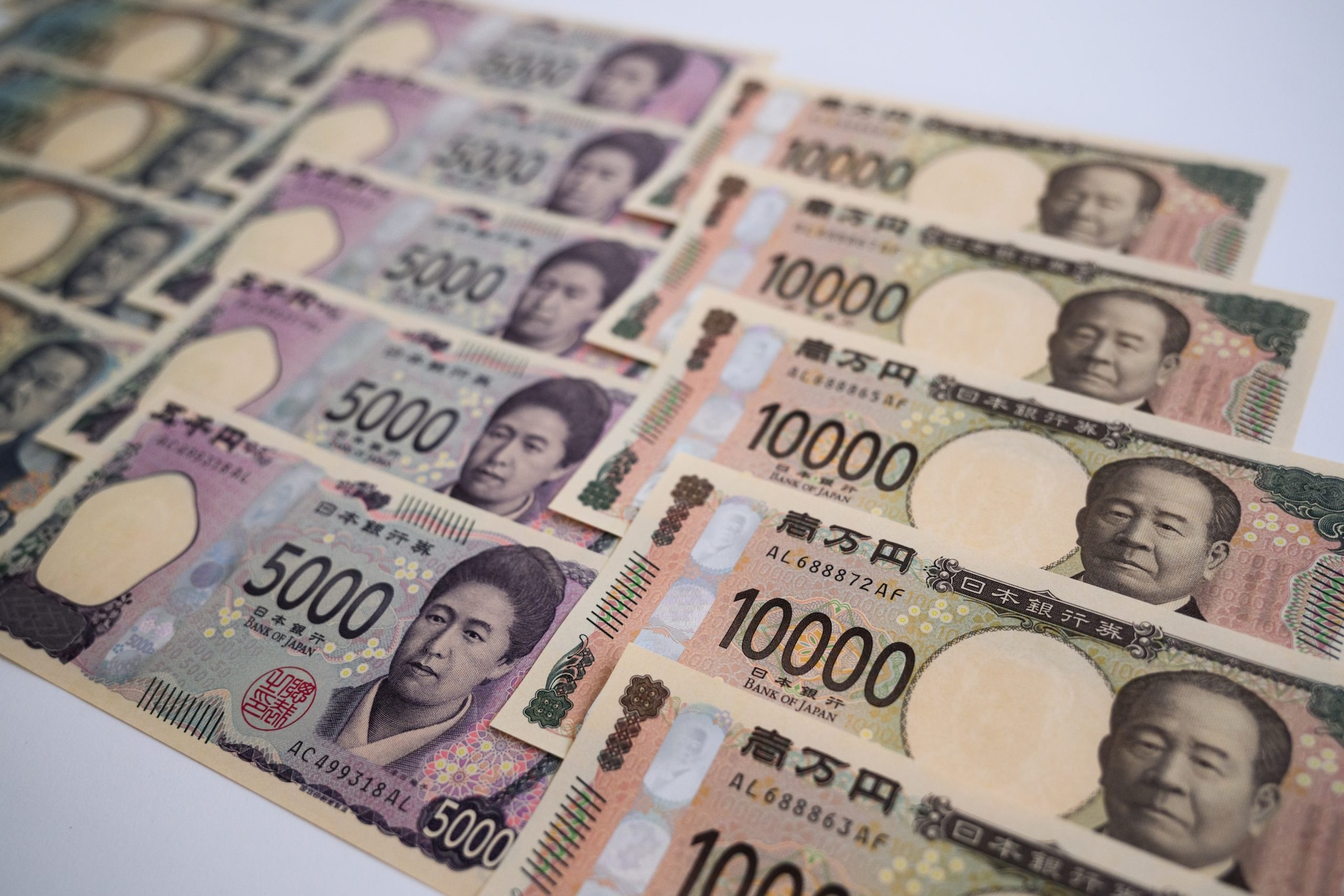
The global financial system is not a flat field; it is a steep, jagged mountain. At the summit sits the "Hard Currencies"—the US Dollar, the Euro, the Yen. These are the reserve currencies, the ones every nation needs to keep in a digital vault just to prove they are solvent. Below them are the "Emerging" currencies, and at the base, the "Soft" currencies of the developing world.
When a country like Brazil or Turkey wants to borrow money to build a bridge or a hospital, they often cannot do so in their own currency. Global investors don't trust the Lira or the Real to hold value over twenty years. So, these nations borrow in Dollars.
Imagine trying to pay off a mortgage where the bank can unilaterally decide that your debt is now 20% larger because of a policy shift in a different country. That is the "Original Sin" of international finance. It creates a cycle of dependency where the poorest nations are forced to peg their futures to the whims of the wealthiest.
The Privilege of the Printing Press
Consider the "Exorbitant Privilege." This term, coined in the 1960s, describes the unique position of the United States. Because the Dollar is the world's primary reserve currency, the U.S. can run massive deficits that would bankrupt any other nation.
If Nigeria prints too much money to stimulate its economy, the value of the Naira plummets, inflation skyrockets, and the cost of imported medicine becomes unbearable. But when the U.S. prints trillions, the world gobbles those dollars up. Central banks in Tokyo, Beijing, and Zurich need those dollars to facilitate trade and stabilize their own systems.
This creates a lopsided reality where the U.S. can export its inflation to the rest of the world. We see the "Power" in the title of this struggle not in tanks or planes, but in the ability to define what value is. The global monetary order is a system where the architect lives in the penthouse and the tenants pay for the renovations.
The Hidden Tax on Growth
Let’s look at a hypothetical scenario to ground this. Meet Elena, a brilliant software engineer in Argentina. She is as talented as any developer in Silicon Valley. She works for international clients, earning a decent wage. However, because her country’s currency is volatile and locked out of the top tier of the monetary hierarchy, she faces "Capital Flight."
Every time there is a hint of global instability—a war in Europe, a pandemic, a shift in oil prices—investors get scared. When investors get scared, they pull their money out of "risky" markets like Argentina and put it into "safe" assets like U.S. Treasury bonds.
Suddenly, Elena’s local purchasing power vanishes. The cost of her imported laptop doubles. The government, desperate to stop the currency from collapsing, raises interest rates to 70% or 100%. Local businesses can no longer afford to borrow. Growth grinds to a halt.
Elena is being taxed by a system she didn't vote for. This isn't just "bad luck." It is a structural feature of a world where one currency serves as the global backbone. The "Policy" mentioned by economists isn't just a set of rules; it is a fence that keeps certain nations in a state of permanent catch-up.
The Vicious Cycle of the Safety Net
When things go truly wrong, nations turn to the "Lender of Last Resort," typically the International Monetary Fund (IMF). On paper, this is a safety net. In practice, it often feels like a debt trap.
To receive a bailout, a country must often agree to "Austerity Measures." This usually means cutting social programs, freezing wages, and privatizing national industries. The logic is to make the country "attractive" to foreign investors again.
But look at the human cost.
In the 1990s and again in the late 2000s, we saw this play out across Southeast Asia and Southern Europe. While the banks were saved, the citizens saw their pensions evaporate and their healthcare systems crumble. The monetary order prioritizes the "stability of the system" over the "stability of the family."
The real tragedy is that this system is self-reinforcing. Because developing nations know the safety net is painful, they try to protect themselves by hoarding even more U.S. Dollars. They sell their goods cheaply to the West just to stack up greenbacks in their reserves. This effectively means that the poorest people in the world are lending money to the richest government in the world, at near-zero interest rates, just to ensure they don't get crushed in the next crisis.
A System Designed for Divergence
We are often told that global trade will lead to "convergence"—that poor countries will eventually catch up to rich ones. But a monetary system built on inequality ensures divergence.
If you are at the top, you have "Monetary Sovereignty." You can lower rates when your economy slows and raise them when it overheats. You are the conductor of the orchestra.
If you are at the bottom, you are just a listener. If the conductor speeds up the tempo, you have to run to keep up, even if you are already exhausted. If the conductor slows down, you are forced to wait, even if your people are starving.
This is why we see a growing movement toward "De-dollarization." Countries like Brazil, India, and China are increasingly looking for ways to trade in their own currencies. They are tired of being the collateral damage of a central bank in a different hemisphere. They are looking for a way to break the hierarchy.
The Cost of the Status Quo
It is easy to get lost in the jargon of "liquidity swaps" and "Special Drawing Rights." But behind every percentage point shift in a central bank's rate is a father who can no longer afford the tuition for his daughter's school. Behind every currency devaluation is a small business owner who has to shutter a shop that had been in the family for generations.
The invisible stakes are the dreams that are deferred because the medium of exchange is rigged against the dreamer. We treat the current monetary order as if it were a law of nature, like gravity. It isn't. It is a series of choices made by men in suits in the wake of World War II, a system designed for a world that no longer exists.
The struggle for a fairer monetary order isn't just an academic debate for economists. It is a struggle for the right of a woman in Jakarta, an engineer in Buenos Aires, and a farmer in Nairobi to own the fruits of their labor without a foreign bank taking an invisible cut.
We live in a world where we have globalized trade, globalized communication, and globalized culture, but we have kept a monetary system that belongs to a colonial era. The friction we feel in the world today—the political unrest, the migration, the deepening inequality—is the sound of that outdated machinery grinding against the reality of the 21st century.
Until the ladder is replaced with a bridge, the majority of the world will continue to climb a mountain that grows taller with every step they take.