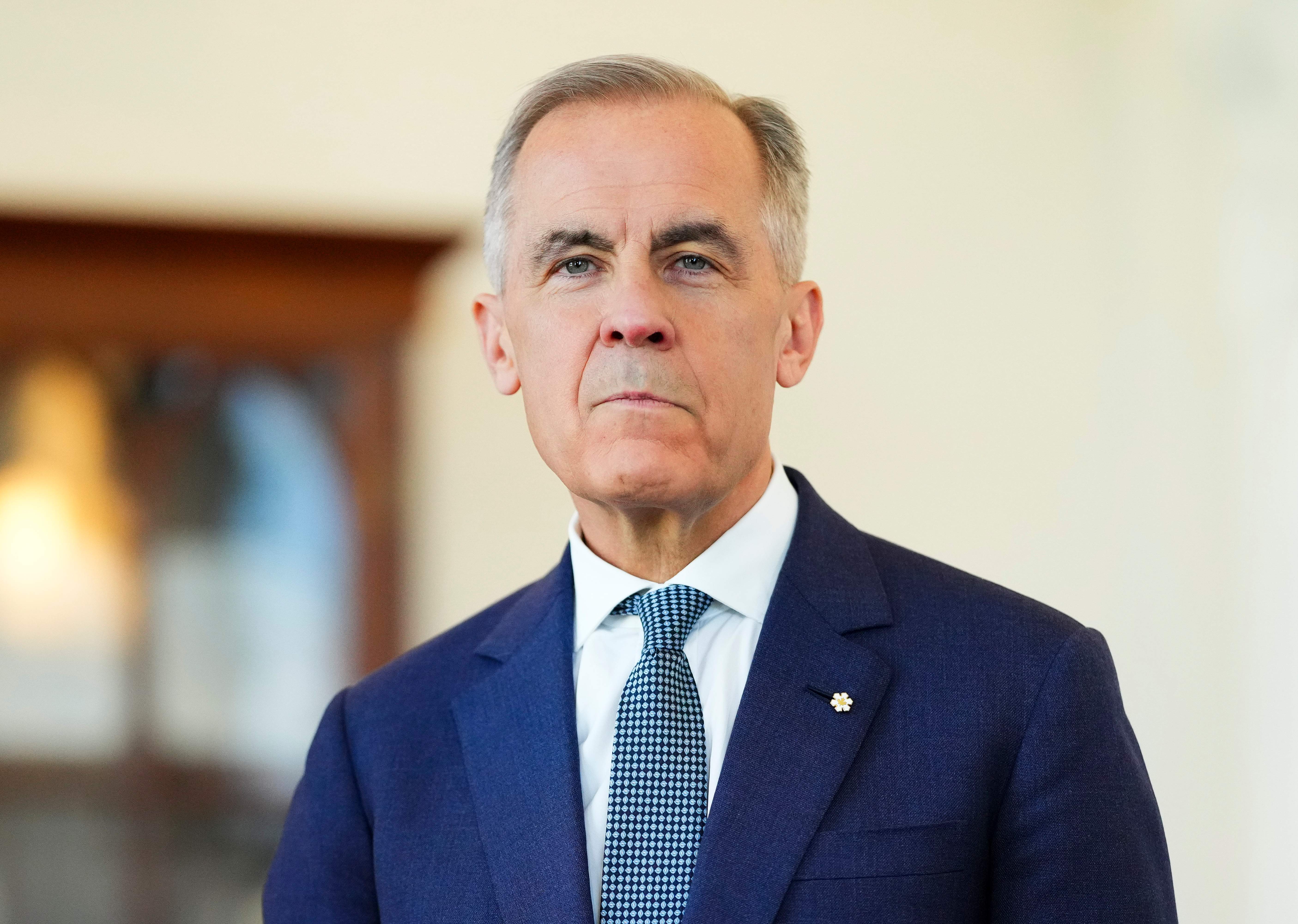
Mark Carney stands in a room where the air feels heavy with the weight of numbers. Outside, the world sees a former central banker, a man of spreadsheets and interest rates. But the reality is far messier. It involves the roar of trucks at the Ambassador Bridge and the quiet anxiety of a shop owner in Windsor who wonders if a shift in Washington will mean her shelves stay empty next month.
The border between Canada and the United States is often described as the longest undefended boundary in the world. That sounds poetic. It sounds like a triumph of diplomacy. To the people who actually move goods across it, however, it is a living, breathing organism that can suddenly choke off the oxygen to the Canadian economy.
Carney knows this. He also knows that the old ways of managing this relationship—polite phone calls between Ottawa and D.C.—are no longer enough. The world has fractured. Trade is no longer just about moving car parts or bushels of wheat; it is about survival in a century where supply chains are used as weapons.
To meet this moment, Carney has assembled a new council. It isn't a collection of ivory-tower academics. It is a war room of practical minds tasked with a singular, high-stakes mission: ensuring that the $3.6 billion in trade that flows between these two nations every single day does not stop.
The Architect and the Storm
Mark Carney is a man who speaks in the measured tones of someone who has seen the inside of the world’s most powerful vaults. He has led the Bank of Canada and the Bank of England. He has navigated the fallout of the 2008 financial crisis and the tectonic shifts of climate finance. But this new role, advising the Liberal government on a critical trade council, feels different. It is more visceral.
Imagine a small manufacturer in southern Ontario. For decades, they have operated on a "just-in-time" model. They don't keep months of inventory. They rely on the fact that a truck can leave a warehouse in Michigan and arrive at their loading dock in four hours. If that truck is delayed by forty-eight hours because of a new tariff or a regulatory spat, the factory lights go dark. Workers go home. Families stop spending.
This is the "human element" that often gets lost in the dry headlines about trade councils. We talk about GDP and trade deficits, but we are really talking about the ability of a father in Hamilton to pay his mortgage. We are talking about the stability of the grocery prices in a supermarket in Vancouver.
The council Carney is building serves as a protective layer for these people. It is comprised of leaders who understand the machinery of the American economy. They are individuals who can walk into a room in Washington or a boardroom in New York and speak the language of shared interest. They aren't there to beg for favors. They are there to prove that a prosperous Canada is the best insurance policy the United States has.
The Map of Interdependence
Consider the car you drive. It is a miracle of modern logistics. A single door handle might cross the border half a dozen times before the vehicle is finally assembled. This isn't just business; it is a shared nervous system. If you prick the finger of Canadian industry, the American heart feels the sting.
The new advisory council is focusing on three critical pillars. First, there is the immediate protection of existing trade routes. This is the defensive play. It involves identifying the "bottlenecks of tomorrow" before they become the crises of today. Second, there is the hunt for new opportunities in the green economy. Canada sits on a treasure trove of the critical minerals needed for the next century of transport. Third, and perhaps most importantly, is the management of the "Trump factor"—the looming possibility of a more protectionist administration south of the border.
Politicians like to talk about "Buy American" or "Canada First." These are catchy slogans. They work well in thirty-second commercials. But they ignore the reality that we are no longer two separate economies. We are one integrated machine.
Carney’s council is tasked with making this case to a skeptical American public. They have to explain that when a Canadian company builds a plant, they often use American steel. When an American tech firm expands, they often rely on Canadian talent. It is a story of mutual survival.
The Weight of the Chair
Being an advisor in this climate is a thankless task. If you succeed, nothing happens. The trucks keep moving, the shelves stay full, and the public never knows your name. You only become famous when things go wrong.
The pressure on this council is immense because the stakes have changed. We are no longer in the era of "free trade" as a given. We are in the era of "friend-shoring." This is the idea that you only trade with people you trust. In a world where Russia and China are increasingly decoupled from the West, the bond between Canada and the U.S. is the most valuable asset either country possesses.
But trust is a fragile thing. It can be eroded by a single executive order or a misinterpreted tweet. Carney’s group acts as the custodians of that trust. They are the ones who have to bridge the gap between the political rhetoric in the capital cities and the economic reality on the ground.
Critics might argue that another council is just more bureaucracy. They see a list of names and wonder what a committee can actually do against the tide of global protectionism. But they misunderstand the nature of modern power. Power today is not just about who has the most tanks; it is about who has the best relationships. It is about who can get the right person on the phone on a Sunday night when a trade corridor is suddenly blocked.
The Unseen Harvest
Think of the border not as a wall, but as a bridge.
Every morning, thousands of people wake up and cross that bridge to go to work. Nurses from Windsor cross to Detroit. Engineers from Buffalo cross to Toronto. This human flow is the lifeblood of our shared society.
The council’s work is ultimately about them. It is about ensuring that the border remains a place of opportunity rather than a site of friction. It is about making sure that the invisible lines on a map do not become barriers to the dreams of the people who live near them.
Mark Carney is a realist. He doesn’t believe that a trade council can solve every problem. He knows that the winds of politics are unpredictable. But he also knows that you don't wait for the storm to hit before you start reinforcing the foundation.
The work has begun. It is quiet, it is technical, and it is incredibly difficult. It involves long nights spent pouring over trade agreements and tense meetings with skeptical stakeholders. But it is some of the most important work happening in the country today.
As the global economy continues to shift and groan under the pressure of new rivalries and old grievances, the importance of this council will only grow. They are the sentinels of our prosperity. They are the ones standing at the gate, ensuring that the road ahead remains open.
The next time you see a truck hauling a load of timber or a crate of electronics across the border, remember that its passage is not guaranteed. It is the result of a delicate, constant negotiation. It is the result of people like Mark Carney and his council working behind the scenes to make sure the machine keeps humming.
The stakes are nothing less than the future of the North American middle class. We are all passengers on this ship, and for the first time in a long time, the navigators are looking at a map that shows more than just calm seas. They see the reefs. They see the darkening sky. And they are turning the wheel.