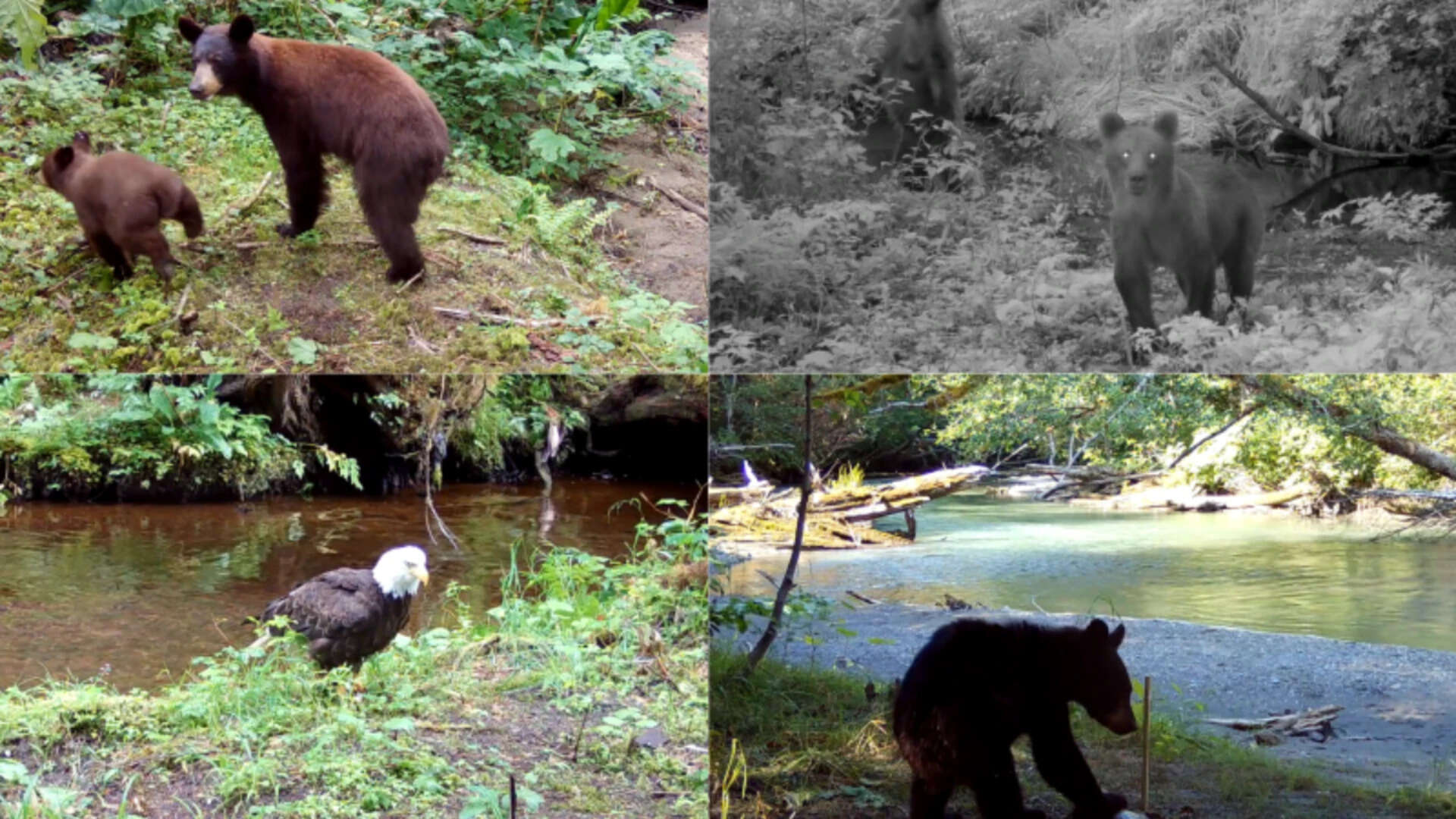
Wildlife biologists recently set up a network of hidden speakers along the pristine salmon streams of Alaska, broadcasting a sound far more terrifying to the local wildlife than the roar of a chainsaw or the crack of a rifle. It was the sound of a human being reading a book in a calm, conversational tone.
The results were immediate and devastating for the local ecosystem. Brown bears abandoned their crucial fishing spots, leaving half-eaten carcasses behind. Bald eagles took flight, abandoning vantage points they had occupied for hours. This biological retreat occurred not because of hunting pressure, habitat destruction, or physical confrontation, but due to the mere acoustic footprint of the human animal. The experiment exposes a deep flaw in how we manage wilderness areas. We have long believed that if we do not shoot the animals or pave over their habitats, we are leaving them unharmed. That assumption is dead.
The study, conducted across critical salmon-spawning tributaries, reveals that the psychological weight of human presence acts as an invisible wall. When apex predators flee these streams, the entire biological machinery of the region grinds to a halt. Salmon populations lose their natural population checks, nutrients fail to transfer from water to soil, and smaller scavengers lose their primary source of winter fat. This is not a localized inconvenience. It is a fundamental disruption of the evolutionary contract between predator and prey.
How the Experiment Exposed a Broken Ecosystem
For generations, wildlife management has relied on visible metrics to judge the health of an ecosystem. If the tree canopy remains intact and the water runs clear, we stamp a region as protected. Biologists shattered this complacency by deploying high-fidelity audio equipment in areas with minimal foot traffic. They wanted to isolate the precise impact of human vocalizations on wild animals that rarely encounter people.
The speakers did not blast sirens or simulated gunfire. Instead, they played standard text read at normal conversational volume. The reaction from the grizzly populations was uniform panic. Bears that had spent hours positioning themselves at the optimal riffles to catch migrating pink and sockeye salmon turned and fled into the dense brush within minutes of the audio playback.
This reaction carries a massive metabolic cost. A brown bear in Alaska operates on a strict caloric calendar. They have a narrow window of a few months to consume enough fat to survive a brutal winter hibernation. Every minute spent running from a phantom human speaker is a minute lost to starvation. When a bear is forced away from a stream, it abandons high-density caloric opportunities for lower-quality forage in the deeper woods. This forces them to burn more energy to acquire fewer calories.
The eagles showed a similar aversion. As apex avian predators, bald eagles rely on salmon carcasses left behind by the bears to feed themselves and their young. When the bears fled, the eagles followed, completely vacating the riparian zone. The experiment demonstrated that human speech creates a massive zone of exclusion. Animals are treating our casual chatter as an apex threat indicator, electing to starve rather than risk an encounter.
The Hidden Cost of Ecotourism and Wildlife Management
The ecotourism industry markets itself as a clean alternative to extraction industries like logging and mining. Millions of travelers head north every year, packed into observation vessels or guided hiking groups, operating under the assumption that taking photos leaves no footprint. The reality on the ground is far messier.
The surge in wilderness tourism has flooded Alaska's river corridors with acoustic pollution. Hikers are explicitly told to make noise while walking through the woods to avoid surprising a bear. "Hey bear," is the standard refrain shouted across thousands of miles of backcountry trails. While this practice undoubtedly reduces the number of sudden, dangerous defense attacks, it simultaneously weaponizes the acoustic environment. We are effectively clearing the forest of its native inhabitants long before we ever catch a glimpse of them.
This creates an uncomfortable paradox for national parks and wildlife refuges. These entities are mandated to provide public access while preserving wild characteristics. If public access inherently degrades the wild nature of these animals by instilling chronic stress and altering foraging behavior, the dual mandate becomes impossible to fulfill.
Consider the financial machinery behind wildlife viewing. Guided bear-watching tours can cost thousands of dollars per person, driving significant revenue to remote coastal communities. These tours frequently position groups directly at stream mouths. Operators argue that because the bears become habituated to seeing humans in designated spots, the impact is minimal. The hidden speakers experiment suggests otherwise. It proves that even when animals appear to tolerate our presence, their underlying neurological response is one of heightened alarm. They are navigating a permanent state of fear, forced to choose between starvation and the terrifying proximity of human voices.
Why a Silent Stream is a Dying Stream
An Alaskan salmon stream is more than just a waterway filled with fish. It is an industrial-scale nutrient delivery system for the entire Pacific Northwest. Salmon accumulate massive amounts of marine-derived nitrogen and phosphorus while feeding in the open ocean. When they return to their natal streams to spawn and die, they bring those ocean nutrients deep into the interior forests.
Bears are the primary mechanics of this nutrient transfer. A single grizzly can pull hundreds of salmon out of a river during a single run. They rarely eat the entire fish, focusing instead on the high-fat areas like the brains, skin, and eggs. The rest of the carcass is dropped on the forest floor, often hundreds of yards away from the water's edge.
This decaying biological matter feeds everything from insects to berry bushes. Old-growth Sitka spruce trees grown near salmon streams show significantly accelerated growth rates directly tied to marine nitrogen brought ashore by bears. When human voices scare bears away from these streams, that conveyor belt of nutrients stops.
The implications ripple down through the food chain:
- Scavengers lose their winter lifeline: Pine martens, minks, foxes, and gulls depend entirely on the scraps left behind by brown bears. Without bear kills, these smaller animals face severe winter food insecurity.
- Salmon populations face genetic stagnation: Bears selectively harvest certain sizes and species of salmon, driving natural selection. Without this predatory pressure, the evolutionary balance of the river shifts in unpredictable ways.
- Soil degradation accelerates: The lack of marine-derived nutrients weakens the riparian plant community, leading to increased bank erosion and the degradation of the very gravel beds salmon need to spawn.
By silencing the predators through our own vocal footprint, we are systematically starving the soil, the trees, and the surrounding wildlife. The damage is structural, slow-moving, and largely invisible to the casual observer.
The Policy Failure Chasing Predators into the Shadows
Current environmental protection laws are completely unequipped to handle acoustic degradation. The Marine Mammal Protection Act and the Endangered Species Act focus heavily on physical harassment, structural takes, and direct mortality. If a drone flies too close to a whale, or a logging operation cuts down a nesting tree, the law steps in. But if a group of rafters talks loudly down a salmon stream, scaring every predator within a half-mile radius, no violation has occurred.
Federal land managers operate with a blind spot regarding ambient noise levels. They regulate the number of vehicles on a road or the horsepower of an engine, but they completely ignore the unamplified human voice. The experiment demonstrates that the human voice itself is an environmental pollutant.
Fixing this requires a complete overhaul of how we define wilderness access. We need to move away from the idea that all public lands should be open to unrestricted human exploration at all times. Some river corridors must be designated as complete acoustic sanctuaries, where human entry is banned during critical wildlife feeding windows.
This will face immediate pushback from commercial guiding associations, local tourism boards, and recreational advocacy groups. The argument will be familiar: public lands belong to the public, and restricting access hurts local economies. That argument ignores the long-term economic reality. If the bears are driven off the streams permanently, the very attraction that fuels the ecotourism economy will vanish.
We have spent decades focusing on what we do with our hands in the wilderness. We worry about leaving trash, cutting down saplings, and campfires. It is time we start paying attention to what comes out of our mouths. The wilderness is listening, and right now, it is fleeing from the sound of our existence.