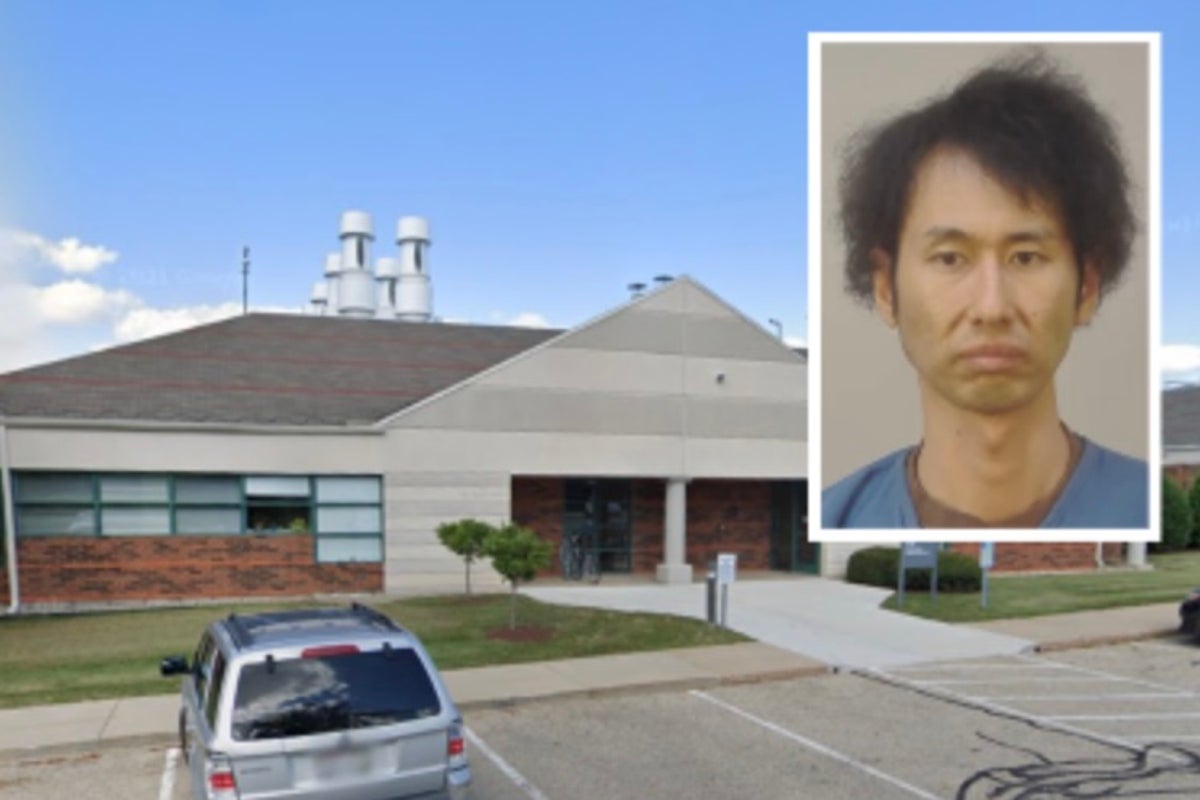
The air inside a high-level research laboratory is filtered, scrubbed, and recirculated until it feels sterile enough to breathe through a surgical mask. It is a place of absolute precision. We measure life in microliters. We track progress in milligrams. When you spend fourteen hours a day hunched over a centrifuge, your world shrinks to the size of a test tube. You begin to believe that every variable is under your control.
But you can’t filter out resentment.
At the University of California, Berkeley, the silence of the lab wasn't just a byproduct of intense focus. It was the sound of a slow-motion collapse. Behind the glass partitions of the engineering department, a brilliant researcher named Xuanyuan "Zack" He was watching his professional future evaporate. He had done the work. He had put in the years. He expected a promotion—the kind of validation that justifies the missed dinners and the blurred eyesight.
Instead, he was denied.
To an outsider, a missed promotion is a Tuesday. It’s a temporary setback. To a scientist whose entire identity is forged in the fires of academic prestige, it can feel like an execution. The ego is a fragile thing when it lives in a petri dish. When the university administration said "no," something in Zack He snapped. He didn't quit. He didn't file a grievance. He didn't even yell.
He waited.
The Chemistry of Betrayal
Imagine the mundane ritual of a morning at the office. You set your bag down. You grab your water bottle. You feel the familiar weight of your shoes as you step toward your desk. These are the tactile anchors of our daily lives. They are the things we trust implicitly.
One of He’s colleagues, a man who worked just feet away from him, began to notice a strange, metallic tang in his water. It wasn't the chlorine of tap water or the stale taste of a plastic bottle left in a hot car. It was sharp. Wrong. Soon, the symptoms followed. Dizziness. Nausea. A creeping, systemic fatigue that couldn't be explained by a lack of sleep.
Then came the shoes.
The victim began to experience burning sensations in his feet. The very act of walking—the most basic human movement—became an ordeal of fire. It is a specific kind of cruelty to poison a man’s shoes. It requires a level of intimate malice that goes beyond a sudden burst of rage. It requires the poisoner to watch their victim dress themselves in agony every single day.
The substance in question was cadmium.
Cadmium is a heavy metal that the body has no idea how to handle. It mimics essential minerals, sneaking past the body's defenses like a Trojan horse. Once inside, it settles into the kidneys and bones, staying there for decades. It is a quiet killer. It doesn't cause a dramatic, cinematic collapse. It erodes you from the inside out. Zack He, a man trained to understand the molecular building blocks of our world, knew exactly what he was doing. He wasn't just venting frustration; he was conducting a long-term experiment in human suffering.
The Surveillance of the Soul
In the world of academia, we often talk about "intellectual honesty." We peer-review papers and double-check data sets because the truth is the only currency that matters. But what happens when the person sitting across the lab bench from you has decided that the truth is whatever they can get away with?
The victim eventually grew suspicious. It wasn't a sudden epiphany. It was a slow, sickening realization that his environment was trying to kill him. He installed a hidden camera in his own workspace. It felt paranoid. It felt like something out of a cheap spy novel. Until he watched the footage.
The video didn't show a monster. It showed a coworker. It showed Zack He, a man with a PhD and a promising career, unscrewing the cap of his colleague's water bottle with the practiced ease of someone performing a routine titration. He wasn't shaking. He wasn't looking over his shoulder with wide, frantic eyes. He was calm. He was methodical.
He was a scientist at work.
This is the horror of the Berkeley case. It wasn't a crime of passion. It was a crime of calculation. When the police eventually searched He’s car and home, they found the tools of his new trade. They found the cadmium. They found the evidence of a man who had traded his ethics for a bottle of heavy metal.
The Cost of the Pressure Cooker
We have to ask ourselves how we got here. Why does a university lab—a place dedicated to the advancement of human knowledge—become a crime scene?
The answer lies in the invisible stakes of the ivory tower. In elite institutions, the "publish or perish" mantra isn't just a catchy phrase. It’s a lived reality. Your status, your funding, your visa, and your self-worth are all tied to a hierarchy that is notoriously rigid and often indifferent to the human beings caught in its gears.
When that hierarchy fails someone—or when someone feels they have been unfairly cast out—the reaction can be catastrophic. We see it in the high rates of depression among graduate students. We see it in the burnout of tenured faculty. And, in extreme, terrifying cases like this one, we see it in the weaponization of the very tools meant to save lives.
Consider the psychological landscape of a poisoner. It is a coward’s method. It allows for distance. You don't have to look into the eyes of your enemy as you strike. You simply add a few drops to a bottle and walk away, returning to your own work while the poison does its silent labor. It allows the perpetrator to maintain a facade of normalcy. Zack He likely sat through department meetings and chatted about research papers with the very man he was slowly destroying.
This duality is what haunts the survivors. The physical damage of cadmium poisoning can be treated, to an extent, through chelation therapy and rigorous medical intervention. But the psychic damage—the knowledge that your morning glass of water was a delivery system for a colleague’s hatred—that is a toxicity that never truly leaves the system.
The Fragility of the Lab
The Berkeley incident isn't just a story about one disgruntled employee. It’s a cautionary tale about the environments we build. When we prioritize results over people, when we create systems where a single "no" can feel like the end of the world, we create a breeding ground for desperation.
We like to think of scientists as purely rational actors, driven by logic and the pursuit of objective reality. But they are human. They are subject to the same petty jealousies, the same crushing insecurities, and the same vengeful impulses as anyone else. The difference is that a scientist has the keys to the cabinet where the heavy metals are kept.
The case against Zack He ended in a courtroom, far from the sterile quiet of the Berkeley labs. He faced charges of attempted murder and poisoning. The university moved on, scrubbed the benches, and assigned new researchers to the empty desks. The filters continued to hum, cleaning the air of every possible contaminant.
But you can still feel the chill in the hallway.
It’s the realization that the person in the next cubicle, the one who shares your coffee pot and asks about your weekend, might be harboring a darkness that no amount of peer review can detect. It’s the understanding that in our quest to master the physical world, we often remain complete strangers to the internal worlds of the people standing right next to us.
The victim survived. He is alive, though his body will carry the signature of Zack He’s resentment for the rest of his days. He walks with the knowledge that the ground beneath his feet—the very shoes he wears—was once a weapon.
In the end, the most dangerous substance in the lab wasn't the cadmium. It was the silence. It was the hidden, simmering rage of a man who believed that his career was worth more than a human life. We can test for heavy metals. We can install cameras. We can lock the cabinets. But we have yet to find a reagent that can detect the moment a brilliant mind turns into a hollow shell of malice.
The lab is clean now. The data is filed. The experiments continue. But every time a bottle is opened or a shoe is laced up, there is a flicker of hesitation. A ghost of a question.
Is it safe to breathe?