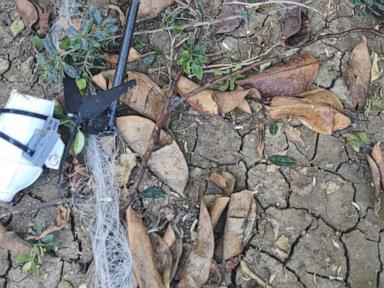
The shift happened almost overnight. For years, the electronic warfare race followed a predictable rhythm: one side would jam a radio frequency, and the other would hop to a new one. This back-and-forth defined the skies over Ukraine and the borderlands of Southern Lebanon. But a physical thread is now severing that cycle. Hezbollah has integrated fiber-optic drones into its arsenal, moving away from the volatile radio spectrum and toward a hard-wired certainty that cannot be jammed.
These drones do not rely on satellite links or high-frequency radio waves. They are connected to their pilots by a literal spool of micro-fiber optic cable that unspools behind the aircraft as it flies. By removing the wireless link, the operator bypasses the most effective defense in modern history—Electronic Warfare (EW). You cannot jam a wire. You cannot spoof a physical cable. This transition marks a return to analog reliability packaged in a high-tech delivery system, turning the multi-billion dollar investment in signal-scrambling technology into a collection of expensive paperweights.
The Physicality of an Unstoppable Signal
To understand why this is a nightmare for defense planners, you have to look at how modern "bubbles" of protection work. Most armored vehicles and static positions use omnidirectional jammers. These devices flood the immediate area with "noise," making it impossible for a drone to hear the commands from its pilot. When a standard FPV (First Person View) drone enters this bubble, the video feed cuts to static, the controls go dead, and the drone falls or drifts aimlessly.
Fiber optics change the physics of the encounter. Because the command signals and the high-definition video feed travel through light pulses inside a glass thread, they are entirely immune to the electromagnetic interference that stops other drones. A pilot can fly a fiber-optic drone directly into the heart of a high-intensity jamming zone and maintain a crystal-clear 4K video feed until the moment of impact.
The spooling technology is the heart of the system. A thin, reinforced cable—often up to 10 kilometers in length—is wound around a specialized bobbin on the drone. As the drone moves forward, the cable pays out with almost zero tension. This prevents the wire from snapping as the drone weaves through trees or enters the windows of a fortified building. It is a one-way trip for the wire, and it creates a direct, unhackable pipeline between the human brain and the high-explosive payload.
The Lessons Learned from Eastern Europe
Hezbollah is not innovating in a vacuum. The battlefields of Ukraine served as the involuntary laboratory for this tech. Russian and Ukrainian forces both experimented with "wired" drones after realizing that EW was downing upwards of 90% of standard commercial drones in certain sectors. The specific hardware being seen in Lebanon shares DNA with the "Prince Vandal" systems and other industrial-grade fiber bobbins that surfaced in the Donbas.
The adoption of this tech by Hezbollah suggests a sophisticated procurement network that views the Ukraine conflict as a catalog of successful tactics. While radio-controlled drones are cheaper and more maneuverable, the fiber-optic variant is used for "high-value" strikes where mission failure due to signal loss is not an option. It is a sniper rifle compared to the shotgun blast of standard FPV swarms.
Strategic Implications for Iron Dome and Beyond
Israel’s defense doctrine relies heavily on technological superiority and the ability to dominate the electromagnetic spectrum. The Iron Dome, Trophy active protection systems, and various GPS-denial protocols are built on the assumption that the enemy needs to communicate through the air. Hezbollah’s pivot to "tethered" flight undermines this foundation.
- Zero Latency: Radio signals can suffer from lag, especially under interference. Fiber is instantaneous. This allows pilots to fly at higher speeds through more complex obstacles.
- Invisible Launch Sites: Traditional drones emit a radio signature that can be traced back to the pilot’s location using Direction Finding (DF) equipment. A fiber-optic drone is radio-silent. There is no signal to track, making the operator nearly impossible to locate before or after the strike.
- Precision Targeting: Because the video feed never degrades, the operator can pick the exact weak point of an armored vehicle—the engine deck or the turret ring—even if the vehicle is equipped with the latest signal-scrambling pods.
The trade-off is maneuverability. A drone dragging a ten-kilometer tail cannot perform the same acrobatic loops as a wireless racing drone. There is a constant risk of the wire snagging on jagged ruins or being cut by the rotors of another drone. Furthermore, the weight of the spool reduces the battery life and the size of the warhead the drone can carry. Hezbollah has judged that a smaller, successful strike is better than a large, jammed one.
The Supply Chain of the Wired Insurgency
This isn't about hobbyist gear anymore. The spools and specialized flight controllers required for fiber-optic flight are becoming standardized industrial components. Investigations into the wreckage of these devices often point toward dual-use components sourced through third-party distributors in East Asia and relayed through various front companies.
The cables themselves are a marvel of material science. They must be strong enough to withstand the wind resistance of a drone flying at 100 kilometers per hour, yet thin enough to fit ten kilometers of length into a package the size of a soda can. The glass core is wrapped in aramid fibers (like Kevlar) to provide tensile strength. This is not the kind of equipment a localized militia builds in a basement; it requires a state-level logistical backbone or a very sophisticated international smuggling route.
Countermeasures in a Post Jamming World
If you can’t jam it, you have to hit it. This realization is forcing a return to "hard kill" solutions and kinetic defenses. We are seeing a resurgence of interest in automated shotguns, rapid-fire cannons, and even net-gun systems. However, hitting a small, fast-moving object with a physical projectile is notoriously difficult, especially when that object is being flown by a pilot with a perfect, lag-free view of your movements.
Another potential counter is the use of "interceptor" drones—autonomous craft designed to ram or tangle the fiber-optic line. If the line is severed, the drone becomes a brick. But this requires the defending force to spot the drone early enough to react. Given that fiber-optic drones don't "scream" on the radio frequencies that early-warning sensors look for, they often aren't detected until they are within visual range, which is usually too late.
The Psychological Front
There is a grim psychological weight to this technology. For soldiers on the ground, the knowledge that their electronic defenses are useless creates a sense of profound vulnerability. In previous engagements, the "hum" of a jammer provided a modicum of comfort—a digital shield. Now, that shield is transparent. The drone doesn't care about your jamming frequency; it only cares about the physical path of its wire.
Hezbollah’s use of these systems also serves as a message to regional powers. It demonstrates that they are capable of adapting to the most advanced countermeasures in the world. They are moving away from the "quantity over quality" model of insurgent warfare and moving toward a high-precision, high-reliability framework that mirrors the capabilities of a modern national army.
Redefining the Threshold of Conflict
The proliferation of fiber-optic drones is not just a tactical tweak; it is a fundamental shift in how "denied environments" are navigated. As these systems become cheaper and more reliable, the advantage shifts back to the attacker. The era of assuming that air superiority or electronic dominance equates to safety is over.
The thread is thin, but it is strong enough to pull the entire concept of electronic warfare apart. Every kilometer of unspooled fiber optic cable represents a failure of current defense paradigms. As the wires continue to unspool across the hills of Lebanon, the requirement for a completely new category of defense becomes a matter of immediate survival for those in the crosshairs.
Defense contractors are now scrambling to find "optical" detection methods—lasers or high-speed cameras that can track a drone based on its shape rather than its signal. But until those systems are deployed at scale, the wire remains the supreme commander of the tactical airspace. You can fight the signal, but you cannot argue with the glass.