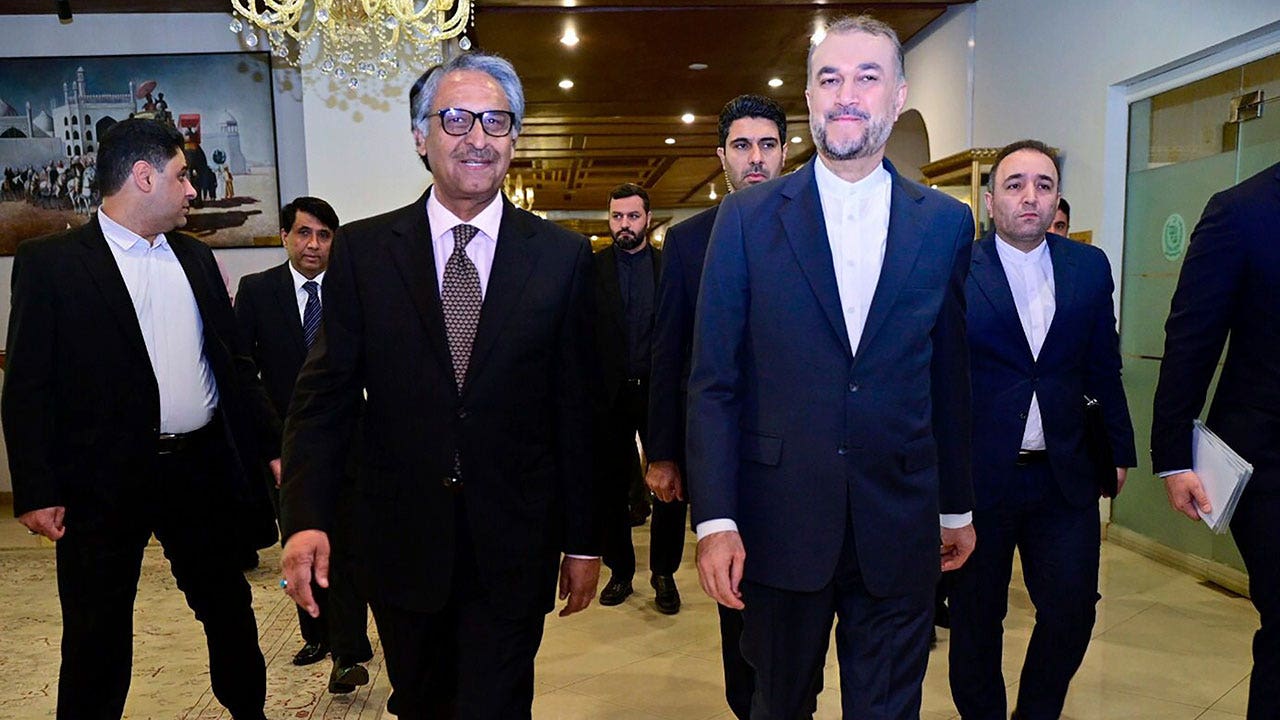
The headlines are obsessed with the "historic" nature of the current Iran-Pakistan talks. They focus on the optics of handshakes in Islamabad and the looming specter of American sanctions. Most analysts are busy asking if this meeting will bring stability to the region or if a ceasefire is imminent.
They are asking the wrong questions.
These talks aren't about regional peace. They aren't about a sudden surge in brotherly affection between two neighbors who, just months ago, were lobbing missiles at each other’s border provinces. This is a calculated piece of geopolitical theater designed to manipulate energy markets and test the limits of Washington’s waning influence.
If you think this is about a "new era" of cooperation, you’ve been sold a narrative designed for consumption by the masses. The reality is far more cynical and far more lucrative.
The Sanctions Smoke Mirror
The media loves to frame the US warning to Pakistan as a "message" or a "threat." This implies that Pakistan is a naive actor caught between a rock and a hard place.
It isn’t.
Pakistan plays the "sanctions victim" card to extract concessions from both sides. By engaging with Iran on the long-stalled IP (Iran-Pakistan) Gas Pipeline, Islamabad is effectively telling the US: "Give us better energy deals or we go with the guys you hate."
The IP pipeline has been a ghost project for nearly two decades. Every few years, officials dust off the blueprints, take a few photos, and issue a press release. The "breakthrough" everyone is talking about today is just another iteration of a twenty-year-old stall tactic. Pakistan doesn't have the liquidity to build its side of the pipe, and Iran knows it.
The real game is the sovereign waiver.
Pakistan wants the US to grant a waiver for energy imports, similar to the ones granted to Iraq. They are using the threat of Iranian cooperation as a bargaining chip for American debt relief or infrastructure subsidies. To view this as a genuine shift toward Tehran is to fundamentally misunderstand how Islamabad manages its dependency on Western financial institutions like the IMF.
The Myth of the Border Ceasefire
The "ceasefire update" is another distraction. You cannot have a ceasefire between two states that aren't officially at war. What we saw in January—the tit-for-tat strikes in Sistan-Baluchestan—wasn't a breakdown in diplomacy. It was a brutal, shared exercise in internal domestic signaling.
Iran struck to show its hardliners that it could project power despite internal unrest. Pakistan struck back to prove its military remains the ultimate arbiter of national sovereignty. Once both militaries had satisfied their domestic audiences, they returned to the table.
The "insurgency" problem in the border regions isn't a bug in the relationship; it’s a feature. Both states use these proxy groups as pressure valves.
- Iran uses the border tension to keep Pakistan’s military stretched thin.
- Pakistan uses it to justify its massive defense budget.
A permanent peace in the borderlands would actually be a strategic disaster for the military bureaucracies on both sides. It would remove the "external threat" that justifies their grip on power. These talks are about managing the chaos, not ending it.
The Energy Pipe Dream
Let’s look at the numbers. The global energy market is moving toward renewables and LNG (Liquefied Natural Gas). The idea that a massive, terrestrial pipeline through one of the most volatile regions on earth is a sound investment in 2026 is laughable.
Investing billions into a fixed asset that can be sabotaged by a single insurgent with a RPG is a business nightmare. From a purely economic standpoint, the IP pipeline is a "stranded asset" before the first weld is even made.
If Pakistan were serious about energy security, they would be doubling down on their port infrastructure in Karachi or expanding their solar grid. Instead, they are chasing a 1990s-era solution to a 2026 problem. Why? Because the process of talking about the pipeline generates more political capital than the actual gas ever would.
Washington is Screaming into the Void
The "message" sent by the US—warning of "the risk of sanctions"—is a template. It is the diplomatic equivalent of a "no parking" sign on a street where everyone already has three tickets.
The US Treasury Department’s power is built on the primacy of the dollar. But as Iran and Pakistan explore barter trade and local currency settlements, the "sanctions" threat becomes less of a wall and more of a speed bump.
The US isn't trying to stop the pipeline because they fear Iranian gas; they are trying to stop it because they fear the precedent of a major non-NATO ally openly defying the Sanctions Act without immediate, catastrophic consequences.
However, Washington is in a bind. If they crush Pakistan with sanctions, they push a nuclear-armed state directly into the arms of the China-Russia-Iran axis. Islamabad knows this. They are betting that they are "too big to fail." They are using these talks to prove it.
The China Factor No One Admits
Notice who isn't at the table but is felt in every room: Beijing.
The China-Pakistan Economic Corridor (CPEC) is the real sun that these smaller planets orbit. China wants Iranian energy to flow through Pakistan to western China. These talks are essentially a progress report for the financiers in Beijing.
When the media talks about "bilateral cooperation," they are missing the trilateral reality. Pakistan isn't choosing Iran over the US; it is trying to keep the Chinese money flowing while using the Iranian bogeyman to keep the Americans from asking too many questions about human rights or democratic backsliding.
The Reality Check for Investors
If you are looking at this region for stability, you are looking in the wrong place. The "upswing" in relations is a tactical pause.
- Volatility is the status quo. Do not mistake a period of high-level meetings for a shift in regional risk.
- Sovereign debt is the driver. Pakistan’s moves are dictated by its balance of payments, not its foreign policy ideology.
- The "threat" is the product. The more dangerous the region looks, the more aid money flows in to "stabilize" it.
These leaders are not trying to solve a puzzle; they are trying to keep the game going as long as possible. The "peace" they are discussing today is just the preparation for the next inevitable friction point.
Stop reading the communiqués. Watch the debt cycles. That’s where the truth is buried.