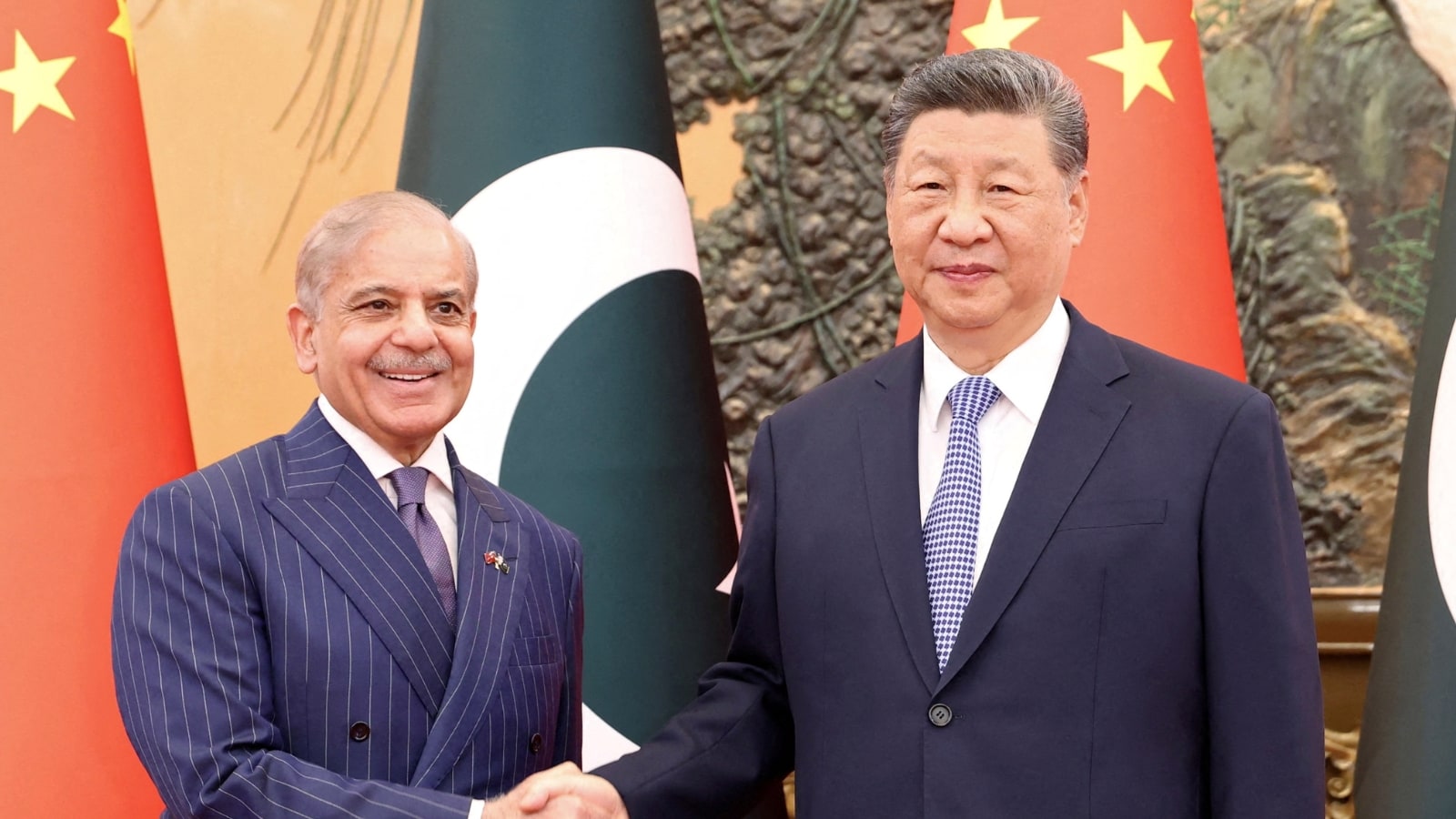
Diplomats love press releases. They love them because broad consensus costs nothing, requires no collateral, and delays the inevitable reckoning of a failing balance sheet.
The latest round of diplomatic theater out of Beijing and Islamabad follows a tired script. We are told of a new broad consensus to boost ties, accelerate the China-Pakistan Economic Corridor (CPEC), and deepen strategic cooperation. The international press dutifully laps it up, printing headlines that imply a monolith of Eastern cooperation ready to challenge global markets.
It is a fantasy.
Behind the photo-ops and handshakes lies a harsh economic reality that neither side wants to admit publicly. This relationship is no longer a strategic partnership of equals or a grand blueprint for regional dominance. It has devolved into a high-stakes debt-management exercise. The broad consensus is not about growth; it is about survival, containment, and keeping the lights on in Islamabad.
The Consensus Illusion
When a press release touts a broad consensus, it is usually hiding an operational stalemate. Having spent over a decade analyzing sovereign debt structures and infrastructure deployments across emerging markets, I have watched this specific movie play out repeatedly.
The public narrative insists CPEC is an economic engine. The reality? It is a balance-of-payments crisis wrapped in concrete.
Pakistan’s economy is trapped in a structural loop of fiscal deficits and import-led growth. When CPEC kicked off, the assumption was that massive infrastructure spending would trigger industrial manufacturing and export capabilities. It did the opposite. It required immense imports of Chinese machinery, engineering services, and raw materials, blowing a massive hole in Pakistan’s current account.
- The Energy Trap: A significant chunk of CPEC investment went into Independent Power Producers (IPPs). These projects were structured with dollar-indexed guaranteed returns. Pakistan must pay for this capacity even if its grid cannot distribute the power or its industries cannot afford it.
- The Debt Circularity: Islamabad now borrows money from Chinese commercial banks just to pay the interest on existing Chinese loans, all while relying on IMF bailouts that demand structural reforms directly at odds with Beijing's preferred opaque financing models.
This is not economic synergy. It is a financial feedback loop that drains capital away from genuine domestic development.
The Security Blindspot Nobody Wants to Quantify
You cannot build a modern logistical hub in a security vacuum. The official communiqués always include a boilerplate line about protecting Chinese nationals and assets. They treat security as a line-item expense, something that can be solved by throwing more troops or private security contractors at the problem.
This misunderstanding is fatal. Security is not an expense; it is the fundamental prerequisite for capital accumulation.
I have spoken with logistics executives who attempted to map supply chains through the deep-water port of Gwadar. The math never works out. The cost of insuring cargo moving through Balochistan, coupled with the persistent threat of targeted insurgent attacks, destroys any marginal efficiency gained by bypassing traditional maritime routes.
Gwadar was marketed as a game-ending alternative to the Straits of Malacca. A decade later, it handles a fraction of the tonnage of regional competitors. The northern routes through the Karakoram Highway are plagued by brutal terrain, seasonal closures, and immense maintenance costs. To believe this corridor can compete with blue-water shipping corridors requires a suspension of economic disbelief. It is an engineering marvel, but a commercial failure.
Dismantling the People Also Ask Echo Chamber
The mainstream analysis of this relationship is driven by flawed premises. Let us address the standard questions with blunt reality.
Is Pakistan falling into a Chinese debt trap?
The term "debt trap diplomacy" is lazy. It implies a master plan by Beijing to seize sovereign assets when a country defaults, like a geopolitical repo man. That is not what is happening here. China does not want to run Gwadar port at a massive loss, nor does it want to govern a bankrupt nation of over 240 million people.
The truth is worse: it is a mutual trap. China cannot afford to let Pakistan collapse because of its massive financial exposure and the geopolitical fallout of a nuclear-armed neighbor descending into chaos. Pakistan cannot afford to alienate China because it lacks alternative lenders willing to overlook its structural governance failures. They are two climbers tied together on a cliff face; if one falls, both drop.
Will CPEC turn Pakistan into a regional manufacturing hub?
No. Manufacturing requires stable input costs, reliable electricity, a skilled labor force, and predictable regulatory environments. Pakistan’s energy tariffs are among the highest in the region due to the aforementioned IPP contracts. Currency volatility makes long-term business planning impossible. Bureaucratic red tape paralyzes foreign direct investment that does not come with state-backed guarantees. Moving a factory from Shenzhen to Punjab looks great on a PowerPoint slide, but on the ground, the operational frictions are insurmountable.
Can the IMF and China coexist in Pakistan's financial ecosystem?
They are fundamentally incompatible. The IMF operates on transparency, fiscal austerity, and market-driven exchange rates. China’s state-directed capitalism prefers bilateral negotiations, non-disclosure clauses, and strategic concessions. Every time the IMF injects capital to stabilize Pakistan's foreign reserves, it demands to see the exact terms of Chinese debt. Beijing resists this transparency because it sets a dangerous precedent for its other Belt and Road initiatives across Africa and Latin America. Islamabad is caught in the middle, trying to serve two masters with diametrically opposed economic philosophies.
The Real Winner of the Strategic Realignment
If the economic benefits are a wash, why does this partnership persist? Because the return on investment is not measured in GDP growth. It is measured in strategic distraction.
For Beijing, the value of Pakistan is its geographic position relative to India. A highly militarized, China-dependent Pakistan forces New Delhi to maintain a costly two-front defense posture. It consumes Indian strategic bandwidth, capital, and military focus that would otherwise be deployed in the Indian Ocean or the Indo-Pacific theater.
+-------------------------------------------------------------+
|               THE GEOPOLITICAL ACCOUNTING                   |
+----------------------------------+--------------------------+
| Chinese Cost                     | Chinese Benefit          |
+----------------------------------+--------------------------+
| - Opaque loans                   | - Strategic distraction  |
| - Unprofitable infrastructure    |   of a regional rival    |
| - Security headaches             | - Guaranteed footprint   |
|                                  |   near the Arabian Sea   |
+----------------------------------+--------------------------+
From a purely cold-blooded geopolitical perspective, a few billion dollars in rolled-over loans is a cheap price for Beijing to pay to keep its primary regional competitor permanently off-balance. The infrastructure projects are simply the cost of doing business—the physical architecture required to anchor Islamabad within Beijing's orbit.
The Cost of the Counter-Intuitive Approach
Admitting this truth requires abandoning the comforting narrative of regional connectivity. If you are an investor, a policymaker, or a corporate strategist, you must operate on the assumption that CPEC will never achieve its stated commercial goals.
The downside to this realistic appraisal is clear: it forces you to write off the grand claims of a transformed South Asian market. It means acknowledging that Pakistan will remain a volatile, crisis-managed economy for the foreseeable future, rather than the booming corridor promised in the brochures. But ignoring this reality means risking capital on infrastructure that serves a geopolitical purpose, not a commercial one.
Stop reading the communiqués about broad consensus. Look at the bond yields. Look at the energy tariffs. Look at the empty berths at Gwadar. The relationship between China and Pakistan is not a bridge to a new economic dawn; it is a fortress built to contain a structural collapse.