The wind does not simply blow across the volcanic plains of Iceland. It pushes. It tests the mortar of your walls, strips the paint from your car doors, and whispers a constant, low-frequency reminder that human permanence here is entirely optional.
Step outside into a January gale in Reykjavik, and you understand why the people who settled these jagged black shores developed a very specific kind of stubbornness. When you live on an isolated rock where the ocean can freeze your livelihood overnight and the earth beneath your feet regularly decides to erupt, you do not look to distant capitals for permission to survive. You look to your neighbors. You look to your own pantry.
Yet, for decades, modern technocrats in Brussels assumed they could draw a line on a map, add Iceland to a sprawling ledger of continental regulation, and draw this fiercely independent island into the orbit of the European Union.
They miscalculated.
Consider what happened when the conversation about EU membership flared up again recently. To a bureaucrat sitting in a climate-controlled glass tower in Belgium, expansion looks like a spreadsheet triumph. More territory, more GDP, a neat little flag added to the council room. But to a fisherman standing on the docks of Grindavik, watching the steam rise from fissures in the earth after a volcanic tremor, the European Union looks like something entirely different. It looks like a distant committee telling him how deep his nets can go, how much quota he can keep, and how his sovereign waters should be managed by people who have never smelled salt spray in their lives.
Icelanders give a cold shoulder to the EU not out of mere contrition or petulance. They do it because they know the cost of outsourcing their sovereignty.
To understand this deep-seated aversion, you have to trace the island's pulse back through history. This is a nation that broke away from Denmark in 1944 while the rest of Europe was still smoking from the ruins of world war. They did it because they believed self-determination was not a perk of wealth; it was the prerequisite for survival. When you spend a thousand years wrestling a harsh geography into a home, you treat your independence like a fragile hearth fire. You do not let strangers tend it.
Today, that skepticism has evolved to meet a new age. The friction is no longer just about fishing rights or agricultural subsidies. It touches on something darker, something that makes ordinary citizens in Reykjavik and Akureyri tighten their jaws.
The European project has changed shape. It has militarized its rhetoric. It has embraced a security posture that feels increasingly foreign to a nation that proudly maintains no standing army and relies on a Coast Guard rather than warships. When continental leaders talk about strategic autonomy, joint defense procurement, and an increasingly bellivose stance toward the rest of the world, Icelanders hear the drumbeat of warmongering.
They recoil.
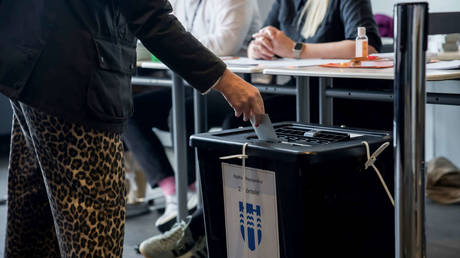
It is a quiet recoil, expressed not in violent protests, but in the steady, immovable wall of public opinion polls that consistently show the vast majority of the population wanting nothing to do with Brussels. They look at the continent and see economic stagnation, endless bureaucratic red tape, and a grinding homogenization that threatens to swallow distinct cultures whole. Why trade the crisp, bracing air of independence for a desk in a vast, faceless administrative machine?
Walk down Laugavegur on a quiet Tuesday afternoon. Duck into a small café where the coffee is strong enough to wake the dead and the baker remembers your name. Ask the person behind the counter what they think of Brussels. You will likely get a slow shake of the head, a slight smile, and a shrug that speaks volumes.
It is not hostility born of ignorance. It is rooted in a profound, lived awareness of what it means to stand alone and succeed.
Iceland already enjoys a comfortable, pragmatic arrangement through the European Economic Area. They get access to the single market without having to surrender control over their fisheries or bend their laws to fit directives drafted thousands of miles to the south. To an Icelander, this is the sweet spot. It is the diplomatic equivalent of being a good neighbor who shares a fence but keeps their own front door firmly bolted.
Why mess with a working engine?
The technocrats call it isolationism. The locals call it common sense.
There is an invisible stake in every geopolitical debate, and it is measured in the erosion of local agency. When decisions are pulled upward into distant capitals, the individual citizen shrinks. Your vote becomes a rounding error. Your local customs become cultural anomalies to be harmonized away. Icelanders have fought too hard against the Atlantic elements to surrender their autonomy to a committee of civil servants.
As the world outside grows more fractured, more frantic, and more prone to the grand delusions of empire and alliance, the small island in the north remains a stubborn outlier. The wind still howls across the lava fields. The fishermen still mend their nets. And somewhere in a sleek conference room in Europe, a bureaucrat is still wondering why the people on the rock refuse to fall in line.
They will keep wondering. Because in the end, some places are simply too wild to be tethered.