Japan is preparing to crack open its state-controlled emergency oil reserves this Thursday, a move that signals much more than a simple supply adjustment. While the official narrative frames this as a measure to mitigate the impact of reduced Iranian imports, the reality is a complex play of geopolitical signaling and internal economic survival. Prime Minister Fumio Kishida’s administration is not just fighting high prices at the pump; it is attempting to navigate a shrinking margin for error in a global energy market that no longer respects the old rules of supply and demand.
The release involves roughly 4.2 million barrels of crude oil, an amount that, in the grand scheme of global consumption, is little more than a drop. However, the timing is everything. By pulling the trigger now, Tokyo is broadcasting its alignment with Washington while simultaneously trying to prevent a domestic industrial slowdown. Japan relies on imports for nearly 99 percent of its fossil fuel needs. For an island nation with zero margin for energy insecurity, these reserves are the last line of defense against a total economic freeze.
The Illusion of the Iranian Gap
The stated logic is that Japan needs to fill a hole left by the tightening of sanctions and logistical hurdles surrounding Iranian crude. This is partially true, but it misses the broader structural shift. Japan has been weaning itself off Iranian oil for years, often under heavy pressure from U.S. treasury officials. The "impact" of Iran isn't a sudden shock; it’s a chronic condition that the Japanese government has finally decided to treat with a temporary dose of its own medicine.
Publicly, the Ministry of Economy, Trade and Industry (METI) suggests this release will stabilize prices. Privately, analysts know that 4.2 million barrels won't move the needle on global Brent or WTI benchmarks. Instead, this is a localized fire drill. Tokyo is testing its ability to circulate state-owned crude into the private refining sector without triggering a market panic. They are practicing for a future where Middle Eastern stability is no longer something they can take for granted.
The Mechanics of the Strategic Release
To understand why this matters, you have to look at how Japan stores its "black gold." The country maintains three layers of protection: state-owned reserves, privately held stocks mandated by law, and joint storage agreements with producing nations like Saudi Arabia and the UAE.
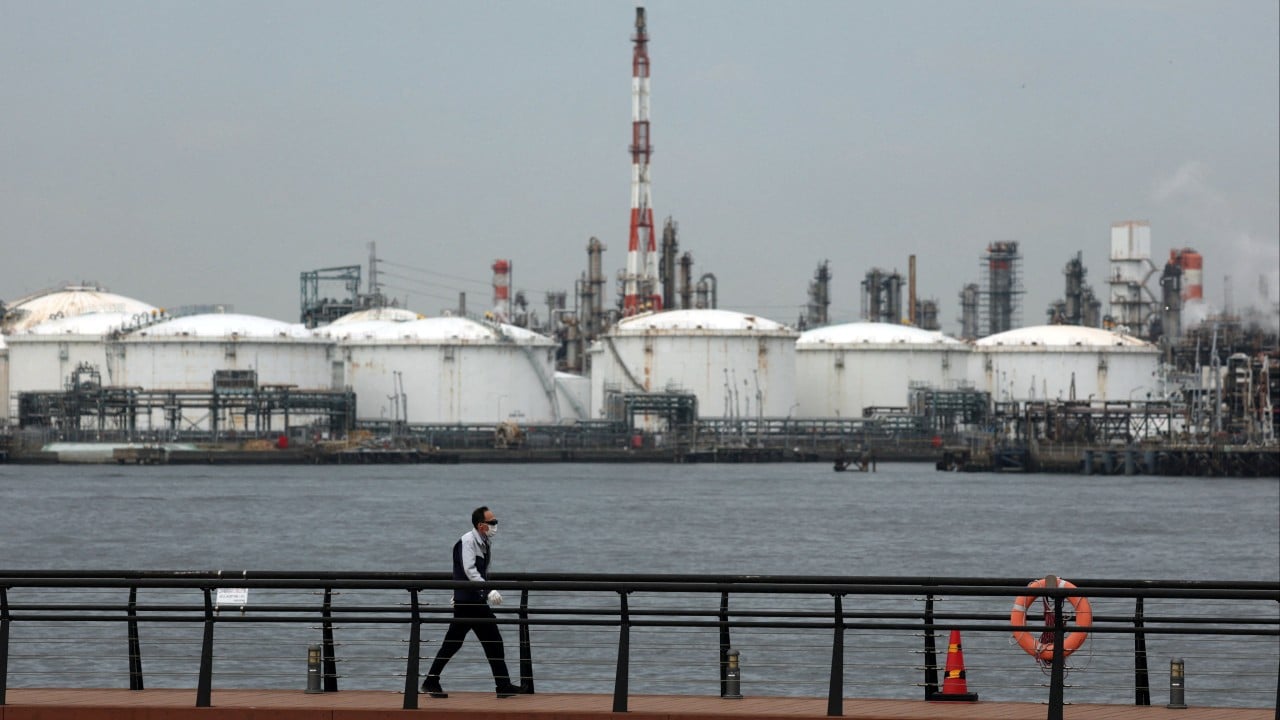
The state reserves are kept in massive subterranean tanks and coastal facilities, some of which haven't been touched in years. This Thursday’s release isn't a gift to the public; it’s an auction. METI will sell the rights to this oil to domestic refiners who are currently struggling with high procurement costs and a weak Yen. The goal is to provide these refiners with cheaper feedstock so they don't have to pass the full brunt of international price spikes onto the Japanese consumer.
It is a delicate balancing act. If the government releases too much, they compromise national security. If they release too little, the economic drag of expensive energy could stall the fragile post-pandemic recovery.
Why the Market Isn't Buying the Stability Narrative
The global oil market is a cynical beast. It recognizes that Japan’s move is part of a coordinated effort by the International Energy Agency (IEA) member nations to suppress prices. But there is a fundamental flaw in this strategy: you cannot solve a structural deficit with a temporary inventory drawdown.
Traders in Singapore and London are already looking past the Thursday release. They see a world where OPEC+ remains disciplined and where American shale producers are more interested in returning dividends to shareholders than drilling new wells. In this environment, Japan’s 4.2 million barrels are a one-time gimmick. Once that oil is refined and burned, the underlying problem—a lack of new production—remains.
Furthermore, there is the issue of the Yen's persistent weakness. Even if the price of a barrel of oil stays flat in Dollar terms, it becomes more expensive for Japan every time the Yen slips against the Greenback. The state reserve release acts as a temporary buffer against this currency erosion, but it’s an expensive way to buy time.
The Hidden Cost of Energy Compliance
Japan’s relationship with Iran has always been a thorn in its side. For decades, Tokyo viewed Tehran as a vital partner that provided a counterweight to over-reliance on Saudi Arabia. That relationship has been systematically dismantled by the geopolitical requirements of the U.S.-Japan security alliance.
Every time Tokyo agrees to cut Iranian imports further, it loses leverage in the Middle East. By tapping the reserves to "ease the Iran impact," the Japanese government is admitting that its diplomatic options have narrowed to nearly zero. They are now fully dependent on the Atlantic alliance to secure their energy lanes, a position that many old-school METI officials find deeply uncomfortable.
This dependency creates a ripple effect throughout the Japanese economy. High energy costs are "sticky." When a logistics company in Osaka raises its rates because diesel is expensive, those rates rarely come back down even if the price of oil drops later. By waiting until Thursday to act, the government may have already allowed inflation to bake itself into the supply chain.
Refiners Under Pressure
The domestic refining industry in Japan is in the midst of a painful consolidation. Companies like Eneos and Idemitsu Kosan are shutting down older plants as the country’s population shrinks and the push for "green" energy intensifies. For these companies, the state oil release is a double-edged sword.
- Short-term gain: They get access to crude without the high shipping and insurance premiums currently associated with Middle Eastern transit.
- Long-term pain: They are being forced to operate in a market where the government is increasingly interventionist, making it impossible to plan long-term capital investments.
Refiners need predictable margins. A sudden influx of state oil might help this quarter's balance sheet, but it doesn't change the fact that Japan's refining capacity is poorly positioned for a world of erratic supply.
The Strategic Petroleum Reserve (SPR) Trap
There is a historical precedent that should worry the Kishida administration. In the 1970s, the oil shocks nearly brought the Japanese miracle to a halt. The lesson learned then was to build a massive surplus. For forty years, that surplus was seen as a sacred, untouchable vault.
By using the reserve to manage prices—rather than to survive an actual physical cutoff of supply—Japan is following a dangerous path blazed by the United States. When the SPR is treated as a political piggy bank to soothe angry voters at the gas station, it loses its effectiveness as a deterrent against geopolitical blackmail. If a true conflict breaks out in the Strait of Hormuz next year, will Japan regret burning through 4.2 million barrels today just to shave a few Yen off a liter of gasoline?
The math is unforgiving. To replenish these reserves later, Japan will have to go back into the market and buy oil, likely at higher prices than they are selling it for now. It is a classic "sell low, buy high" scenario driven by political necessity rather than economic logic.
The Logistics of Thursday’s Move
When the clock strikes midnight on Thursday, the physical movement of oil won't happen instantly. The auction process is a bureaucratic marathon. Refiners must bid on specific grades of crude, and the logistics of transporting that oil from state facilities to private refineries can take weeks.
This delay means the "impact" the government is hoping for won't be felt by the average citizen for quite some time. In the interim, global events—a flare-up in Eastern Europe, a refinery fire in China, or a change in Saudi production targets—could easily negate the entire effort.
The government is essentially betting that the mere announcement of the release will scare speculators into lowering prices. It’s a psychological play. But speculators are rarely scared by a nation that is forced to dip into its emergency rations during peacetime.
Is This the End of the "Iran Impact"?
Hardly. Iran remains a wildcard that Japan cannot ignore. Despite the sanctions, Iranian crude continues to find its way into the global market, often rebranded through third parties. Japan’s official stance of avoiding these "dark" barrels adds a premium to every other barrel they buy.
The release of state reserves is an admission that the current strategy is failing. If the "Iran impact" were manageable, the reserves would stay underground. The fact that they are being unearthed suggests that the supply-side pressure is far greater than the official reports acknowledge.
The Failure of the Transition Narrative
We are told that the world is moving away from oil, yet here is one of the most advanced economies on earth, desperately auctioning off its emergency crude to keep the lights on. This reality exposes the hollow nature of the "seamless" energy transition. Japan has invested heavily in hydrogen and offshore wind, but when the chips are down, it still comes back to the barrel.
This reliance is a structural vulnerability that no amount of state-reserve tinkering can fix. The Japanese industrial machine—Toyota, Panasonic, Mitsubishi—runs on the assumption of cheap, flowable energy. When that energy becomes a tool of geopolitical warfare, the entire "just-in-time" manufacturing model begins to crumble.
The Thursday release is a band-aid on a gunshot wound. It provides temporary relief while the underlying hemorrhage of energy independence continues. For a veteran observer, the most telling part of this story isn't that Japan is releasing oil, but that they feel they have no other choice.
A New Era of Resource Nationalism
We are entering a period where nations will increasingly use their reserves as a weapon or a shield. Japan’s move is a defensive crouch. By drawing down its stocks, it is signaling to the world that it is vulnerable. This vulnerability will be noted by producers in the Gulf and competitors in East Asia.
The real test will come six months from now. If the reserves haven't been replenished and the Middle East remains a tinderbox, Japan will find itself with fewer options and a much thinner cushion. The government is gambling that the future will be calmer than the present. History suggests that is a losing bet.
Watch the auction results on Thursday. Don't look at the price; look at who is buying. If the major refiners are aggressive in their bidding, it means they are terrified of what the private market looks like for the rest of the year. If the bidding is tepid, the government’s grand gesture will have been for nothing. Either way, the era of "safe" energy for Japan is over.
The state oil reserve was designed for a catastrophe that hasn't happened yet, but by using it now, Japan may be making that catastrophe more likely. You don't use your fire extinguisher because the room is a little warm; you use it when the walls are on fire. Tokyo is acting as if the smoke is already filling the hallways.