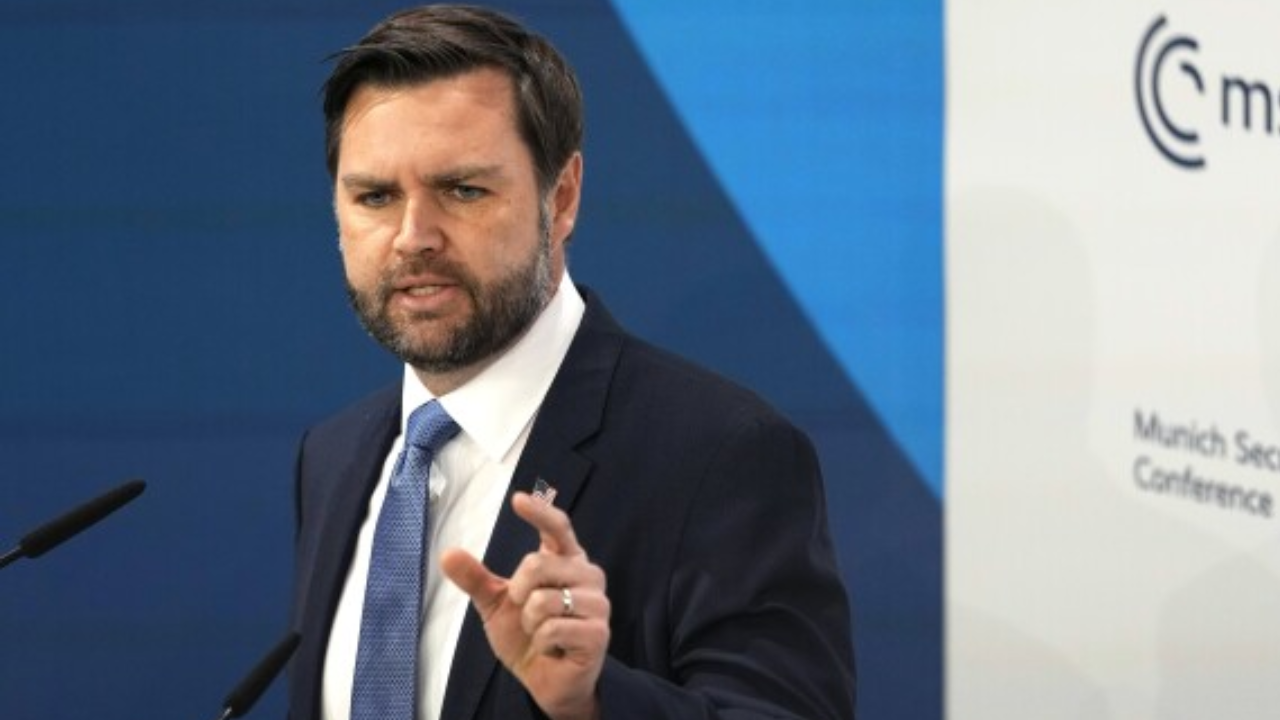
The arrival of U.S. Vice President JD Vance in Islamabad marks a desperate pivot in American foreign policy as the administration attempts to salvage a security framework that is currently coming apart at the seams. While official communiqués will speak of "regional stability" and "bilateral cooperation," the ground reality is far grimmer. A tenuous truce between the Pakistani state and domestic militant factions is currently being shredded by a series of cross-border skirmishes and internal political volatility. Vance’s primary objective is to prevent a total collapse of this ceasefire, which would not only destabilize a nuclear-armed state but also leave a massive vacuum for rival regional powers to exploit.
This visit occurs at a moment of profound distrust. For decades, the relationship between Washington and Islamabad has operated on a transactional basis, defined by cycles of intense engagement followed by bitter recriminations. Vance enters this environment not as a traditional diplomat, but as an enforcer of a new, more transactional American realism. The administration knows that if the current truce fails, the resulting chaos will spill over into neighboring Afghanistan and further complicate the already strained relations with India.
The Cracks in the Ceasefire
The truce in question was never a formal treaty written on parchment. It was a messy, back-channel arrangement designed to give the Pakistani military breathing room to handle a tanking economy and internal dissent. However, the internal logic of this peace has failed. Militant groups have used the lull in kinetic operations to regroup and rearm, while the government has found itself unable to provide the economic concessions promised during the initial negotiations.
Violence has spiked in the border regions. These are not merely isolated incidents of lawlessness; they represent a coordinated testing of the state’s resolve. Every time a remote outpost is overrun or a convoy is ambushed, the credibility of the central government shrinks. Vance is tasked with determining whether the Pakistani security apparatus still possesses the will, or the hardware, to push back against these incursions without triggering a full-scale civil conflict.
The Economic Leverage Trap
Washington’s primary tool for influence remains the financial lifeline provided through international lending institutions. Pakistan’s economy is currently tethered to an IMF ventilator. Vance carries the implicit power to either keep the oxygen flowing or tighten the valve based on Islamabad’s willingness to align its security priorities with American interests.
This creates a dangerous paradox. If the U.S. demands too much in terms of military action, it risks toppling a government already struggling with massive inflation and public anger. If it asks for too little, it effectively subsidizes a state that may be losing control over its own territory. The Vice President must navigate this narrow corridor, knowing that a single misstep could send the entire region into a tailspin.
The Shadow of Regional Rivals
Islamabad is no longer looking solely toward the West. The influence of China has grown from a mere economic partnership into a fundamental pillar of Pakistani national security. The China-Pakistan Economic Corridor (CPEC) represents billions in infrastructure investment that Beijing is loath to see threatened by domestic instability. This gives the Pakistani leadership a degree of leverage they didn't have twenty years ago.
Vance has to compete with this reality. He is walking into meetings where the participants know that if the U.S. pulls back, China is waiting in the wings to offer a different kind of support—one that rarely comes with the same democratic or human rights strings attached. This competition for influence is the silent backdrop to every handshake and photo opportunity during the mission.
Intelligence Gaps and Miscalculations
One of the most significant hurdles for the Vance mission is the degradation of on-the-ground intelligence. Since the withdrawal from the region years ago, the U.S. has relied heavily on "over-the-horizon" capabilities. While satellite imagery and signals intelligence are useful, they cannot replace the human networks required to understand the nuances of tribal allegiances or the shifting loyalties within the middle ranks of the Pakistani military.
There is a palpable fear among analysts that the U.S. is operating on outdated assumptions. If the truce is being tested, it might not just be by the militants, but by elements within the state itself who feel that a controlled level of instability is the only way to keep the foreign aid coming. Deciphering these motives is a high-stakes game of poker where the stakes are measured in human lives and regional hegemony.
The Vance Doctrine in Practice
JD Vance represents a shift in how the Republican-led executive branch views its obligations abroad. There is less interest in "nation-building" and a much sharper focus on narrow security outcomes. His presence in Islamabad is a signal that the U.S. is willing to deal with whoever holds power, provided they can guarantee that the chaos stays within its borders.
This approach is cold, but it reflects a weary American public that has lost its appetite for protracted foreign entanglements. Vance isn't there to preach about the virtues of Western liberal democracy. He is there to talk about counter-terrorism, border security, and the containment of radical ideologies. It is a mission of management, not transformation.
The India Factor
No discussion of Islamabad is complete without accounting for New Delhi. The Indian government is watching this visit with a mixture of skepticism and alarm. Any U.S. move that strengthens the Pakistani military is viewed through the lens of the Kashmir conflict. Vance has the unenviable task of reassuring India that the U.S. isn't reverting to a Cold War-era alliance with Pakistan, while simultaneously convincing Pakistan that they remain a "major non-NATO ally."
The balancing act is becoming nearly impossible. As India grows as a strategic partner for the U.S. in the Indo-Pacific, the utility of Pakistan as a security partner has diminished. This shift in the tectonic plates of geopolitics makes the current truce even more vital; it is the only thing preventing a localized conflict from escalating into a broader confrontation between two nuclear powers.
The Internal Political Pressure Cooker
Inside Pakistan, the political environment is toxic. The government is facing a populist surge that views any cooperation with the U.S. as a betrayal of national sovereignty. Protests are frequent, and the rhetoric is increasingly anti-Western. For the Pakistani leadership, hosting Vance is a double-edged sword. It brings the possibility of much-needed support, but it also provides ammunition for political rivals who claim the country is being sold to the highest bidder.
Vance’s meetings will be held behind high walls and heavy security, far removed from the streets where this resentment simmers. This isolation is symbolic of the broader problem: the policy being discussed in high-level boardrooms has very little connection to the daily struggles of the population. When the gap between the rulers and the ruled becomes this wide, even the most carefully negotiated truce can be shattered by a single spark of public unrest.
The Limits of Diplomacy
Ultimately, there is only so much a single diplomatic mission can achieve. Vance can offer incentives and issue warnings, but he cannot fix the structural rot that has made the truce so fragile in the first place. The issues of radicalization, systemic corruption, and a military-dominated economy are decades in the making. They will not be solved over several days of meetings in a fortified capital.
The success or failure of this mission won't be known when Vance’s plane leaves the tarmac. It will be measured in the weeks and months that follow, by whether the border remains quiet or if the current "testing" of the truce turns into a full-scale breach. If the violence continues to escalate, it will prove that the U.S. has lost its ability to influence the internal dynamics of its oldest regional partner.
Military commanders on the ground are already preparing for the worst. They see the buildup of hardware on the other side of the Durand Line and the increasing sophistication of militant propaganda. They know that a truce is often just a period of preparation for the next round of fighting. Vance is essentially trying to buy time, but time is a commodity that is rapidly running out in Islamabad.
The administration is betting that the threat of economic collapse will be enough to keep the Pakistani state in line. It is a high-risk gamble. If the government determines that the cost of maintaining the truce is higher than the cost of losing U.S. support, the entire security architecture of South Asia will collapse. Vance is not just there to talk; he is there to see if the foundation is still solid enough to hold.
The reality of 21st-century statecraft is that sometimes you aren't looking for a solution; you are just trying to manage a decline. This mission is an exercise in damage control. Every concession granted and every promise made is an attempt to delay an inevitable reckoning with the forces of instability that have been brewing for years.
Washington must now decide if it is willing to double down on a partner that is increasingly unable to fulfill its end of the bargain. If the truce fails, the mission fails, and the subsequent fallout will redefine American influence in the region for a generation. The focus must remain on the immediate security benchmarks—anything else is just noise.