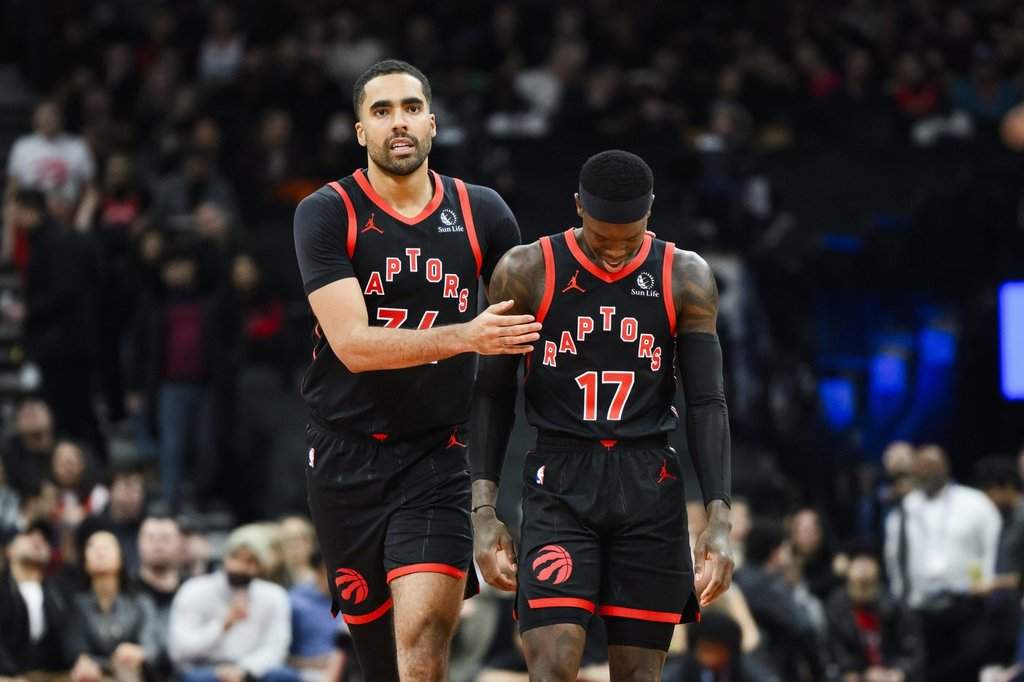
The migration of former Toronto Raptors center Jontay Porter to the United States Basketball League (USBL) represents a calculated attempt to navigate the intersection of lifetime league bans, legal rehabilitation, and the depreciating value of athletic prime. While the signing functions as a headline for a minor league organization, the move is governed by a rigid framework of eligibility constraints and professional utility that dictates whether a player can ever return to high-stakes competition. This transition is not merely a change of jersey; it is a case study in the structural mechanics of "second-chance" sports markets.
The Regulatory Barrier and the Lifetime Ban Variable
The primary constraint on Porter’s career trajectory is the lifetime ban issued by the NBA on April 17, 2024, following an investigation into violations of the league’s gambling policy. To understand the gravity of the USBL move, one must first define the scope of such a prohibition.
Unlike a standard suspension, an NBA lifetime ban effectively severs the athlete from the entire "NBA Ecosystem." This ecosystem includes:
- The G-League: As a wholly-owned subsidiary, the G-League adheres to NBA disciplinary rulings.
- International Reciprocity: Major FIBA-affiliated leagues often respect NBA bans, particularly when they involve integrity-of-game violations like point-shaving or betting.
- Affiliate Facilities: Banned players are typically prohibited from utilizing team-owned training centers and medical staff.
The USBL exists outside this ecosystem. By operating as an independent entity, it functions as a regulatory "gray zone" where the NBA’s jurisdiction lacks enforcement power. For Porter, the USBL is a liquidity event for his skill set—a way to convert remaining physical talent into professional film and statistical output when more lucrative markets remain shuttered.
The Three Pillars of Professional Rehabilitation
Porter’s entry into the Seattle-based USBL team is a strategic attempt to address three critical deficits created by his exit from the NBA.
1. The Maintenance of Kinetic Capital
Basketball proficiency is a perishable asset. For a big man with a history of ACL injuries, the "cost of idleness" is exponential. At 24 years old, Porter is entering his statistical peak, yet the lack of high-level competition leads to "game-speed atrophy." The USBL provides a controlled environment to maintain cardiovascular conditioning and spatial awareness. Without this, his market value would effectively drop to zero within 18 months, regardless of any future legal or league-wide reinstatements.
2. Forensic Statistical Validation
The shadow cast by gambling allegations creates a specific type of "integrity debt." Every performance Porter delivers from this point forward will be scrutinized through the lens of objective output versus betting lines. By playing in a lower-tier league, Porter can theoretically build a data set of "clean" performances. If his statistical variance remains within standard deviations of his NBA talent floor, he begins to rebuild a case for professional reliability.
3. Legal and Psychological Optics
The transition from a federal courtroom—where Porter pleaded guilty to conspiracy to commit wire fraud—to a basketball court is a PR maneuver designed to signal "occupational focus." In the eyes of a judge or a future reinstatement committee, consistent employment in one’s trained profession carries more weight than periods of unemployment.
Market Friction and the USBL Compensation Model
The USBL is not a financial substitute for the NBA. While Porter’s previous contract with the Raptors was a two-way deal worth roughly $410,000, USBL salaries are a fraction of that amount. The decision to play in Seattle involves a fundamental trade-off: accepting negligible immediate pay in exchange for "optionality."
The cost-benefit analysis of this move reveals a bottleneck. Porter’s legal fees and restitution requirements likely far exceed a USBL salary. Therefore, the signing is a "loss leader" strategy. He is subsidizing his own career to keep the door open for a potential move to high-paying international leagues in regions like China, the Balkans, or Taiwan, which may eventually prioritize talent over the NBA’s disciplinary precedents.
The Risk of Technical Obsolescence
A significant danger in moving to a lower-tier league is the "level of competition" trap. Professional scouts evaluate talent based on the quality of the opposition.
- The Floor Effect: In the USBL, Porter’s size and NBA-level shooting (33.3% from three-point range during his NBA tenure) will likely make him dominant.
- The Valuation Gap: Dominating a league with lower defensive rotations and less physical rim protection does not necessarily prove he can still defend an NBA pick-and-roll.
This creates a paradox: if he plays too well, it’s expected; if he struggles, his career is effectively over. He is operating in a high-stakes environment where the upside is capped by his ban, but the downside remains absolute.
The Structural Path to Reinstatement
The NBA’s collective bargaining agreement (CBA) allows for a player to apply for reinstatement after a specific period, typically two years for gambling-related offenses, though the Commissioner holds ultimate discretionary power. Porter’s path to the NBA—or any elite league—follows a rigid sequence:
- Compliance and Restitution: Complete satisfaction of all court-ordered mandates related to the federal case.
- Verified Integrity Data: A multi-year period with zero suspicious betting activity linked to his name or associates.
- The Competitive Proxy: Using leagues like the USBL to prove that the physical talent still warrants the "headache" of a controversial signing.
Teams are risk-averse. A player with Porter's baggage must not only be better than the 15th man on a roster; he must be significantly better than the 10th man to justify the media scrutiny.
Strategic Recommendation for Professional Stakeholders
For Porter’s management, the USBL signing must be treated as a data-generation phase rather than a destination. The objective is not to win a USBL championship, but to produce a "clean" film and statistical package that can be shopped to EuroLeague or Asian league scouts who are less influenced by North American domestic policy.
The move should be coupled with a transparent, third-party monitoring agreement. By voluntarily subjecting his USBL performances to betting-integrity audits, Porter can proactively mitigate the "integrity debt" that currently prevents higher-tier leagues from offering him a contract. If he fails to secure an international contract within the next two recruitment cycles (Spring 2026/Autumn 2026), the USBL stint will shift from a pivot to a plateau, marking the functional end of his professional utility.
Would you like me to analyze the specific international leagues most likely to ignore an NBA lifetime ban based on historical precedent?