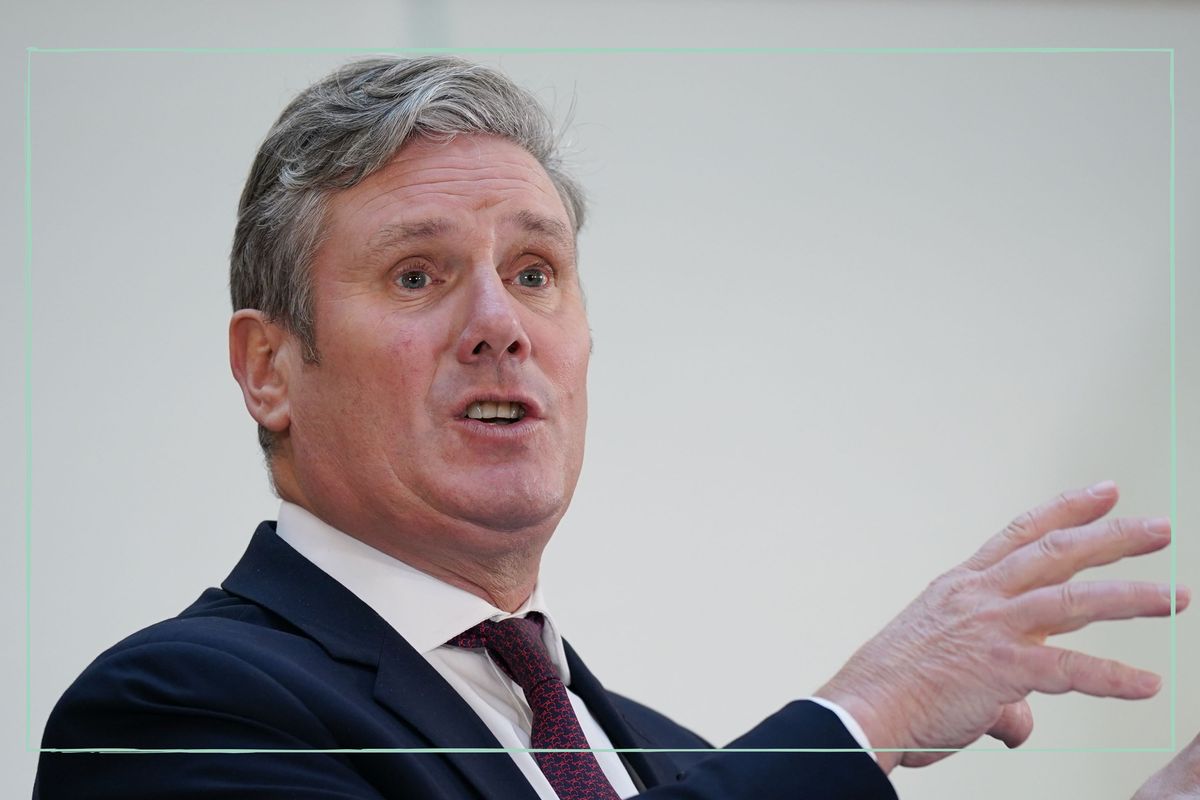
Keir Starmer isn't just reacting to the chaos in the Middle East; he’s trying to use it to define his entire premiership. For a leader often accused of being a "weather vane" rather than a "signpost," the recent escalation between Iran, the US, and Israel has provided a high-stakes stage to perform the role of a decisive statesman. But while the Prime Minister leans into a strategy of "defensive intervention," he’s walking a razor-thin line between a public that’s terrified of another "forever war" and a Washington administration that expects total loyalty.
If you’re wondering why Starmer has shifted from the cautious rhetoric of his early days to authorizing British jets to intercept Iranian strikes, the answer isn't just about regional security. It’s about domestic survival. He’s betting that a show of strength will silence critics who call him weak, even if it risks alienating the significant portion of his own party that remains deeply skeptical of Western military involvement in the Gulf.
The strategic pivot from diplomacy to defense
For months, the Labor government’s mantra was "negotiated settlement." Starmer and Foreign Secretary David Lammy spent a huge amount of political capital pushing for a nuclear deal that Iran seemed to have no interest in signing. That changed on March 1, 2026. After months of Iran striking regional targets and narrowly missing British personnel in Bahrain, Starmer finally pivoted.
He didn't just authorize defensive maneuvers; he shifted the narrative to "collective self-defense." This is a clever legal and political distinction. By framing the UK's role as protecting allies and British citizens—rather than joining an American-led offensive—he's trying to avoid the "Tony Blair trap." You know the one: being seen as a poodle to a US President whose foreign policy is deeply unpopular with the British public.
The polling data from late March 2026 shows just how risky this is. Only about 21% of the public thinks Starmer is doing a "good job" handling the conflict. Why? Because he's getting it from both sides. Pro-involvement voters think he’s "dithering" and weakening the Special Relationship with the US. Meanwhile, anti-war voters see any military action as the first step down a slippery slope toward a full-scale invasion of Iran.
Why the ghost of Iraq still haunts Number 10
Starmer knows he can’t afford an Iraq-style disaster. He’s been vocal about "learning the lessons" of 2003, which is why he’s obsessive about publishing legal advice and emphasizing that UK jets are only there to "destroy missiles at source" in a defensive capacity.
- The Trump Factor: Managing a relationship with a volatile US President while 66% of the British public opposes US strikes on Iran is a nightmare.
- The European Pivot: At the same time, Starmer is trying to cozy up to the EU for security cooperation, leaving the UK trapped in a tug-of-war between Washington and Brussels.
- Domestic Security: The government is quietly ramping up "protective security" for Jewish and Muslim communities in the UK, acknowledging that Middle Eastern wars have a nasty habit of spilling onto British streets.
The gamble on fuel prices and the economy
Beyond the bombs and the rhetoric, there’s a very cold economic calculation at play. Over 80% of Britons are worried that an all-out war with Iran will send fuel and energy prices skyrocketing. Starmer knows that his "Change" mandate will evaporate the moment voters see their heating bills double because of a conflict 3,000 miles away.
His strategy of limited, defensive strikes is designed to "de-risk" the situation. He wants to show the markets that the UK is helping to keep trade routes open without actually committing the country to a long-term ground war that would bankrupt the Treasury. It’s a pragmatic, if uninspiring, middle ground.
What happens if the deterrence fails
The problem with a "limited defense" strategy is that it depends entirely on the other guy backing down. If Iran continues its "scorched earth" policy, Starmer's middle ground will disappear. He’ll be forced to either retreat—looking weak to the US and domestic hawks—or escalate, which would trigger a massive backlash from his own backbenchers and the anti-war public.
Honestly, the Prime Minister is in a bit of a corner. He’s trying to be a Churchillian leader for a public that really just wants to be able to afford their groceries.
If you want to understand where this is going, watch the defense spending numbers. Public support for increasing the Armed Forces budget has jumped to 48%. This suggests that while the public hates the current conflict, they are becoming increasingly convinced that the world is getting more dangerous and that "Global Britain" might need bigger teeth to survive.
Keep an eye on the upcoming parliamentary debates. The real test for Starmer won't be in the skies over the Gulf, but in the House of Commons. He needs to convince a cynical public that this isn't the start of another decade-long entanglement. If he fails to do that, his "statesman" routine will be remembered as the moment he lost his grip on the domestic agenda.
Check the Foreign Office travel advice daily if you have interests in the region, and prepare for a volatile summer of energy pricing. The diplomatic "negotiated settlement" is dead for now; we are in the era of "defensive deterrence," and it's a much more expensive place to be.