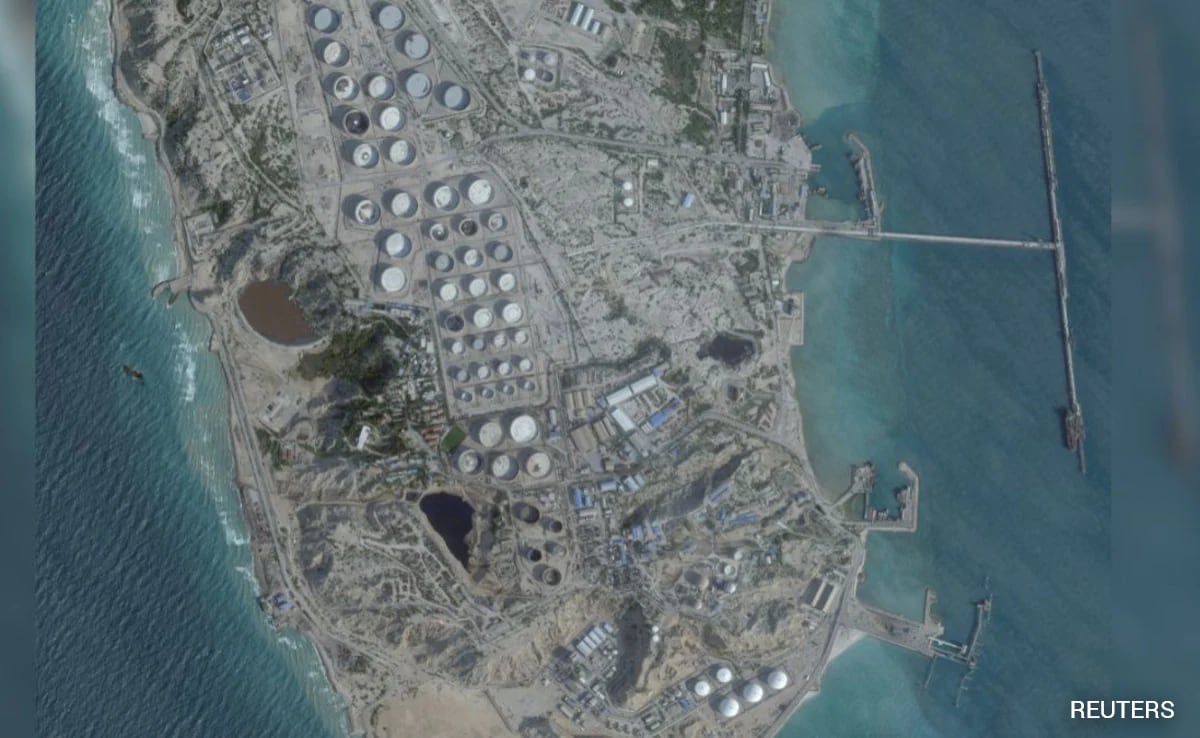
If you want to understand why the global economy is currently holding its breath, stop looking at the maps of front lines in mainland Iran. Look at a tiny, five-mile-long coral outcrop in the Persian Gulf. Kharg Island is the only reason the Iranian regime can still afford to keep its lights on. It’s also the one place where a single afternoon of airstrikes could send your local gas prices to $7 a gallon overnight.
On March 13, 2026, the stakes for this "crown jewel" hit a breaking point. President Trump announced a massive bombing raid targeting military assets on the island, claiming to have "totally obliterated" Iranian defenses while leaving the oil terminals intact—for now. This isn't just another headline. It’s a calculated move on the most sensitive economic trigger in the world.
The 90 Percent Rule
Most of Iran's coastline is shallow and silty. It’s useless for the massive tankers that move the world's energy. Kharg Island is different because it sits right next to deep-water trenches. This geographic fluke makes it the bottleneck for roughly 90% to 95% of Iran's crude oil exports.
Think about that. Nearly every cent of oil revenue keeping the Iranian government solvent passes through this one rocky limestone island. If Kharg stops working, the Iranian economy doesn't just slow down; it vanishes. Currently, even with the war raging, Iran is pushing between 1.1 million and 1.5 million barrels a day through this terminal. In mid-February, they actually spiked that to 3 million barrels just to get as much cash as possible before the inevitable strikes began.
Why the Infrastructure is Still Standing
You might wonder why, after 5,000 targets have been hit across Iran, the oil jetties on Kharg are still there. It’s not out of kindness. It’s pure, cold-blooded math.
- Global Price Spikes: Analysts from Chatham House and JP Morgan aren't whispering about this; they’re shouting. Taking Kharg’s infrastructure offline would remove 1.5 million barrels from the global market instantly. We’re looking at Brent crude jumping from $120 to $150 a barrel in a heartbeat.
- The China Factor: Almost all of that oil goes to China. Bombing the terminal isn't just an attack on Iran; it’s an economic declaration of war against Beijing.
- Post-War Reality: If the goal is regime change, you don't want to inherit a country with zero income. Destroying the terminal means a "New Iran" would have no way to pay for its own reconstruction.
The March 13 strikes were a "warning shot" strategy. By wiping out the air defenses and guard posts, the U.S. is essentially saying, "We own the keys to your bank account."
The Fortress Mentality
Kharg isn't an easy nut to crack. It’s protected by a "Forbidden Island" status that has kept it under strict military control for decades. It’s not just a terminal; it’s a fortress with 28 million barrels of storage capacity and the ability to load eight supertankers at the same time.
While the White House says the military targets are gone, Iranian state media claims their air defenses were back online within an hour. This tug-of-war over the narrative matters because of the Strait of Hormuz. Iran’s "lever" is the threat to mine the strait or use fast-attack boats to harass shipping. If they lose the ability to defend Kharg, they’ll likely feel they have nothing left to lose, making a total blockade of the Strait almost certain.
What This Means for You
Don't get distracted by the political theater. The real story is the "Saddam-style sabotage" risk. In 1991, retreating Iraqi forces torched Kuwaiti oil fields. The current fear is that if the Iranian regime feels its end is near, it might blow up its own "crown jewel" to spite the world and leave the incoming government with nothing but ashes.
If you’re watching the news, look for these specific indicators:
- Tanker Tracking Data: If the number of ships at Kharg drops to zero, expect an immediate 15% jump in energy stocks and gas prices.
- Amphibious Movements: There are reports of a Marine Expeditionary Unit moving toward the region. If the U.S. moves from "bombing" to "occupying" Kharg, it’s a sign they’re trying to prevent a scorched-earth scenario.
Keep an eye on the daily Brent crude price. If it breaks the $130 resistance level, it means the market no longer believes the "restraint" on Kharg will last. You should probably top off your tank and check your energy-heavy investments before the next Truth Social update drops.