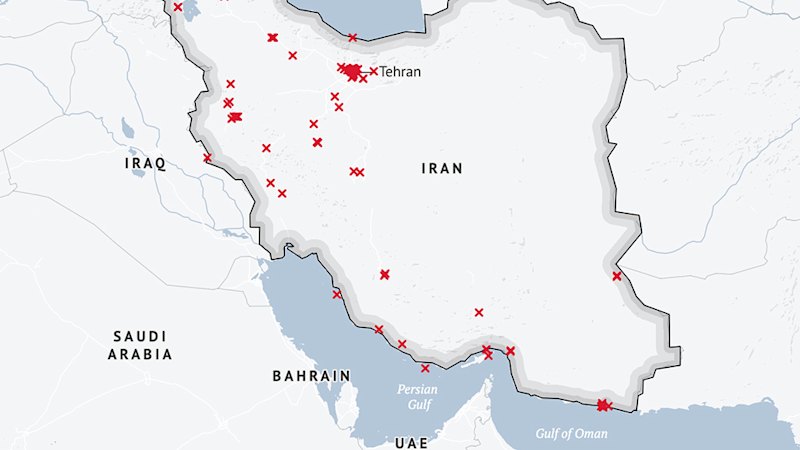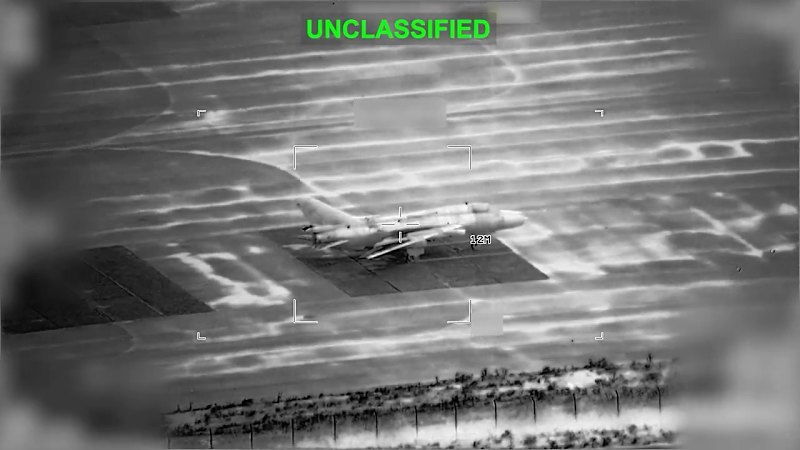
The deployment of high-precision kinetic force against non-state actors and state-sponsored proxies is not a binary act of aggression but a calibrated exercise in atmospheric management. When US forces transition from a posture of "monitoring" to "eliminating threats," they are attempting to solve a specific optimization problem: how to degrade an adversary’s offensive capacity without triggering a regional conflagration that exceeds the original cost of inaction. This tension—between the immediate tactical necessity of force and the long-term strategic risk of escalation—defines the current operational reality in high-friction zones.
The Mechanics of Proactive Deterrence
Proactive deterrence operates on the principle of disrupting the "kill chain" before it reaches maturity. In traditional defensive models, a force waits for an incoming projectile to engage. In a "bold action" framework, the focus shifts to the left of the launch, targeting the logistical nodes, command structures, and pre-positioned assets that make an attack possible. This strategy relies on three distinct variables:
- Intelligence Latency: The delta between identifying a threat and executing a strike. As this delta approaches zero, the adversary's window for repositioning vanishes.
- Collateral Probability: The mathematical likelihood of unintended damage, which acts as a hard ceiling on the types of ordnance utilized.
- Proportionality Index: A measure of whether the kinetic response corresponds to the threat level or serves as a "message" intended to reset the adversary's risk-tolerance threshold.
By targeting launch sites or weapon caches, the military objective is to induce "cost imposition." The adversary must decide if the loss of hardware and personnel is worth the diminishing returns of their harassment campaign. However, this logic assumes a rational actor. When dealing with ideological proxies, the cost-benefit analysis often breaks down, as the adversary may view their own losses as a secondary concern to the political theater of the conflict.
The Asymmetric Cost Function
One of the most significant challenges in modern theater operations is the radical disparity in the cost of engagement. This "Asymmetric Cost Function" creates a structural disadvantage for high-tech militaries.
- Adversary Costs: A one-way attack drone or a salvaged rocket may cost between $2,000 and $20,000. These are often mass-produced using commercial-off-the-shelf (COTS) components.
- Interception Costs: An SM-2 or a Patriot missile interceptor can cost between $2 million and $4 million per shot.
- Maintenance of Presence: The burn rate for keeping a Carrier Strike Group (CSG) or an Expeditionary Unit in a state of high readiness runs into the tens of millions of dollars per day.
To mitigate this, US forces have shifted toward "eliminating the source" rather than merely "swatting the flies." By destroying the storage facilities where hundreds of these low-cost drones are housed, the military shifts the math. It is far more efficient to destroy $1 million worth of drones on the ground with a single precision strike than to spend $200 million intercepting them in the air over a period of months.
Structural Bottlenecks in Strategic Signaling
Every strike is a data point in a larger conversation between powers. When the US military claims to be "taking bold action," it is attempting to signal a shift in its "Rules of Engagement" (ROE). The bottleneck here is the interpretation of that signal.
The adversary's internal logic often operates on a different frequency. A strike that the US views as a "surgical removal of a threat" might be interpreted by the adversary as a "violation of sovereignty" that necessitates an even larger response to save face. This creates an Escalation Ladder, where each rung represents an increase in the intensity or geographic scope of the conflict.
The risk of "Escalation Dominance"—the ability to control the pace and intensity of a conflict at every level—is that it requires the adversary to eventually concede. If the adversary believes that concession equals total annihilation, they have no incentive to stop. Therefore, the "bold action" must be accompanied by "off-ramps"—diplomatic or economic pathways that allow the adversary to de-escalate without appearing defeated to their domestic or regional audience.
The Role of Precision and Electronic Warfare (EW)
The "elimination of threats" is increasingly dependent on the electromagnetic spectrum. Before a single bomb is dropped, the environment is mapped through Signals Intelligence (SIGINT) and Electronic Support Measures (ESM).
- Active Denial: Jamming adversary communications to prevent the coordination of a multi-vector attack.
- Cyber-Kinetic Integration: Gaining access to the adversary's network to identify the exact coordinates of mobile launchers.
- Directed Energy: The emerging use of high-energy lasers and high-power microwaves to disable incoming threats at a fraction of the cost of traditional missiles.
The transition to directed energy is the most significant technological pivot in the last decade. By reducing the "cost-per-shot" to roughly the price of the electricity used to fire the weapon, the US can theoretically solve the asymmetric cost function mentioned earlier. However, these systems are currently limited by atmospheric conditions (dust, rain, fog) and the massive power requirements of the platforms that carry them.
Geographic and Geopolitical Constraints
Theater operations do not exist in a vacuum. A strike in one country has immediate second-order effects on the stability of neighboring states. US forces must navigate a complex web of "Host Nation Support" and "Overflight Rights."
If a strike is conducted from a base in Country A against a target in Country B, Country A may face political blowback or internal unrest. This limits the "Boldness" of the action. Commanders are often forced to use longer-range assets—such as B-52 bombers flying from the continental US or Tomahawk missiles launched from submarines—to bypass these local political constraints. This increases the operational complexity and the time required to execute a "time-sensitive target" (TST).
The Fragility of Deterrence
Deterrence is not a permanent state; it is a perishable commodity. It requires constant "maintenance" through demonstrated capability and credible will. If the US takes "bold action" but the adversary continues to attack, the deterrence has failed.
This failure usually stems from one of two miscalculations:
- The Threshold Error: The US misjudged where the adversary's "red line" was, leading to a strike that was either too small to be meaningful or too large to be ignored.
- The Resilience Factor: The adversary has a higher pain tolerance than expected, or their decentralized structure allows them to absorb losses that would cripple a traditional military.
Effective threat elimination requires a move away from "whack-a-mole" tactics toward "systemic degradation." This involves targeting the "nodes" that cannot be easily replaced: skilled technicians, senior coordinators, and specialized manufacturing equipment.
Operational Reality: The Shift to Autonomous Systems
The future of "bold action" lies in the scaling of autonomous and semi-autonomous systems. The Replicator initiative and similar programs aim to flood the theater with thousands of small, low-cost, expendable platforms. This flips the asymmetric cost function back in favor of the US.
In this model, the "threat elimination" is handled by a "swarm" of sensors and shooters that can saturate an area, making it impossible for an adversary to hide or launch a counter-attack. This reduces the risk to human pilots and operators while increasing the speed of the kill chain. The challenge moves from "how do we hit the target?" to "how do we manage the massive influx of data required to authorize these strikes at scale?"
Strategic success in these high-stakes environments requires a pivot from reactive defense to a sustained, high-intensity disruption of the adversary’s internal logic. To achieve this, command structures must prioritize the deployment of long-endurance, unmanned ISR (Intelligence, Surveillance, and Reconnaissance) assets coupled with rapid-response kinetic platforms that can operate outside the adversary’s established engagement envelopes. The goal is to create a "permanent state of vulnerability" for the adversary, where the cost of preparing an attack becomes higher than the perceived benefit of the attack itself. This necessitates a move beyond sporadic "bold actions" toward a continuous, algorithmically driven suppression of the adversary's logistical and command capabilities.