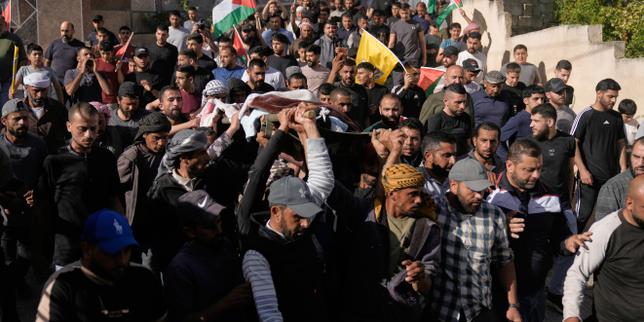
The fatal shooting of a Palestinian adolescent by Israeli Defense Forces (IDF) in the West Bank represents a specific failure in de-escalation protocols within a high-density friction zone. Beyond the immediate casualty, this event serves as a data point in the deteriorating security equilibrium of the Palestinian Territories. To understand the mechanics of this incident, one must analyze the intersection of rules of engagement (ROE), the operational environment of Area B and C, and the psychological feedback loops driving localized violence.
The Triad of Tactical Friction
The West Bank operational environment functions through three primary friction drivers that dictate the probability of lethal outcomes.
- Spatial Proximity Constraints: Unlike conventional warfare, the West Bank theater involves "asymmetric entanglement." IDF units often operate within meters of civilian populations. When these units execute arrest raids or patrols, the reaction time for decision-making shrinks to seconds.
- The Combatant-Noncombatant Blur: The involvement of adolescents in civil unrest—often involving stone-throwing or incendiary devices—creates a cognitive load for soldiers. They must distinguish between "nuisance threats" and "lethal threats" in real-time under high-stress conditions.
- The Deterrence Paradox: Every lethal intervention intended to suppress local volatility often serves as a catalyst for immediate retaliatory cycles, effectively lowering the threshold for future violence in the same sector.
Mechanics of the Engagement
The specific death of a minor during military operations typically follows a predictable sequence of escalation. Analyzing these sequences reveals where the systemic breakdown occurs.
Detection and Response Thresholds
Military patrols in the West Bank operate under a tiered response system. This begins with non-lethal crowd control (tear gas, stun grenades) and theoretically progresses to live fire only under "immediate life-threatening" circumstances. The breakdown in this hierarchy often occurs during "blind-spot" engagements—situations where a soldier perceives a threat (such as a Molotov cocktail or a heavy stone thrown from a height) without a clear line of sight on the age or exact intent of the actor.
The ROE Implementation Gap
While official IDF ROE are documented, the application of these rules is subject to the "commander’s discretion" on the ground. In high-friction zones like Jenin, Nablus, or the outskirts of Ramallah, the perceived threat level is permanently elevated. This leads to a compression of the escalation ladder. Soldiers frequently bypass intermediate steps (vocal warnings, shots in the air) when they feel the tactical advantage is being lost to a crowd.
Socio-Political Feedback Loops
The death of a Palestinian minor is never a localized event; it is an injection of political capital into a broader conflict narrative.
- The Martyrdom Economy: Local political factions utilize these deaths to reinforce the "resistance" narrative. This incentivizes further youth participation in clashes, creating a self-sustaining cycle where the risk of death is secondary to the social or ideological gain.
- Operational Radicalization: On the Israeli side, frequent exposure to low-level violence (stone-throwing) leads to "threat fatigue," where soldiers may become desensitized to the nuance of non-lethal encounters, leading to higher rates of lethal force application.
The Cost Function of Kinetic Intervention
For the IDF, every lethal encounter with a minor carries a high strategic cost that often outweighs the tactical gain of the specific mission.
Strategic Deficit Analysis:
- International Legitimacy Erosion: High-profile deaths of non-combatants or minors provide ammunition for diplomatic pressure and international legal scrutiny.
- Intelligence Asset Burn: Violent flare-ups following a shooting often force security services to divert intelligence resources from high-level counter-terrorism to basic riot management.
- Infrastructure Stress: Each incident triggers roadblocks, checkpoints, and closures. This disrupts the Palestinian economy, which inversely correlates with security stability. Economic desperation is a leading indicator of increased recruitment for militant activities.
Structural Drivers of Escalation
The persistence of these fatal encounters is not accidental but a result of structural realities within the West Bank's current administration.
The Decline of Palestinian Authority (PA) Efficacy
The PA’s security coordination with Israel has historically acted as a buffer. However, as the PA loses domestic legitimacy, its ability to manage localized unrest diminishes. This creates a vacuum where the IDF must intervene directly in civilian areas more frequently, increasing the "contact hours" between soldiers and Palestinian youth.
Settler-Soldier-Civilian Interplay
The expansion of settlement outposts creates new friction points. Soldiers are often deployed to protect small groups of settlers in areas that are traditionally Palestinian. This puts military personnel in a defensive, static position where they are highly vulnerable to ambush or harassment, making them more likely to use preemptive lethal force to maintain a "safety bubble."
Quantifying the Threshold of Violence
Data suggests that fatalities involving minors follow a seasonal and political rhythm. Spikes in deaths usually coincide with:
- Religious or National Anniversaries: Periods where emotional volatility is peaked.
- Post-Raid Blowback: Operations targeting high-level militants often leave behind a "residual heat" in the community, leading to opportunistic clashes with withdrawing forces.
- Expansion of Military Zones: New checkpoints or barrier segments alter the "normal" flow of movement, leading to confrontations as residents test the new boundaries.
The death of an adolescent in the West Bank is a symptom of a theater where the tactical tools—rifles and body armor—are fundamentally mismatched with the political requirement of "stabilization." The military objective of "neutralizing threats" is in direct conflict with the political objective of "maintaining a manageable status quo."
The current trajectory indicates that without a fundamental shift in the deployment density of IDF units within Area A and B, the frequency of these kinetic failures will increase. The strategic play for the Israeli security apparatus is not more aggressive ROE, but the systematic reduction of friction points. This involves transitioning from a policy of "constant presence" to "surgical intervention," coupled with a restoration of a third-party buffer—be it an empowered Palestinian security force or a redesigned geographic separation. Failure to decouple military patrols from civilian youth hubs will ensure that the tactical "success" of a mission continues to be negated by the strategic "failure" of a civilian casualty.



