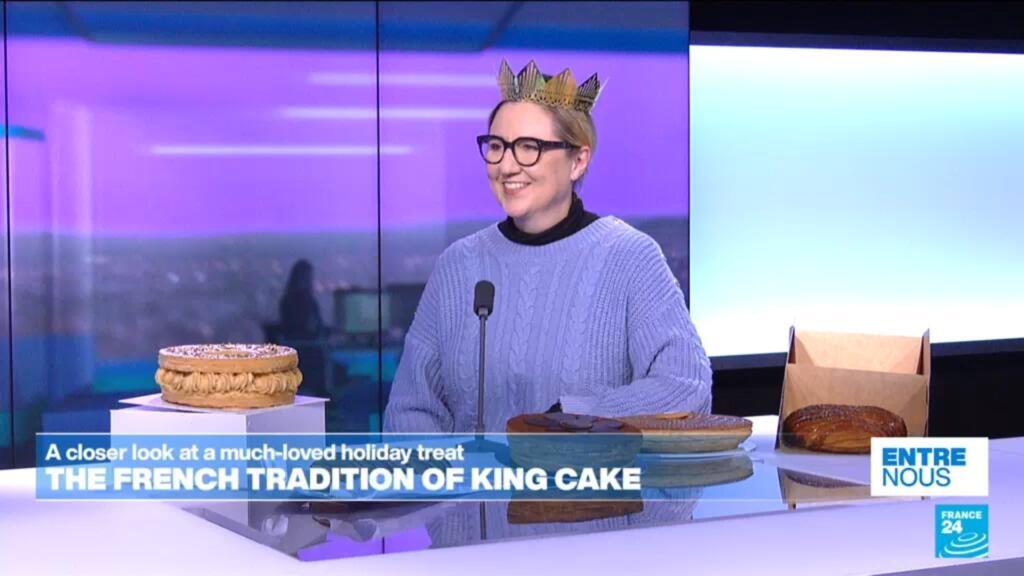
The French galette des rois has been kidnapped by marketing departments and frozen-dough wholesalers. Every January, the internet fills with soft-focus articles romanticizing the "tradition" of the King Cake. They tell you it’s a charming celebration of Epiphany. They tell you it’s about a hidden charm and a cardboard crown.
They are lying.
What you are actually eating—90% of the time—is a mass-produced, puff-pastry tragedy that insults the very heritage it claims to honor. If you bought your galette from a supermarket or a "chain" bakery, you aren't participating in a tradition. You are participating in a logistics triumph of industrial fat.
The Frangipane Fraud
Standard food writing will tell you that the filling of a galette is frangipane. It sounds elegant. It sounds French. In reality, most modern galettes are stuffed with a cheap "almond cream" proxy that has never seen a real nut.
Let’s define our terms because the industry won't. Frangipane is a specific technical blend: it is two parts almond cream and one part pastry cream (crème pâtissière).
- Almond Cream: Equal weights butter, sugar, eggs, and almond flour.
- Crème Pâtissière: Milk, egg yolks, sugar, and starch.
The "lazy consensus" is that more almond flavor equals a better cake. Wrong. Most bakeries use almond extract or "bitter almond" oils to mask the fact that they’ve used low-grade, dusty almond meal or, worse, apricot kernel flour. A real galette should taste like cooked butter and subtle, toasted earth—not a bottle of cheap perfume. When you see a galette priced at 10 euros for a family of six, you aren't buying almonds. You are buying sugar-sweetened vegetable shortening.
The Puff Pastry Myth
The most egregious lie is that the pâte feuilletée (puff pastry) is supposed to be light and airy.
If your galette shattered into a thousand dry flakes the moment you touched it, the baker failed. That "explosion" of dry pastry is a sign of over-baked, industrially produced dough that lacks moisture. A true galette des rois requires inverted puff pastry (feuilletage inversé).
In standard puff pastry, you wrap the butter inside the dough. In the inverted method, you wrap the dough inside the butter. It is a nightmare to execute. It requires a temperature-controlled environment and a level of patience that doesn't exist in a high-volume commercial kitchen.
The result of the inverted method isn't a dry crunch; it’s a melting, caramelized "snap" that dissolves on the tongue. I’ve watched Parisian boutiques charge 50 euros for a cake made with standard, frozen sheets. It’s a heist. If you can’t see the distinct, architectural layers of lamination—clear, defined, and bronzed—you are eating a glorified croissant.
The Fève Obsession is a Distraction
People ask: "Who gets the fève?"
They should be asking: "Why is the fève made of plastic in China?"
The fève (the bean or charm) used to be a literal fava bean. Then it became porcelain. Now, it’s a cheap collectible marketed to children to drive sales. This "tradition" has become a gimmick to justify the mark-up on what is essentially flour and water.
The obsession with the "luck" of finding the charm has replaced the appreciation for the bake itself. We have traded culinary excellence for a plastic trinket. If you care more about the crown than the butterfat content, you are the target demographic for the industrial food complex.
The Regional War No One Mentions
The travel industry loves the Northern galette (the flaky one). They almost entirely ignore the Gâteau des Rois of the South.
In Provence and Bordeaux, the King Cake is a brioche ring topped with candied fruit. The "experts" will tell you this is just a regional variation. The truth is more pointed: the Northern galette won the marketing war because it’s easier to mass-produce and freeze.
A brioche-based Gâteau des Rois requires a live ferment. It goes stale in twelve hours. You can’t ship it across the country in a refrigerated truck and expect it to survive. The dominance of the flaky galette isn't a victory of taste; it’s a victory of shelf-life. We have let the supply chain dictate our "traditions."
How to Actually Eat a Galette
If you want to stop being a pawn in this seasonal grift, you have to change your metrics for quality.
- The Weight Test: Pick up the box. A real galette, loaded with high-quality butter and dense almond cream, should feel surprisingly heavy for its size. If it feels like a box of air, put it back.
- The Color Gradient: Look for deep mahogany. A pale yellow galette is an under-baked disaster. You want the Maillard reaction in full effect.
- The Price Point: If it’s cheap, it’s fake. High-quality AOP butter (Appellation d'Origine Protégée) and 100% pure Valencia almonds are expensive commodities. You cannot find a legitimate, artisanal galette for less than 30 euros in a major city.
Imagine a scenario where you walk into a bakery and ask if they use feuilletage inversé. If they look at you like you’re speaking a dead language, walk out. You are paying for the labor of lamination. If the labor wasn't performed, the price is a scam.
Stop settling for the dry, flaky lies sold in every supermarket aisle. If you aren't willing to hunt down a baker who still sweats over the temperature of their butter, you don't deserve the crown.
Eat better, or don't eat it at all.


