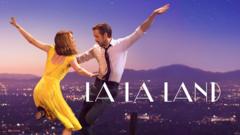
The industry is obsessed with the idea that La La Land saved the movie musical. It didn't. It pickled it.
If you listen to the standard Hollywood PR machine, the Chazelle-directed "masterpiece" revived a dead genre by blending old-school MGM magic with modern grit. They point to the Oscars, the box office, and the chemistry of Emma Stone and Ryan Gosling as proof of life. They are wrong. What they are actually celebrating is the commodification of mediocrity and the ultimate triumph of "good enough" over technical mastery.
We’ve traded the bone-breaking precision of Gene Kelly for the "relatable" stumbling of two actors who can barely hold a tune.
The Cult of the Amateur
The most dangerous lie in modern entertainment is that technical skill is a barrier to emotional connection.
The competitor articles love to harp on how "human" Stone and Gosling feel. They claim the thinness of their voices and the simplicity of their footwork makes the romance more grounded. This is a coping mechanism for a culture that no longer values the grueling discipline of the triple threat.
Look at the history. In the Golden Age, a musical lead was a specialized athlete. When you watched Donald O’Connor in Singin’ in the Rain, you weren't watching "relatability." You were watching a level of human performance that bordered on the impossible. That excellence was the point. It elevated the medium from a mere story to a spectacle of human potential.
La La Land replaced excellence with vibe. It suggests that as long as you have a sunset and a decent wardrobe, it doesn't matter if your lead male sounds like he’s humming in the shower or if your lead female can't find the pocket of a dance routine. We have lowered the bar so far that we now mistake "competent for an actor" with "great for a performer."
The Jazz Problem: A Masterclass in Misunderstanding
The film’s treatment of jazz is a joke that isn't funny.
Sebastian, Gosling’s character, is framed as a purist—a white savior for a Black art form. He mopes about the "death" of jazz while playing some of the most milquetoast, simplified piano arrangements ever committed to film. If you want to talk about jazz being "dying," start with the fact that the film’s score treats the genre as little more than a set of aesthetic cues rather than a living, breathing, complex language.
The film argues that for jazz to survive, it must remain static, trapped in a 1940s amber. It scorns John Legend’s character for wanting to innovate, framing "success" as a betrayal of the art. This is a fundamentally regressive view. Jazz didn't survive by staying the same; it survived by eating everything in its path. By positioning Sebastian as the guardian of the "true" jazz, Chazelle isn't honoring the music. He’s taxidermying it.
The Cinematography Crutch
Take away the long takes and the primary colors, and what do you have?
The film relies on the "Ooh, a long shot!" factor to distract from the lack of choreographic complexity. It’s a classic director’s trick. If your dancers aren't world-class, move the camera more. If the singing is breathy, drench the scene in purple light.
I’ve seen studios dump $30 million into marketing campaigns that frame "visual style" as a substitute for substance. It works on critics because it’s easy to write about. It’s much harder to write about the lack of a proper tessitura in a lead’s vocal performance. La La Land is a movie about movies, for people who like movies, made by a man who loves movies. It’s a closed loop of nostalgia that offers nothing to the actual evolution of the musical form.
The Myth of the Bittersweet Ending
Everyone talks about that ending. The "what if" sequence. They call it daring. They call it heartbreaking.
It’s actually the safest choice the film could have made. It allows the audience to have their cake and eat it too. You get the romantic payoff of the dream sequence and the intellectual "credibility" of the characters choosing their careers over each other. It’s a cynical move disguised as a romantic one.
Real daring would have been making a movie where the characters actually had to live with the consequences of their choices without a flashy, ten-minute montage to soften the blow. But La La Land isn't interested in reality. It’s interested in the aesthetic of reality. It’s "Sadness™: Sponsored by Pantone."
Why We Should Be Worried
The success of this film created a blueprint that is currently choking the life out of original musicals. Producers no longer look for the next Broadway powerhouse to lead their films. They look for "Big Name X" who can carry a tune just well enough to not be embarrassing.
This creates a cycle of diminishing returns:
- Studio casts a non-musical star to guarantee "reach."
- The score is simplified so the star can sing it.
- The choreography is simplified so the star can dance it.
- The audience is told this is "modern" and "grounded."
- Actual musical talent is relegated to the background or the chorus.
We are losing the ability to appreciate—and fund—genuine virtuosity. When everything is "relatable," nothing is extraordinary.
The Actionable Truth
Stop rewarding films for merely acknowledging that musicals exist.
If you want the genre to thrive, demand more. Demand actors who can actually hit the notes. Demand directors who don't think a drone shot is a substitute for a well-staged dance number. Support the films that actually take risks with the music, like the chaotic energy of Annette or the technical precision of the West Side Story remake, which actually bothered to hire people who knew what they were doing.
La La Land is a beautiful tombstone. It’s time we stop treating it like a birth certificate.
The industry doesn't need more love letters to its own past. It needs a kick in the teeth and a reminder that "pretty good" is just another word for forgettable.
Stop settling for the vibe. Start demanding the craft.