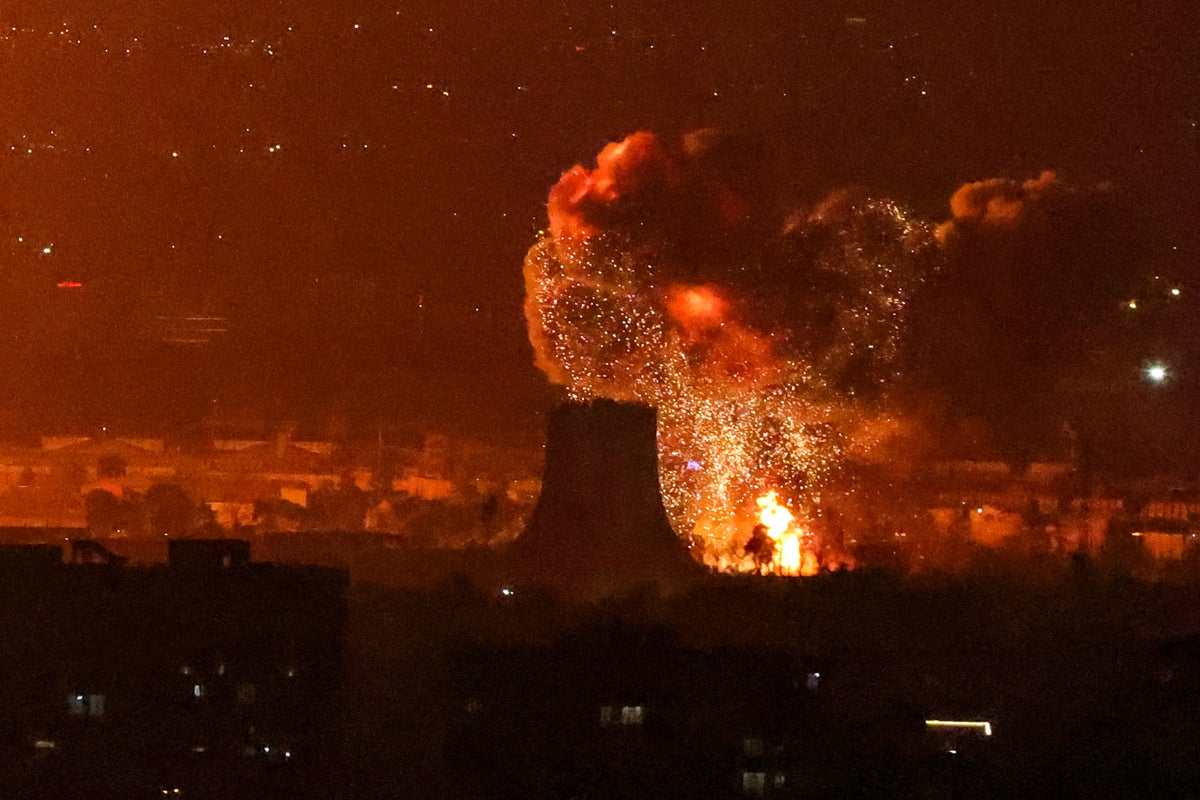
The press release cycle for Directed Energy Weapons (DEW) is a masterpiece of bureaucratic fiction. You’ve seen the headlines. A "historic" test over US soil. A drone falling out of the sky in a puff of smoke. Airspace closures that suggest something monumental is happening.
It isn't.
What you are witnessing is a multi-billion-dollar distraction. While the Pentagon and defense contractors brag about "speed-of-light" interception, they are ignoring the physics of the real world and the economics of modern attrition. Lasers are not the silver bullet for the drone age. They are a high-maintenance, fragile, and catastrophically expensive solution to a problem that has already moved past them.
The Atmospheric Tax Nobody Talks About
The "lazy consensus" among tech journalists is that lasers are perfect because they don't run out of bullets. They have an "infinite magazine," provided you have a diesel generator or a massive battery bank.
This ignores the fundamental reality of atmospheric thermal blooming.
In a pristine laboratory, a laser is a scalpel. In the real world—where there is humidity, dust, smoke, and turbulence—the air itself fights the beam. As the laser travels, it heats the air molecules in its path. This heated air acts like a lens, spreading the beam out. Instead of a concentrated point of energy capable of melting a wing spar, you get a lukewarm flashlight by the time the "bullet" hits a target three kilometers away.
If it’s raining? The weapon is useless. If there is heavy fog? You might as well throw rocks. We are pouring billions into a weapon system that is defeated by a bad forecast. Traditional kinetic interceptors—good old-fashioned lead and high explosives—don't care about humidity.
The Myth of the Low Cost Per Shot
The industry loves to tout the "one dollar per shot" metric. They compare the electricity cost of a laser burst to the $2 million price tag of a Patriot missile.
This is a dishonest accounting trick.
It ignores the Total Cost of Engagement. To field a laser capable of downing a Group 3 UAV, you need a massive cooling infrastructure, high-end adaptive optics to compensate for atmospheric shimmer, and a platform stable enough to keep a beam on a single 2-inch spot of a moving target for several seconds.
You aren't paying $1 for electricity. You are paying $100 million for the machine that can deliver that dollar. When that machine vibrates slightly out of alignment because it’s mounted on a truck driving over gravel, the "shot" fails.
Meanwhile, the adversary is launching a swarm of $500 FPV drones. Even if your laser works perfectly, it can only engage one target at a time. It has to "dwell" on the target to burn through. In a saturation attack, the "infinite magazine" is irrelevant because the rate of fire is bottlenecked by physics. While you’re busy melting the plastic housing on Drone A, Drones B through Z are already hitting your perimeter.
Mirror Coating: The $5 Counter-Measure
I have seen defense committees hand-wave away the simplest counter-measure in history: Reflective surfaces and ablative shielding.
If I am an insurgent or a cut-rate military power, I don’t need to out-engineer a 50kW laser. I just need to coat my drone in a highly reflective chrome finish or a cheap ablative material that flakes off and carries the heat away.
Imagine a scenario where a $50,000 "cutting-edge" laser tries to track a drone wrapped in $10 worth of specialized Mylar. The dwell time required to achieve a kill increases by 400%. The laser system, already struggling with thermal management, overheats and shuts down. The drone survives.
We are building a glass cannon and pretending it’s an invulnerable shield.
The Airspace Closure Charade
The recent tests in US skies required massive airspace closures. The media portrays this as a safety precaution for "secret tech." The reality is more embarrassing.
Lasers are a massive eye-hazard risk for miles beyond the target. If you miss—or if the beam reflects off a shiny surface on the drone—you are firing a blinding beam into the sky where it can hit civilian pilots or satellites. Kinetic rounds eventually fall back to earth. A laser beam keeps going.
The "safety" requirements for these weapons make them virtually impossible to use in a chaotic, urban, or crowded environment. A weapon you can’t fire because there’s a Cessna 20 miles behind your target is not a weapon; it’s a liability.
The Drone Problem is an Economic One
We are losing the drone war because we are trying to solve a "quantity" problem with "quality" engineering.
The success of drone warfare in modern conflicts isn't due to the sophistication of the drones. It's due to their disposability. When the cost of the interceptor is orders of magnitude higher than the cost of the threat, the defender loses by default.
Lasers were supposed to flip this script. They failed because the complexity of the delivery system makes the "per shot" cost a fantasy.
If you want to actually secure airspace, you don't need a multi-million dollar laser that breaks when it gets dusty. You need:
- Electronic Warfare (EW): Cheap, wide-area jamming that severs the command link.
- Kinetic Autocannons: Systems like the Gepard, which use programmed fragmentation rounds to create "clouds" of steel.
- Interceptor Swarms: Small, cheap "suicide" drones that hunt other drones.
The Sunk Cost Fallacy
I’ve watched the Pentagon burn through decades of funding on the Airborne Laser (ABL) and its successors. The ABL was a modified Boeing 747 that couldn't kill a missile unless it was flying in perfect conditions. We scrapped it after $5 billion.
The current "tactical" lasers are just smaller versions of that same failure. We keep funding them because the idea of a "death ray" sounds like the future. It appeals to generals who grew up on Star Wars. But in the mud and blood of actual 21st-century friction, a laser is a delicate laboratory instrument that has no business on a battlefield.
The status quo is a circle-jerk of defense contractors and lobbyists. They sell the "infinite magazine" dream to hide the "infinite maintenance" nightmare.
Stop asking when lasers will be ready for the front lines. They’ve been "five years away" for forty years.
Start asking why we are still trying to use 1970s sci-fi concepts to fight a 2026 swarm reality.
Throw away the mirrors. Buy more ammo.