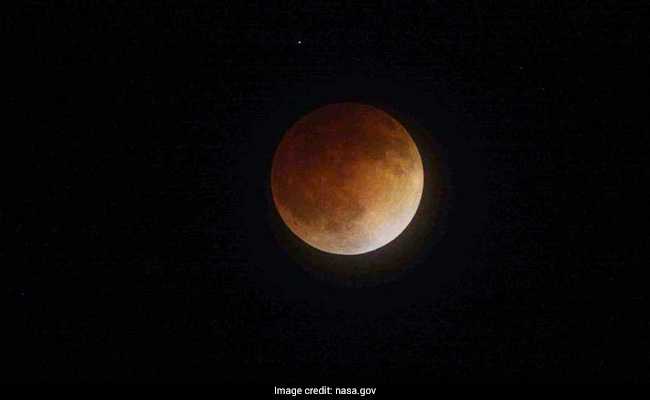
The coffee in the thermos has gone cold, but nobody cares. On a patch of grass in a suburban park, a father adjusts a tripod while his daughter shivers in a puffer jacket three sizes too big. They are waiting for the sky to break. Not with a storm, but with a shadow.
Tomorrow, the moon will do something it won't repeat for another three years. It will slide into the deepest part of the Earth’s shadow, the umbra, and for eighty-five minutes, it will bleed.
This is the last total lunar eclipse until March 2025. For those of us living in the frantic, blue-lit hum of the 21st century, it is a rare invitation to look up and realize that we are passengers on a massive, silent rock hurtling through a vacuum. We spend our days obsessing over refresh rates and interest rates. Tomorrow, we get to obsess over the mechanics of the heavens.
The science is precise, even if the experience feels mystical. At approximately 3:02 AM PT (6:02 AM ET), the moon begins its first contact with the Earth’s partial shadow. But the real theater starts an hour later. That is when the "Blood Moon" phase begins.
The Physics of a Ghostly Glow
Why red?
If the Earth were a simple, dead hunk of stone without an atmosphere, the moon would simply vanish during a total eclipse. It would be a hole in the sky. But our planet is wrapped in a thin, fragile layer of nitrogen and oxygen. As sunlight hits the edges of the Earth, the atmosphere acts like a lens. It bends the light.
It also filters it. The shorter, bluer wavelengths of light are scattered away—this is why our sky is blue during the day. The longer, redder wavelengths, however, pass through. They curve around the bend of the Earth and project onto the lunar surface.
When you look at a crimson moon tomorrow, you are literally seeing the glow of every sunrise and every sunset happening on Earth at that exact moment, reflected back at you from 238,000 miles away. It is a cosmic mirror of our planet’s collective light.
Consider a hypothetical observer standing on the moon during this event. For them, it wouldn’t be a lunar eclipse. It would be a solar eclipse. They would see a black disk—the Earth—slowly covering the sun. But the edges of that black disk would be a ring of fire, a brilliant, glowing orange halo. That is the light currently hitting the moon. That is the light we are waiting to see.
A Three Year Silence
We have been spoiled lately. The early 2020s offered a relatively steady cadence of lunar spectacles. We grew used to the idea that if we missed one, another was just a few months away. That luxury ends tomorrow.
After the shadow recedes on Tuesday morning, the celestial clock enters a lull. We will see partial eclipses and penumbral eclipses—the "lite" versions where the moon merely looks a bit dusty or gets a small bite taken out of it. But the "Totality," that eerie, immersive moment where the moon is fully submerged in shadow, won't return until March 14, 2025.
Three years is a long time in human terms.
Think back to where you were three years ago. Think about who was still in your life, or what you were worried about. A lot changes in a thousand days. By the time the next total lunar eclipse arrives, children will be in new schools. Careers will have pivoted. The world will look different. There is a weight to this "last chance" that the data points don't quite capture. It is a marking of time, a celestial fence post in the yard of our lives.
The Logistics of Awe
You don't need a telescope. You don't need special glasses like you do for a solar eclipse. You just need to be awake.
The peak of the eclipse—the moment of deepest totality—occurs at 2:59 AM PT / 5:59 AM ET. For those on the East Coast, the moon will be setting in the west just as it reaches its most dramatic hue, creating a "moon illusion" where it appears gargantuan against the horizon and the silhouettes of trees or buildings.
For those in the West, the eclipse happens high in the sky, a pristine view of the celestial machinery at work.
- Penumbral Eclipse begins: 12:02 AM PT / 3:02 AM ET
- Partial Eclipse begins: 1:09 AM PT / 4:09 AM ET
- Totality begins: 2:16 AM PT / 5:16 AM ET
- Maximum Eclipse: 2:59 AM PT / 5:59 AM ET
- Totality ends: 3:41 AM PT / 6:41 AM ET
The weather, as always, is the antagonist in this story. Clouds are the only thing that can rob you of the experience. But even then, there is a certain solidarity in the attempt. Thousands of people will be leaning out of windows or standing on balconies, all staring at the same patch of dark sky, hoping for a break in the vapor.
The Invisible Stakes
In an age where everything is recorded, replayed, and simulated, the eclipse offers something increasingly rare: an unmediated reality. You can watch a high-definition stream of it on your phone, sure. But there is a physiological response to being physically present under a copper moon.
Your pupils dilate. Your internal sense of scale shifts. You feel small.
In the grand scheme of the universe, this is a minor event. Two rocks and a ball of gas lining up in the dark. But for the person standing in their driveway in their pajamas, it is a reminder that we are part of a system that does not care about our emails, our politics, or our deadlines. The shadow moves at its own pace. It has been moving this way since before we had names for the stars, and it will continue long after our names are forgotten.
There is a strange comfort in that indifference.
When the moon finally slides out of the umbra tomorrow morning, returning to its familiar, pale white glow, the world will go back to being loud. The morning news will start. The traffic will pick up. We will dive back into the three-year stretch of "normal" nights.
But for those eighty-five minutes of totality, the world gets to be quiet. We get to stand in the shadow of our own home, looking at the light of a thousand sunsets reflected on a desert in the sky.
Go outside. Set the alarm. Braving the cold for an hour is a small price to pay for a memory that has to last you until 2025.
The shadow is already starting to reach.
***