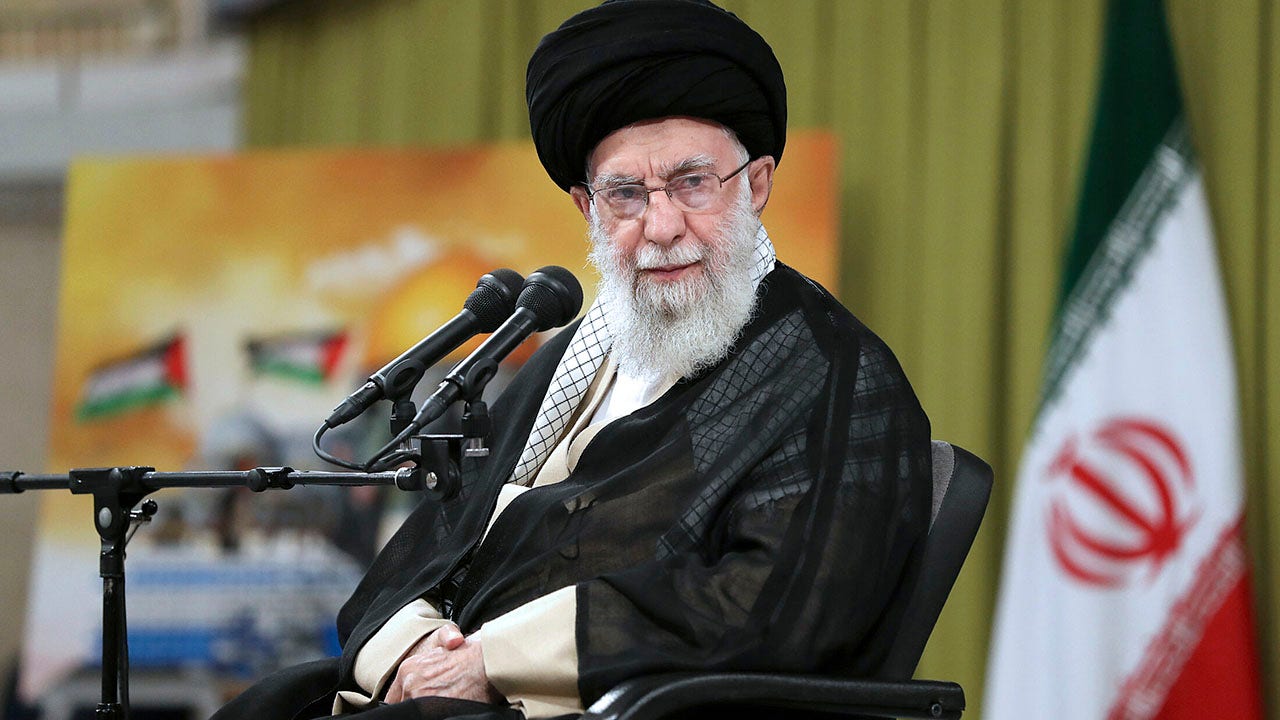
The western intelligence apparatus is currently high on its own supply. If you scan the headlines following the removal of Ali Khamenei from the board, you see a recurring, lazy trope: "Disarray." The pundits are popping champagne, convinced that decapitating the head of the "Axis of Resistance" has triggered a terminal's shutdown. They think they’ve won.
They are dead wrong.
What the "consensus" fails to grasp is the fundamental physics of decentralized insurgency. In the world of high-stakes geopolitics, a rigid hierarchy is a target; a fractured one is a virus. By celebrating the "disarray" of Iran’s proxy network, the West is ignoring the fact that it just traded a predictable, rational actor for a dozen unguided missiles with nothing to lose.
The Myth of the Essential Core
The prevailing narrative suggests that the IRGC (Islamic Revolutionary Guard Corps) and its affiliates like Hezbollah or the Houthis are a top-down corporate structure. The logic goes: Kill the CEO, and the regional branches stop filing expense reports.
I’ve spent years watching these networks operate in the gray zones. This isn’t General Motors. This is an open-source franchise.
Khamenei was the brake, not just the engine. For decades, the Supreme Leader’s primary role was balancing the "Pragmatists" against the "Ideologues." He was the final arbiter who knew exactly how far to push the envelope without triggering a full-scale regional conflagration that would end the regime. He managed the "escalation ladder" with the precision of a watchmaker.
Without that central anchor, the "Axis" doesn't dissolve. It mutates.
The Franchise Model of Terror
When you remove the central clearinghouse for strategy, you empower the mid-level commanders. These are the men who have been fighting in the trenches of Yemen, Syria, and Iraq for twenty years. They don't care about "strategic patience." They care about local optics and immediate vengeance.
- Loss of Command and Control (C2): This isn't a bug; it's a feature for the proxies. Without Tehran's "no" in their ear, groups like Kata'ib Hezbollah are free to pursue their own agendas.
- The "Succession Hunger Games": Inside Iran, the power vacuum creates a race to the bottom. To prove their revolutionary bona fides, competing factions will likely authorize more aggressive operations to show they aren't "soft" on the Great Satan.
- Weaponized Autonomy: We are moving from a world of "Tehran-directed attacks" to "Tehran-inspired chaos." The latter is much harder to deter because there is no single neck to wring.
Why "Disarray" is a Deadly Misdiagnosis
The term "disarray" implies weakness. In reality, what we are seeing is the transition from a State-Sponsored model to a Crowdsourced model of warfare.
Look at the technology. In 2010, if Hezbollah wanted a precision-guided missile, they needed a convoy from Damascus. Today, they have 3D printing facilities, local assembly kits, and autonomous drone software that can be updated via a Telegram channel. The technical barrier to entry has collapsed.
The "Axis" no longer needs a Supreme Leader to tell them how to use a Shahed-136 drone. The blueprints are out. The supply lines are diversified.
"Thinking that killing a leader stops a movement is like thinking that deleting a shortcut on your desktop deletes the program." — Anonymous Intelligence Officer, 2024
The "Hydra" Effect in Numbers
| Aspect | The "Old" Axis (Centralized) | The "New" Axis (Fractured) |
|---|---|---|
| Strategy | Long-term, geopolitical | Short-term, reactionary |
| Decision Speed | Slow (requires Tehran's nod) | Instant (local initiative) |
| Deterrence | High (Regime survival at stake) | Near Zero (Nothing to lose) |
| Tech Reliance | State-level manufacturing | Local assembly & COTS tech |
If you think a fractured IRGC is better for global shipping in the Red Sea, you haven't been paying attention to how the Houthis operate. They thrive in chaos. They don't need a formal declaration of war to shut down 15% of global trade; they just need a few bored teenagers with a remote control.
The Intelligence Blind Spot: The "Stability" Trap
The West has a pathological obsession with "Stability." We assume that if we remove a "bad" actor, a "better" one will emerge, or the system will revert to a peaceful baseline.
History screams the opposite.
- We removed Saddam; we got ISIS.
- We removed Gaddafi; we got a decade of slave markets and civil war.
- We removed Soleimani; we got a more aggressive, less sophisticated IRGC.
By removing Khamenei, we haven't brought democracy to Tehran. We’ve brought a knife fight to a room full of gunpowder. The most likely successor isn't a tuxedo-wearing reformer; it’s a hardline IRGC general who thinks Khamenei was too soft.
Imagine a scenario where the IRGC’s "Quds Force" splits into three competing sub-factions. One controls the drone fleet, one controls the ballistic missiles, and one controls the maritime assets. To win internal influence, the "Maritime" faction decides to mine the Strait of Hormuz without consulting the others.
Who do you call to stop it? There is no "hotline" to a committee in civil war.
Stop Asking "Who is Next?" and Start Asking "What is Next?"
The "People Also Ask" sections on Google are filled with questions like "Who will be the next Supreme Leader?" or "Will Iran become a democracy?"
These are the wrong questions. They assume the old framework still matters.
The real question is: How do you deter a ghost?
Traditional deterrence relies on the threat of "Regime Change." But if the regime is already in a state of slow-motion collapse or violent restructuring, that threat loses its teeth. You can’t kill a man who’s already jumping off a cliff.
The New Rules of the Game
If you are an investor, a policy maker, or a citizen of the world, stop waiting for the "Return to Normal."
- Energy Markets: Expect volatility not from state-level embargoes, but from "accidental" pipeline explosions and "unauthorized" tanker seizures.
- Cyber Warfare: Expect a surge in "lone wolf" state-sponsored hacking. Without a central authority to keep the cyber-corps on a leash, expect them to go after softer, high-impact civilian targets to "avenge" their leader.
- Regional Alliances: Watch for the Abraham Accords nations to panic. They didn't sign up for a neighborhood run by warlords; they signed up for a neighborhood managed by a strongman they understood.
The Dangerous Allure of the Vacuum
The removal of a dictator is a dopamine hit for the Western ego. It feels like progress. It looks like a win on a PowerPoint slide at the Pentagon.
But power, like nature, abhors a vacuum. And in the Middle East, vacuums are never filled by liberals with iPads. They are filled by the most organized, most violent, and most radical elements available.
Khamenei was a tyrant, a human rights nightmare, and a strategic adversary. But he was also a known quantity. He was a man who valued the survival of his "Islamic Republic" above all else. That made him rational. That made him someone you could play chess against.
Now, the chessboard has been kicked over. The pieces are rolling under the furniture. And some of those pieces are armed with biological weapons and dirty bombs.
You wanted a leaderless Iran. You got it.
Now watch as the "Axis of Resistance" stops being a political tool and starts being a religious suicide pact. The "disarray" isn't the end of the war; it's the beginning of a much messier, more violent, and entirely unpredictable chapter that no one is prepared for.
Get ready for the fallout. It won't be televised, and it won't have a central office you can bomb.
Buy more lead and less gold. The era of the "Rational Adversary" is over.


