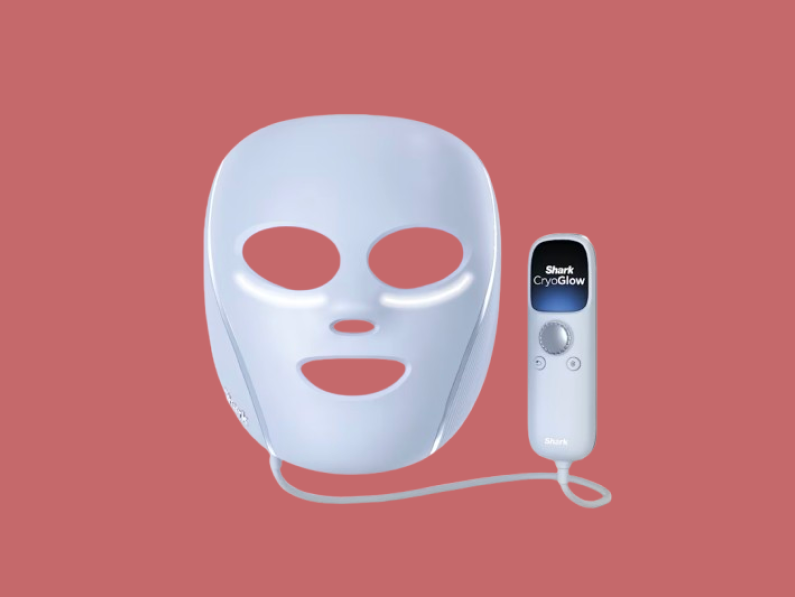
Dermatologists love a safe bet. They spend years learning how to not get sued, which is why their "expert evaluations" on LED face masks read like a damp paper towel. They tell you it’s "promising." They tell you it’s "non-invasive." They tell you to look for FDA clearance.
They are missing the entire point.
The $500 plastic bucket you strapped to your face last night isn't failing because LED technology doesn't work. It’s failing because the consumer beauty industry has fundamentally hijacked the physics of photobiomodulation and watered it down into a placebo-heavy gimmick. You aren't buying a medical device; you’re buying a light-up security blanket.
The Irradiance Lie
Every "best of" list focuses on the number of bulbs. This is the first sign the author has no idea how light interacts with human tissue. In the world of clinical phototherapy, bulb count is a vanity metric. What actually matters is irradiance—the power density measured in milliwatts per square centimeter ($mW/cm^2$).
Most consumer masks are underpowered toys. To trigger a real biological response in the mitochondria, you need a specific threshold of energy to reach the target depth. If the irradiance is too low, you aren't "biohacking" your collagen; you’re just sitting in a dark room with red Christmas lights on your nose.
Think of it like boiling water. If you need to hit 100°C to cook pasta, but your stove only reaches 40°C, it doesn't matter if you leave the pot there for three weeks. The pasta will never cook. Most home masks operate at such a pathetic power density that they never hit the "activation energy" required for systemic change. You’re waiting for a boil that’s physically impossible.
The Inverse Square Law vs. Your Ego
Dermatologists often gloss over the "fit" of the mask, calling it a matter of comfort. Physics disagrees.
Light intensity diminishes rapidly with distance. This is the Inverse Square Law. In a clinical setting, a high-powered panel is positioned precisely. In your bedroom, you’re using a flexible silicone mask that touches your cheeks but sits two centimeters off your forehead and three centimeters away from your chin.
Because of that gap, the "dose" your forehead receives is exponentially lower than what your nose gets. You are essentially giving yourself a patchy, uneven treatment that no self-respecting clinician would ever authorize. If the mask isn't flush against the skin with uniform pressure, the "expert evaluation" is moot. You’re leaking energy into the air, not your dermis.
Why "FDA Cleared" Is a Participation Trophy
Marketing teams treat "FDA Cleared" like a gold medal. It’s not.
In the world of medical devices, there is a massive difference between FDA Approved and FDA Cleared (510k). Most LED masks are cleared via the 510(k) pathway. This simply means the manufacturer proved their device is "substantially equivalent" to another device already on the market.
It does not mean the FDA conducted clinical trials to prove the mask actually erases wrinkles. It just means the FDA is reasonably sure the device won’t set your face on fire or blind you. Using "FDA Cleared" as a proxy for "This Works" is the most successful gaslighting campaign in modern skincare.
The Red Light Spectrum Scam
We’ve been told Red (630-660nm) and Near-Infrared (830-850nm) are the holy grail. While these wavelengths are biologically active, the industry ignores the "biphasic dose response."
There is a sweet spot for light therapy known as the Arndt-Schulz Curve. If you do too little, nothing happens. If you do too much, you actually inhibit cell repair.
The "more is better" crowd is currently nuking their skin barrier. I’ve seen enthusiasts using high-output panels for thirty minutes a day, wondering why their skin looks dull and inflamed. They’ve pushed past the stimulation phase and into the inhibitory phase. Your cells have a capacity limit. Once the cytochrome c oxidase is saturated, you’re just causing oxidative stress.
The Blue Light Paradox
The consensus says blue light (415nm) kills P. acnes bacteria. It does. But nobody mentions that blue light is a double-edged sword.
Prolonged exposure to high-energy visible (HEV) light—which includes the blue spectrum—is linked to hyperpigmentation, especially in Fitzpatrick skin types IV and above. If you have a darker complexion and you’re using a blue LED mask to fight breakouts, you are very likely trading your acne for long-term melasma and stubborn brown spots. The "expert" advice rarely accounts for the fact that blue light can be more damaging to certain skin types than the acne it's trying to treat.
The Professional Grade Mirage
"Professional grade" is a term used by people who want to charge you an extra $300 for a carrying case.
If you want actual results, you have to stop looking at "masks" and start looking at "panels." A high-quality LED panel allows for higher irradiance because it doesn't have to worry about heat dissipation against your skin. It uses better heat sinks, more stable drivers, and offers a uniform field of light.
The mask is a compromise of form over function. It’s designed for Instagram selfies, not for cellular ATP production.
The Actual Cost of Efficacy
Let’s be honest about the hardware. A high-quality LED chip costs pennies. The markup on these devices is astronomical. You are paying for the brand's overhead, the influencer's commission, and the "luxury" packaging.
When a dermatologist recommends a $400 mask, they are often recommending the experience of skincare, not a clinical outcome. If you want the results they claim, you shouldn't be buying a mask that looks like a Daft Punk helmet. You should be looking at the spectral output graphs and the irradiance measurements at specific distances. If a company won't provide those numbers, they are selling you a lamp, not a medical tool.
Stop Asking if They Work
The question "Do LED masks work?" is the wrong question. It’s like asking "Does exercise work?"
A three-minute walk once a week is exercise, but it won't get you ready for a marathon. A 5mW/cm² mask worn twice a week won't fix your sun damage.
We need to stop treating light therapy as a passive miracle and start treating it as a precision-dosed pharmaceutical. That means acknowledging the downsides:
- Eye Strain: Even with goggles, the brightness can trigger migraines and ocular discomfort.
- False Hope: It won't fix sagging skin. No amount of light will tighten a jawline that has lost its structural integrity.
- Time Poverty: The ROI on sitting under a light for 20 minutes a day is remarkably low compared to a prescription retinoid.
The Hard Truth
If you aren't willing to spend upwards of $800 on a high-irradiance, medical-grade panel and use it with the discipline of a monk, you are wasting your money. The middle-market $200-$500 masks are the "no man's land" of skincare—too expensive to be a stocking stuffer, too weak to be a solution.
You’ve been sold a version of technology that has been sanded down, depowered, and packaged in pretty pink plastic so it can be sold at a retail markup. It’s a decorative hobby, not a dermatological intervention.
Throw away the mask. Buy a bottle of Tretinoin. If you still have money burning a hole in your pocket, go to a clinic that uses a machine that requires a dedicated cooling system and a technician with a degree. Everything else is just expensive lighting.