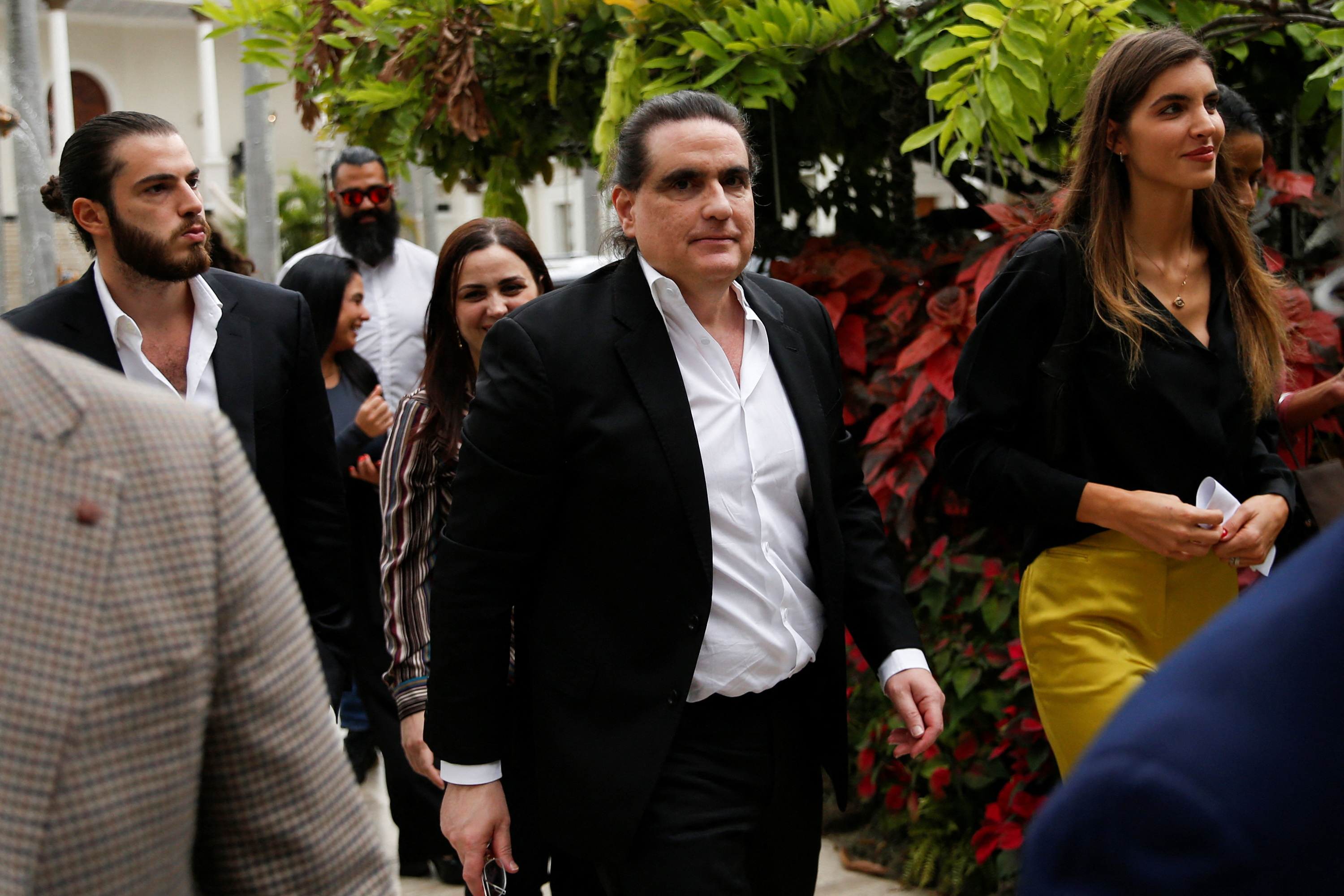
The deportation of Alex Saab to the United States by Venezuela’s transitional authority represents a structural realignment of the state’s political economy rather than a simple shift in foreign policy. The transaction executes an asset liquidation strategy by the administration of Delcy Rodríguez, who assumed control following the ouster of Nicolás Maduro. By processing Saab not as a repatriated diplomat but as an un-extraditable foreign asset, Caracas has bypassed domestic constitutional constraints to fulfill an implicit liability exchange with Washington.
To understand this operational pivot, the situation must be evaluated through the mechanics of authoritarian survival, rent distribution, and the legal parameters of international prosecution. The value of Saab to the current Venezuelan executive has inverted from a high-yield geopolitical shield to a toxic balance-sheet liability.
The Strategic Inversion: From Sovereign Shield to Negotiable Liability
Under the Maduro administration, Alex Saab functioned as a primary procurement node designed to bypass international trade restrictions. His operational architecture relied on a network of shell companies spanning Turkey, Mexico, Hong Kong, and the United Arab Emirates. This network managed the asymmetric exchange of Venezuelan crude oil for gold, food staples, and fuel.
The state neutralized his 2020 arrest in Cape Verde by retroactively designating him a plenipotentiary diplomat, a legal shield intended to establish immunity under the 1961 Vienna Convention. The primary objective was to safeguard the state's illicit procurement architecture from judicial discovery.
The structural transition of January 2026, which concluded with the removal of Maduro from executive power, fundamentally altered the internal cost-benefit function of retaining Saab. For the Rodríguez administration, the primary objective shifted from protecting legacy networks to stabilizing macro-economic inflows and establishing institutional legitimacy.
Legacy Regime (Maduro):
[Saab as Diplomat/Procurement Node] ---> Mitigates Sanctions ---> Preserves Legacy Rents

Current Regime (Rodríguez):
[Saab as Toxic Asset] ---> Deportation to US ---> Secures Capital Inflows & Oil Access
The continuation of the protective strategy generated severe negative externalities:
- Capital Constraints: Retaining Saab signaled continuity with the Maduro procurement structures, blocking access to Western capital markets and freezing normalization protocols with foreign energy conglomerates.
- Internal Security Risk: As a repository of the previous administration's financial data, Saab represented a domestic destabilization risk within the Chavista movement, holding structural leverage over competing military and civilian factions.
- Diminishing Marginal Utility: With Maduro awaiting trial in federal custody in Manhattan, the diplomatic utility of shielding his financial architect dropped to zero.
Legal Arbitration and the Nationality Loophole
The execution of the deportation highlights the precise application of statutory law to achieve geopolitical objectives. Article 69 of the Constitution of the Bolivarian Republic of Venezuela explicitly prohibits the extradition of Venezuelan citizens.
To execute the transfer without triggering a constitutional crisis or establishing a precedent that could threaten current elites, the immigration authority issued an administrative ruling that categorized Saab exclusively by his country of origin, designating him a Colombian citizen.
This administrative shift allows the executive branch to reclassify the physical removal of an individual from an extradition to a deportation. The distinction is mechanically vital:
- Extradition: A bilateral judicial process requiring judicial review, proof of double criminality, and formal treaty compliance, barred by Saab’s dual Venezuelan citizenship status.
- Deportation: A unilateral administrative action executed by immigration authorities based on sovereign border control, requiring lower evidentiary thresholds and minimal judicial oversight.
By stripping Saab of his functional cabinet portfolios, removing him from his role as a foreign investment liaison, and executing a targeted re-classification of his civic status, the state cleared the legal path for immediate physical transfer based on active US federal warrants.
The Financial Architecture of the Complicity Loop
The federal investigations targeting Saab in the Southern District of Florida and the Southern District of New York focus on the structural corruption within the Comités Locaux d'Approvisionnement et de Production (CLAP). This state-run food distribution network serves as an analytical case study in rent extraction under hyperinflationary conditions.
The economic mechanics of the CLAP fraud framework operated via a three-tiered arbitrage loop:
- Over-Invoicing ($I_f > I_m$): Shell entities controlled by Saab and his partner, Alvaro Pulido, secured exclusive contracts to import basic commodities (rice, corn flour, cooking oil) from Mexico. The invoiced cost to the Venezuelan state ($I_f$) was artificially inflated far above fair market value ($I_m$).
- Currency Arbitrage ($E_{off} \ll E_{mkt}$): Payment for these contracts was settled via the state’s preferential exchange rate mechanisms. This allowed the network to convert local currency balances into US dollars at highly subsidized rates, capturing the spread between the official rate and the parallel market valuation.
- Quality Degradation: To maximize the net profit margin per unit, the physical inputs were systematically downgraded. Lower-grade food substitutes were shipped while the financial delta was funneled through international banking hubs to fund capital transfers to regional political actors.
The 2023 presidential pardon granted by the United States was constrained to a specific 2019 indictment regarding unexecuted low-income housing projects. It offered no prospective immunity for separate, ongoing investigations into the CLAP food network or associated bribery conspiracies. Consequently, the US Department of Justice retained full structural leverage to prosecute Saab on distinct asset laundering and conspiracy charges.
Strategic Forecast: Realignment of Bilateral Rents
The physical custody of Saab provides US prosecutors with an unparalleled map of global sanctions-evasion channels and sovereign wealth concealment methods. His prior, documented history of cooperation with the Drug Enforcement Administration (DEA) before his 2020 detention indicates a high probability of structural plea insulation. Saab possesses actionable data regarding the global financial footprints of senior Venezuelan military officials, Iranian logistics networks, and Turkish commodity clearing houses.
For the Rodríguez administration, the immediate yield of this transaction will manifest in specific concessions from Washington:
- Sanctions Calibration: Gradual modification of Office of Foreign Assets Control (OFAC) general licenses, specifically targeting the expansion of western operations in the Orinoco Petroleum Belt.
- De-escalation of Sovereign Enforcement: A reduction in asset seizure initiatives targeting Venezuelan state holdings abroad, allowing the transitional government to stabilize domestic liquidity.
This structural play cements a transition away from ideological resistance toward a transactional, resource-driven model designed to preserve domestic political control while re-integrating Venezuela into Western energy supply chains.


_Biopsy.png?branch=uat_release_3)
