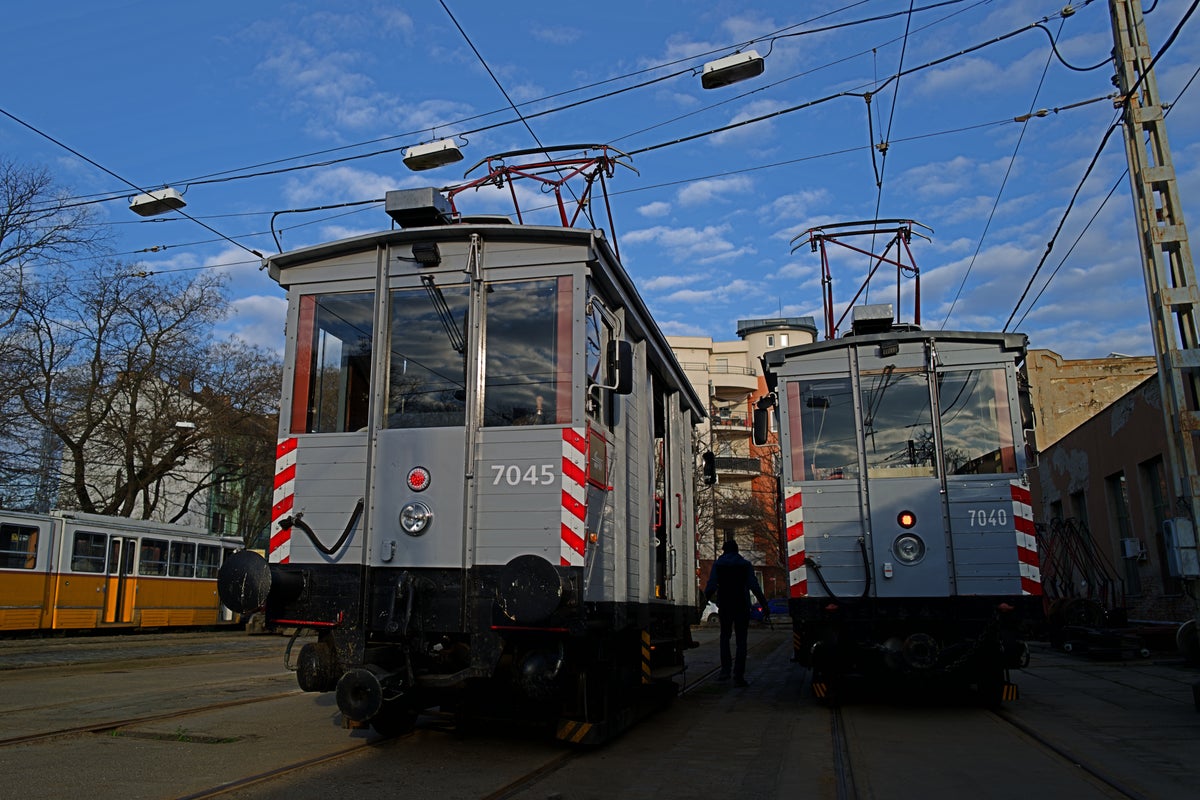
The survival of the Güterbim—the freight tram system in Zurich and similar European models—is not a result of nostalgia but a successful mitigation of the Urban Last-Mile Friction Point. While passenger rail systems focus on throughput of human capital, freight trams address the physical constraints of medieval and early industrial street grids that cannot accommodate the volumetric demands of modern heavy goods vehicles (HGVs). By repurposing existing electrified rail infrastructure, cities create a secondary logistics layer that bypasses the congestion-induced latency of rubber-tire transport.
The Structural Efficiency of Rail Based Urban Logistics
To understand why a century-old technology remains viable, one must analyze the Spatial Utility Ratio. Standard delivery vans (LGVs) operate with high degrees of freedom but suffer from low volumetric efficiency relative to the road space they occupy during both transit and dwell times (unloading).
- Energy Recovery and Cost Basis: Freight trams utilize regenerative braking systems. In a stop-start urban environment, the kinetic energy converted back into the overhead line provides a lower marginal cost per ton-kilometer than diesel or even battery-electric vans, which must carry the dead weight of their own energy storage.
- The Throughput Constant: A single freight tram configuration can displace between five and ten standard delivery vans. This reduces the "Logistics Footprint" on the street level, effectively increasing the available bandwidth for other economic activities.
- Decoupling from the Traffic Wave: Because trams often operate on dedicated or semi-dedicated rights-of-way, their transit times are predictable. This allows for JIT (Just-In-Time) scheduling that road-based vehicles, subject to the stochastic nature of urban traffic, cannot guarantee.
The Triple Constraint of Zurich’s Cargo Tram Model
The Zurich model operates under a specific framework known as the Circular Resource Recovery Loop. Unlike commercial logistics aimed at retail fulfillment, this system focuses on "bulky waste" and e-waste—materials that represent high-volume, low-density challenges for municipal management.
- Input Synchronization: The city establishes "Siding Nodes" at existing tram stops. The logic here is to minimize the distance the end-user must travel, effectively crowdsourcing the "First Mile" of the waste stream.
- Operational Windowing: To prevent interference with high-frequency passenger intervals, freight movements are scheduled during off-peak windows. This maximizes the Asset Utilization Rate of the track and power infrastructure, which would otherwise be under-leveraged during mid-day or late-evening periods.
- Modular Loading: The system relies on standardized containers that can be rolled directly onto flatbed tram cars. This minimizes "Dwell Time" at each node, ensuring the freight unit maintains its slot in the transit sequence without delaying passenger cars behind it.
The Economic Physics of the Last Mile
The "Last Mile" typically accounts for up to 28% of total transportation costs. In a high-density European city, these costs are driven by three primary variables:
- Congestion Penalties: Time lost in traffic.
- Search Costs: Time spent finding legal unloading zones.
- Regulatory Friction: Low-emission zone (LEZ) charges and weight restrictions.
Freight trams eliminate these variables. By treating the city’s rail network as a Fixed-Pipe Distribution System, the municipality converts a variable cost (driver time in traffic) into a fixed operational cost (energy and rail maintenance).
However, the limitation of this model is its Geographic Rigidity. A tram can only serve areas within 200–400 meters of a rail spur before the costs of drayage (moving goods from the tram to the final doorstep) negate the efficiency gains of the rail transit. Therefore, freight trams are most effective when used for Centralized Consolidation Points rather than individual home delivery.
Technical Infrastructure and Power Dynamics
The 100-year longevity of these systems is a byproduct of Infrastructure Interoperability. The trams operate on a standard 600V or 750V DC overhead line. This creates a redundant power system. In the event of a localized power failure in one sector of the city, the interconnected nature of the grid allows for continued freight movement, provided the substations remain active.
Furthermore, the maintenance of freight rolling stock is significantly lower than that of internal combustion or battery-electric trucks. The absence of heavy batteries—which reduce the net payload capacity of electric trucks—allows the tram to maintain a superior Payload-to-Gross-Weight Ratio.
The Strategic Failure of Traditional Logistics
Traditional logistics companies view the city as a "Map of Points." A rigorous analytical view sees the city as a "Volume of Flows." The failure of many modern delivery startups lies in their reliance on the Single-Drop-Off Variable. Each stop in a van involves parking, engine shutdown, egress, delivery, ingress, and re-entry into traffic.
Freight trams shift this to a Bulk-Transfer Model. By aggregating 50–100 individual "drops" into a single rail movement to a micro-hub, the system achieves a "Logistics Density" that no fleet of vans can match.
Barriers to Scalability
Despite the clear mechanical and spatial advantages, the freight tram faces two significant bottlenecks:
- Infrastructure Sunk Costs: Cities without an existing light rail or tram network cannot justify the capital expenditure (CAPEX) of laying tracks solely for freight. The system is an "add-on" benefit of passenger transit, not a standalone solution.
- The Transshipment Tax: Every time a parcel is moved from one vehicle to another (e.g., from a tram to an e-cargo bike), it incurs a cost in labor and potential damage. For low-margin goods, this "Transshipment Tax" can be prohibitive unless subsidized by municipal environmental goals.
The Engineering of Urban Metabolism
To optimize a city's "Metabolism"—the intake of goods and the output of waste—planners must integrate the freight tram into a Multimodal Synchronization Matrix.
- Node 1 (The Perimeter): Heavy rail or electric HGV delivers goods to a peri-urban terminal.
- Node 2 (The Arterial): Freight trams move bulk quantities into the city core using existing rail.
- Node 3 (The Capillary): E-cargo bikes or walking couriers handle the final 100 meters.
This structure mimics biological circulatory systems, where the "Vessels" (trams) handle high-volume flow and the "Capillaries" (bikes) handle individual cell (doorstep) delivery.
Predictive Modeling for the Next Decade
As cities move toward "Car-Free" or "Low-Traffic Neighborhood" (LTN) mandates, the freight tram transitions from a "charming" relic to a Primary Industrial Asset. The conversion of former passenger lines or the installation of "Logistics Sidings" in new developments will become a requirement for urban planning permission.
The next evolution involves Autonomous Freight Modules. These smaller, self-propelled units can detach from a main tram "train" and move into sidings independently, allowing for continuous unloading without blocking the main line. This removes the current operational bottleneck of "Block Signaling," where a freight tram occupies a track segment and prevents passenger throughput.
The strategic play for municipal governments is the immediate protection of rail rights-of-way. Once a track is paved over or a siding is sold to a developer, the city loses the ability to implement high-density freight forever. Urban centers must categorize their tram networks as dual-use infrastructure—prioritizing the movement of atoms (goods) with the same rigor as the movement of people. Would you like me to develop a comparative cost-benefit analysis between these tram systems and autonomous electric delivery fleets?