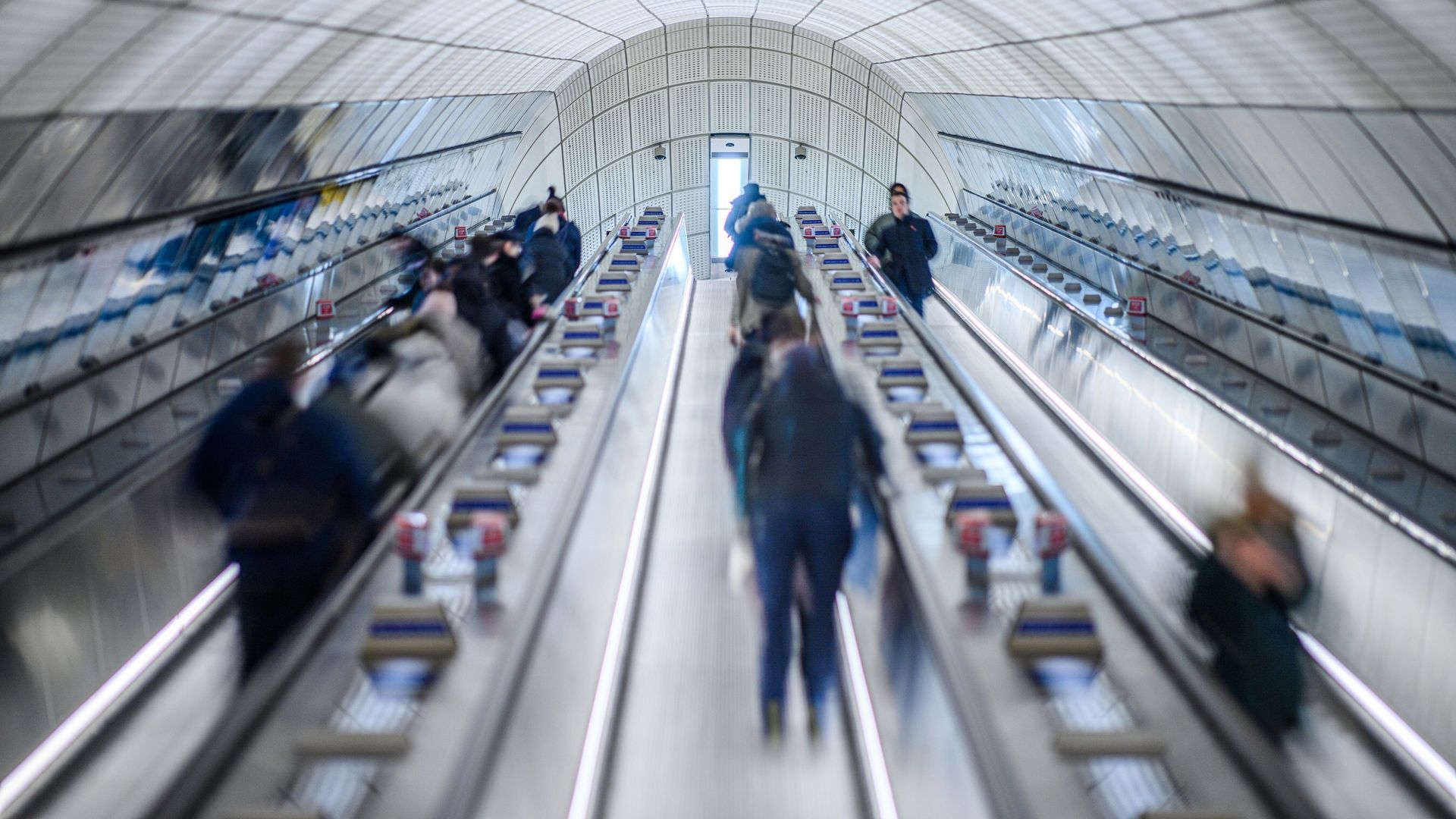
The operational integrity of London’s transport network is fundamentally binary: it either moves capital and labor efficiently, or it clusters failure across interconnected infrastructure. When the London Underground faces industrial action, the resulting gridlock is not a series of isolated delays but a predictable cascade of systemic failure. Understanding a Tube strike requires moving past superficial timelines of "lines closed" and analyzing the structural bottlenecks, labor dependencies, and economic friction points that dictate urban immobility.
Commuters and businesses treat transport disruptions with reactive panic. A strategic approach requires treating a network shutdown as a predictable supply chain disruption. By dissecting the operational mechanics of the strike, mapping the exact points of failure across specific lines, and deploying alternative transit frameworks, individuals and enterprises can neutralize the economic tax of industrial action.
The Three Pillars of Network Vulnerability
The impact of a London Underground strike is governed by three structural variables. These pillars dictate why certain geographic zones paralyze instantly while others maintain partial utility.
                  [ Labor Dependency ]
                           │
                           ▼
[ Asset Asset Isolation ] ───► [ Commuter Asymmetry ]
- Labor Dependency and Grade Specialization: The network cannot function without highly specialized, safety-critical staff. Station supervisors, signal operators, and drivers are not interchangeable. If a union representing asset-specific workers (such as signalers on the District line) walks out, the entire line fails, even if drivers on that same line are willing to work.
- Asset Isolation: Certain sections of the London Underground rely on shared infrastructure with National Rail or deep-level tube geometry that prevents trains from safely turning around midway through a route. When a strike hits, these isolated segments experience total service cessation rather than reduced frequency.
- Commuter Asymmetry: The disruption is never distributed equally. High-density employment hubs like the City of London and Canary Wharf experience exponential crowding on remaining transit modes, while outer zones experience absolute isolation due to a lack of secondary transport infrastructure.
Structural Breakdown of Line Vulnerabilities
A blanket statement that "the Tube is disrupted" obscures the distinct operational realities of individual lines. The vulnerabilities of the network fall into specific risk categories based on their automation levels, infrastructure age, and labor union density.
Deep-Tube Automated Lines: Victoria and Jubilee
The Victoria and Jubilee lines utilize Automatic Train Operation (ATO), meaning the onboard systems control acceleration and braking, while the operator manages door clearance and emergency interventions.
This automation creates a false sense of security during industrial action. While the technical reliance on a driver is minimized, the safety mandates of Transport for London (TfL) dictate that deep-tube tunnels cannot operate without minimum station staffing levels. If station control rooms are abandoned due to strikes by station-based unions, these highly automated lines are forced to close entirely due to subterranean evacuation regulations.
Sub-Surface Interconnected Lines: District, Circle, Metropolitan, and Hammersmith & City
These lines operate on a legacy, shared-track matrix. They are highly vulnerable to cross-contamination.
A disruption on the Circle line immediately degrades the throughput of the District and Metropolitan lines because they share physical junctions, signaling blocks, and rolling stock depots. If a strike targets the signal cabins of the sub-surface network, the failure cascades across all four lines simultaneously, rendering west-to-east transit across central London non-viable.
The Deep-Tube Legacy Lines: Central, Piccadilly, Northern, and Bakerloo
These lines feature high labor density and complex physical constraints. The Central and Piccadilly lines cover massive geographical spans, stretching deep into the western and eastern suburbs.
Because these lines rely heavily on manual operation or older generations of signaling, they require a high volume of active drivers and physical line guards. A strike here creates an immediate fragmentation of the line, where service might run in short, disconnected shuttles in outer zones while the central London core closes entirely.
The Cost Function of Commuter Displacement
When the underground network capacity drops toward zero, the displacement of millions of daily commuters triggers an immediate cost function across surface transport networks. The alternative options are not clean substitutes; they are sub-optimal systems subject to rapid saturation.
The Bus Network Bottleneck
The London bus network operates as a feeder system to the Underground, not a replacement for it.
[Tube Capacity Drop] ──► [Bus Passenger Influx] ──► [Dwell Time Increase] ──► [Gridlock]
When millions of displaced passengers attempt to board surface buses, the system encounters the "dwell time" trap. The time spent at each bus stop increases exponentially as passengers crowd the doors. This slows the average speed of the bus fleet, lengthening headways and creating physical gridlock on roads already congested by increased vehicular traffic.
The Multi-Modal Saturation Point
Alternative rail networks, specifically National Rail, the Elizabeth line, and the DLR, experience immediate demand shocks during a Tube strike.
The Elizabeth line handles massive volume due to its high-capacity rolling stock and deep-level automation, but its central interchanges (such as Tottenham Court Road and Liverpool Street) quickly become dangerous choke points. TfL frequently implements crowd-control measures at these hubs, forcing commuters into long queues outside the stations just to access the platforms. The DLR remains functional during many disputes due to its driverless configuration, yet it suffers severe crowding at key interchange points like Canning Town and Stratford.
Enterprise and Individual Mitigation Framework
Surviving a period of sustained transit disruption requires moving away from ad-hoc planning and implementing a rigorous risk-mitigation framework.
The Corporate Operational Continuity Plan
Businesses operating within the capital must quantify their exposure to transit deficits. Relying on staff "trying their best" to get to the office results in lost productivity and fragmented operations.
- Audit Employee Commute Topography: Map the residential distribution of essential on-site personnel against the strike map. Identify staff members who rely entirely on single-line deep-tube infrastructure with zero secondary options.
- Implement Asynchronous Operating Hours: Shift mandatory office arrival times outside the peak commuting windows of 07:00–09:30 and 16:30–19:00. Surface transport networks experience a sharp drop in saturation outside these hours.
- Deploy Micro-Mobility and Active Transport Subsidies: For essential staff within a 5-mile radius of the workplace, corporate docking accounts for Santander Cycles or e-scooter schemes provide a reliable, traffic-immune alternative to jammed bus routes.
The Individual Transit Hierarchy
For the individual commuter, navigating a strike day requires adhering to a strict efficiency hierarchy. Abandon the mental model of your standard commute and assess options purely through the lens of predictability and time-to-destination.
| Priority | Transit Mode | Risk Factor | Strategic Utility |
|---|---|---|---|
| 1 | Active Transport (Walking / Personal Cycling) | Negligible | Complete autonomy; immune to traffic gridlock. |
| 2 | Fixed-Rail Surface Overground / Elizabeth Line | Moderate | High capacity, but subject to severe station crowd-control delays. |
| 3 | River Services (Uber Boat by Thames Clippers) | Low | Highly predictable schedules, but geographically limited to the river corridor. |
| 4 | London Buses | High | Severe journey-time inflation due to road congestion and boarding delays. |
| 5 | Ride-Hailing / Taxis | Critical | Extreme surge pricing and complete vulnerability to surface traffic stagnation. |
Limitations of Strategic Substitutes
No mitigation strategy is flawless. The primary limitation of active transport is weather dependency and physical capability constraints. The limitation of relying on alternative rail networks is that their ticketing boundaries and infrastructure are often distinct from the Underground, leading to increased direct costs for the commuter.
Ride-hailing services represent the lowest-utility choice during a major strike. The convergence of thousands of commuters onto applications like Uber or Bolt triggers algorithmic surge pricing, often multiplying fares by three or four times the baseline rate, while simultaneously placing the vehicle into the center of London’s gridlocked road network. The financial cost increases while the velocity of transit drops.
The Impending Structural Shift
The long-term trajectory of London transport labor relations points toward an escalation of these structural frictions. As TfL pushes for greater modernization, including the expansion of driverless train technologies on modern lines and the overhaul of legacy pension structures, union resistance will likely crystallize around defending remaining manual operations.
The strategic play for both enterprises and individuals is to decouple operational success from the daily availability of the subterranean rail network. Treat the London Underground not as a guaranteed utility, but as a high-performance system with an inherent, recurring risk of temporary insolvency. Build redundancy into your operational footprint now, or accept the recurring tax of urban immobility.


