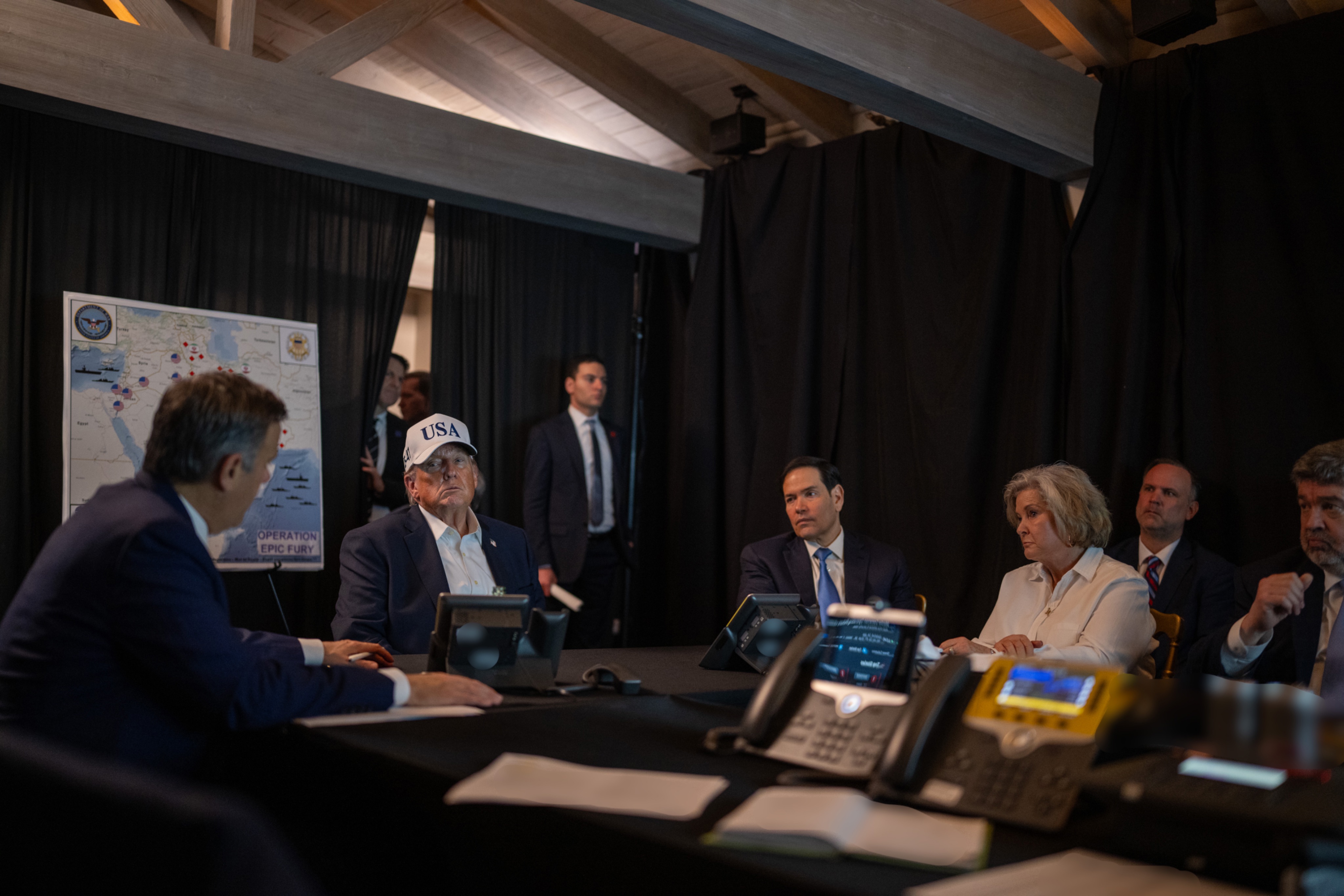
In the windowless Situation Room, the air usually carries a faint metallic tang from the overtaxed cooling systems. The clocks on the wall don’t just show the time in D.C., Tel Aviv, and Tehran; they track the pulse of a global equilibrium that is currently skipping beats. This isn't about dry policy papers or white-shuttered briefings anymore. It is about a clock that has been ticking since the 1979 revolution, a countdown that many in the current administration believe is finally entering its final minutes.
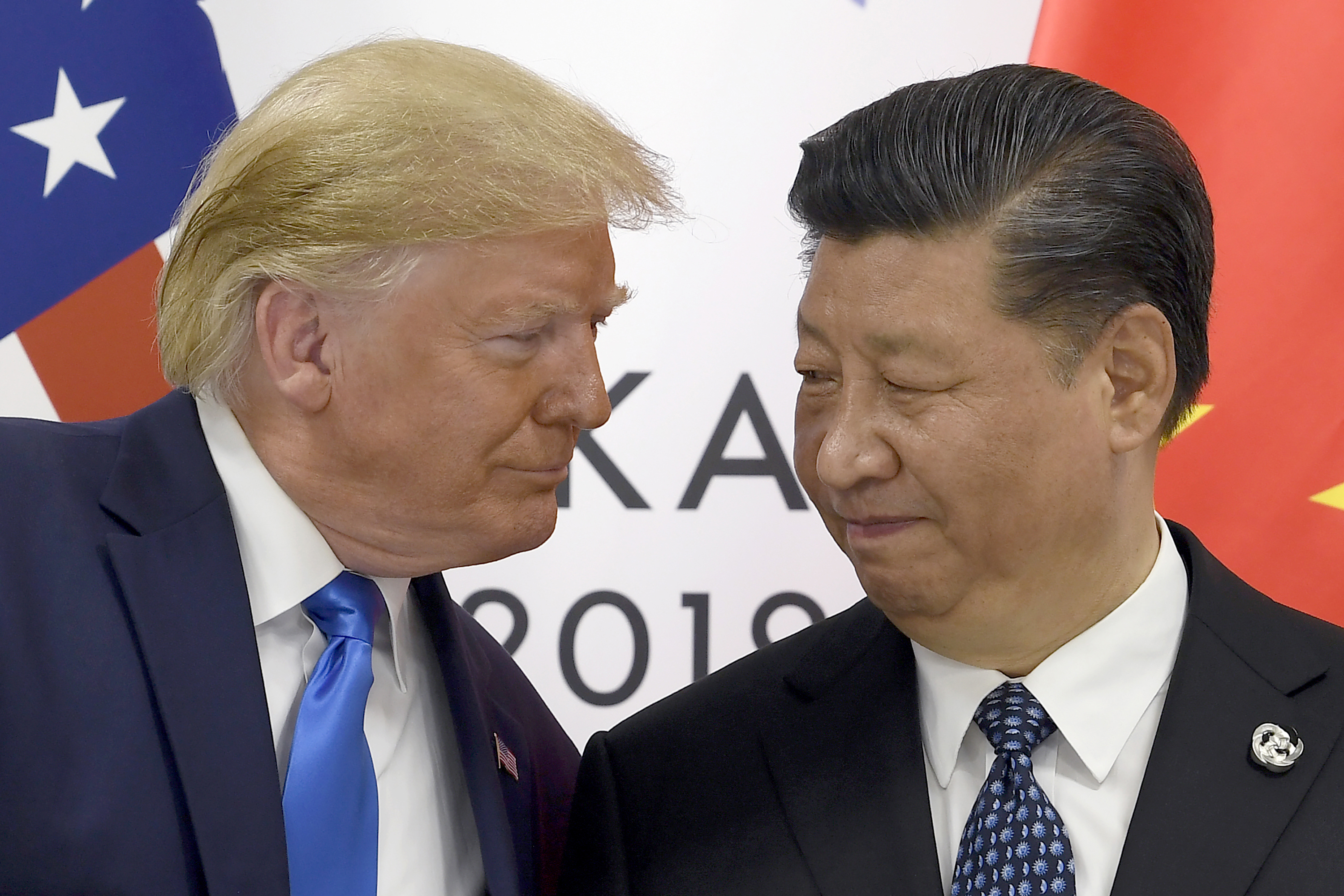
Donald Trump has always viewed the world through the lens of the "Big Deal." In his world, there are no permanent enemies, only leverage points. The current movement in Washington suggests he isn't just looking for a tactical win or a temporary freeze on uranium enrichment. He is eyeing a superpower summit—a theatrical, world-altering moment where he can sit across from the highest powers of the East and redefine the map of the Middle East.
The Ghost in the Centrifuge
To understand the stakes, you have to look past the satellite imagery of Natanz. Imagine a young engineer in Tehran. Let’s call him Arash. Arash spent his twenties studying fluid dynamics, dreaming of renewable energy. Now, he spends his days monitoring the vibrations of IR-6 centrifuges. He knows that every increase in RPM brings his country closer to a nuclear threshold, but it also brings the shadow of a B-2 Spirit bomber closer to his roof.
This is the human friction of the Iran timeline. While diplomats argue over "breakout times"—the theoretical window required to produce enough weapons-grade material for a single bomb—millions of people like Arash live in the gap between a handshake and a mushroom cloud. The Trump strategy relies on the belief that the Iranian economy is a parched forest, and he is the man holding the match, waiting for the regime to realize that the only way to put out the fire is to talk.
The Superpower Table
Washington is no longer just playing a game of chess with Tehran. It is a three-dimensional match involving Moscow and Beijing. The "Superpower Summit" isn't a theory; it’s the endgame. If Trump can convince Vladimir Putin that a nuclear-armed Iran is a threat to Russia’s southern flank, and persuade Xi Jinping that oil flow through the Strait of Hormuz is more important than an anti-Western alliance, the Iranian leadership finds itself alone.
History is a heavy ghost in these rooms. We remember the 2015 JCPOA as a series of technical benchmarks. Trump sees it as a "disaster" because it dealt with the symptoms rather than the soul of the conflict. His timeline for "defeating" Iran isn't necessarily about a ground invasion or regime change through force. It is about a total diplomatic and economic enclosure that forces a choice: evolution or extinction.
Consider the reality of the Iranian rial. It doesn't just fluctuate; it breathes with the fear of the streets. When news breaks of a new carrier strike group moving into the North Arabian Sea, the price of bread in Isfahan moves. The administration knows this. They are betting that the internal pressure of a hungry, digitally-connected generation will eventually outweigh the ideological rigidity of the aging clerical elite.
The Silent Hardware
While the headlines focus on the rhetoric, the real shifts happen in the silence of the desert. The technology of modern warfare has stripped away the luxury of distance. We are talking about hypersonic glide vehicles and autonomous drone swarms that can bypass traditional radar.
This technological leap changes the math of the "timeline." In the past, defeating a regional power meant months of troop build-ups and clear, visible mobilization. Today, it can happen in the time it takes to send a localized signal. The threat of a "lightning strike" is the silent partner at every negotiating table. It creates a sense of urgency that didn't exist in the 1990s or 2000s. The clock isn't just ticking; it’s accelerating.
But what does "defeat" actually look like?
To some in the inner circle, it looks like a signed document where Iran relinquishes its ballistic missile program and its regional proxies in exchange for a seat at the global table. To others, it is more visceral. It’s the total dismantling of the Islamic Revolutionary Guard Corps’ economic empire. The difficulty lies in the fact that you cannot bomb an ideology, and you cannot sanction a belief system into non-existence.
The High Stakes of the Handshake
There is a specific kind of silence that falls over a room when a leader decides to gamble with the future of a hemisphere. We are approaching that silence. The rumors of a "Timeline for Defeat" suggest a period of 12 to 18 months. This is a compressed, violent schedule for diplomacy. It assumes that the opponent will break before the mediator runs out of political capital at home.
The risk is the "wounded tiger" scenario. If the Iranian leadership feels there is no path back to the global community—no "off-ramp" provided by the superpower summit—they may decide that the cost of nuclearization is lower than the cost of surrender. This is the nightmare scenario that keeps the lights on in the basement of the West Wing.
Think about the sailors on a destroyer in the Gulf. They see the lights of the Iranian coast every night. To them, the "timeline" isn't a policy debate. It’s the difference between a routine patrol and a combat engagement. Their lives are the currency being traded in these high-level summits.
The strategy is a paradox. It uses the threat of total destruction to pave the way for a grand peace. It treats the world’s most volatile region like a distressed real estate asset that can be flipped with the right amount of pressure and a flashy enough closing ceremony.
We are watching the ultimate test of the "strongman" theory of history. It posits that the world is not moved by grand social forces or economic cycles, but by the sheer will of individuals sitting in gold-trimmed chairs. If the summit happens, it will be the most-watched television event in history. If it fails, the "timeline" doesn't just end. It resets with a much more dangerous set of rules.
The sun sets over the Persian Gulf, casting long, amber shadows over the tankers and the warships. They sit in the same water, separated only by intent. Somewhere in a darkened office in Washington, a pen is being held over a map. The ink is dry for now, but the hand is moving. The deal is being built, brick by heavy brick, on the hope that when the summit lights finally go up, the other side will have no choice but to show up.
Everything is on the table. The ghosts are waiting. The clock is down to its final, heavy seconds.