The air in Tehran does not just carry the scent of exhaust and jasmine. It carries the weight of a held breath. For decades, the political life of Iran has been defined by a single, unwavering silhouette at the top. But when the center cannot hold, when the inevitable silence of a transition finally falls, the city begins to look for a face it can recognize. It looks for a man who knows how to navigate the labyrinth without tripping the wires.
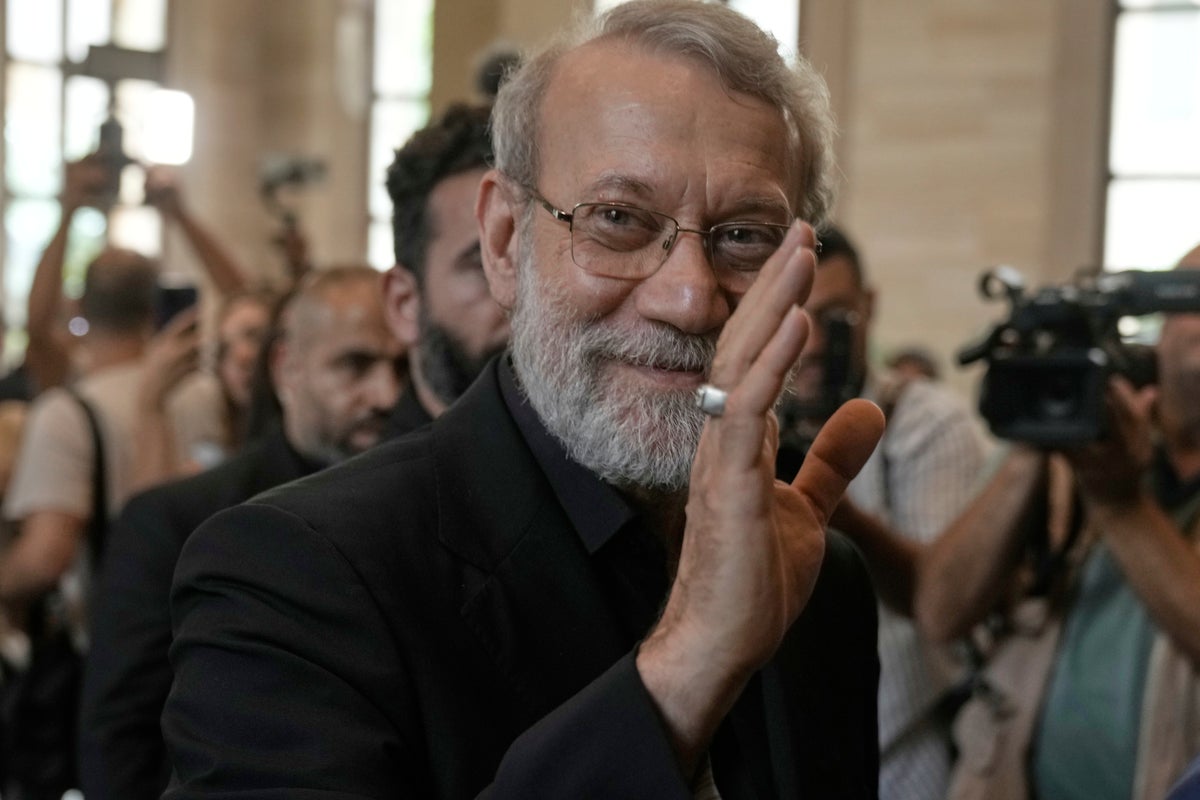
Ali Larijani is that face.
He is not a firebrand. He does not possess the jagged, populist edge that defines the street-level clerics or the blunt force of the military commanders. Instead, Larijani is a creature of the corridors. To understand him is to understand the delicate art of being "just enough." He is revolutionary enough to be trusted, pragmatic enough to be feared by the hardliners, and sophisticated enough to speak a language the West mistakenly thinks it understands.
Consider the map of power in a post-Khamenei world. It is not a straight line. It is a fractured mosaic. The Supreme Leader’s death would not just be a funeral; it would be a starter pistol for a race that has been running in secret for twenty years. In the middle of that chaos stands the Office of the Supreme Leader, the Guardian Council, and the sprawling economic empire of the Revolutionary Guard.
Larijani has sat at nearly every table where these powers collide.
The Architect of the Middle Way
He was born into the aristocracy of the faith. His father was a Grand Ayatollah, and his brothers occupy the highest rungs of the judiciary and the political elite. In Iran, lineage is a currency that never devalues. But Larijani did not just rely on his name. He studied Western philosophy, diving into the works of Kant and Popper, which gave him a unique mental toolkit. He understands the mechanics of a Republic even as he serves a Theocracy.
This duality is his greatest weapon.
During his decade as the Speaker of the Parliament, he became the ultimate ghost in the machine. He was the one who could bridge the gap between the screaming demands of the ultra-conservatives and the desperate hopes of the reformers. He managed the impossible: he made the system function without ever letting it change too much.
Think of a high-stakes poker game where the stakes aren't chips, but the stability of a nation of 85 million people. The players at the table are the generals, the clerics, and the merchants. Larijani is the dealer who knows exactly which card is at the bottom of the deck. He isn't playing to win a single hand. He is playing to keep the game from ending in a brawl.
The Invisible Stakes of a Power Vacuum
When a titan falls, the vacuum pulls everything toward the center. The fear in the West is often focused on the "madman" scenario—the rise of a nuclear-armed zealot. But the real danger is far more mundane: paralysis. An Iran that cannot decide who it is becomes a cornered animal, lash-out prone and unpredictable.
Larijani represents the "Managed Transition."
To the international business community, he is a figure of cautious interest. He was a key supporter of the 2015 nuclear deal, not because he is a liberal, but because he is a mathematician of power. He saw that the cost of isolation was outweighing the benefit of defiance. He understands that a nation cannot lead the Middle East if its currency is worthless and its youth are looking for the exit.
But there is a human cost to this pragmatism. For the young woman in a Tehran cafe, Larijani is not a savior. He is the ultimate insider. He is the man who ensures the status quo survives the person who created it. He represents the survival of the system, not the liberation from it. This is the tension that defines his potential rise. Can a man who is a master of the old guard truly lead a country that is increasingly young, secular, and tired?
The Philosophy of the Long Game
There is a specific kind of silence that follows a Larijani speech. It is the silence of people trying to figure out if they were just insulted, complimented, or redirected. He uses language like a surgeon uses a scalpel—precise, cold, and designed to minimize bleeding.
In 2021, the system he helped build turned on him. He was disqualified from the presidential race by the Guardian Council, a move that many saw as a purge by the hardliners. He didn't scream. He didn't call for a revolution. He wrote a letter. It was a masterpiece of controlled fury, questioning the logic of his exclusion without ever burning the bridge.
He waited.
Now, as the shadows lengthen over the current leadership, that patience looks less like a defeat and more like a strategy. The hardliners who pushed him out have struggled to manage the economy and the civil unrest. The "pure" path has led to a dead end. In the quiet rooms where the real decisions are made, the name Larijani is being whispered again.
The Bridge Between Two Worlds
If you were to walk through the Grand Bazaar in Tehran, you would feel the friction. The merchants are worried about the Rial. The shoppers are worried about the price of meat. They don't want a martyr. They want a manager.
Larijani is the candidate of the boardroom and the mosque. He is the only figure who can potentially command the respect of the traditional clergy while convincing the technocrats that the lights will stay on. He is the human embodiment of the "Third Way"—an Iran that remains an Islamic Republic but functions like a modern state.
It is a narrow path. One slip to the left, and the Revolutionary Guard sees a traitor. One slip to the right, and the street sees another dinosaur.
Imagine a bridge made of glass, suspended over a canyon of fire. On one side is the rigid, unyielding past. On the other is an uncertain, globalized future. Larijani is currently standing in the middle of that bridge, waiting for the wind to die down. He knows that in the history of the Persian Empire, the man who survives the transition is rarely the one who shouts the loudest. It is the one who knows how to make himself indispensable to every side.
The stakes are not just about who sits in a specific chair in North Tehran. They are about whether the next chapter of Iranian history is written in ink or in blood. The world watches for the "Next," but Larijani is focused on the "How." He isn't looking for a crown; he is looking for the keys to the engine room.
In the end, power in Iran is not seized. It is inherited through a thousand small compromises and ten thousand long silences. As the old era fades, the man who spent a lifetime mastering the art of the shadow is finally stepping into the light, not because he forced his way there, but because the light has nowhere else to go.
The prayer rugs are laid out, the centrifuges are spinning, and the black SUVs are idling in the courtyard. The transition is coming. And Ali Larijani is already in the room, waiting for the door to lock.